








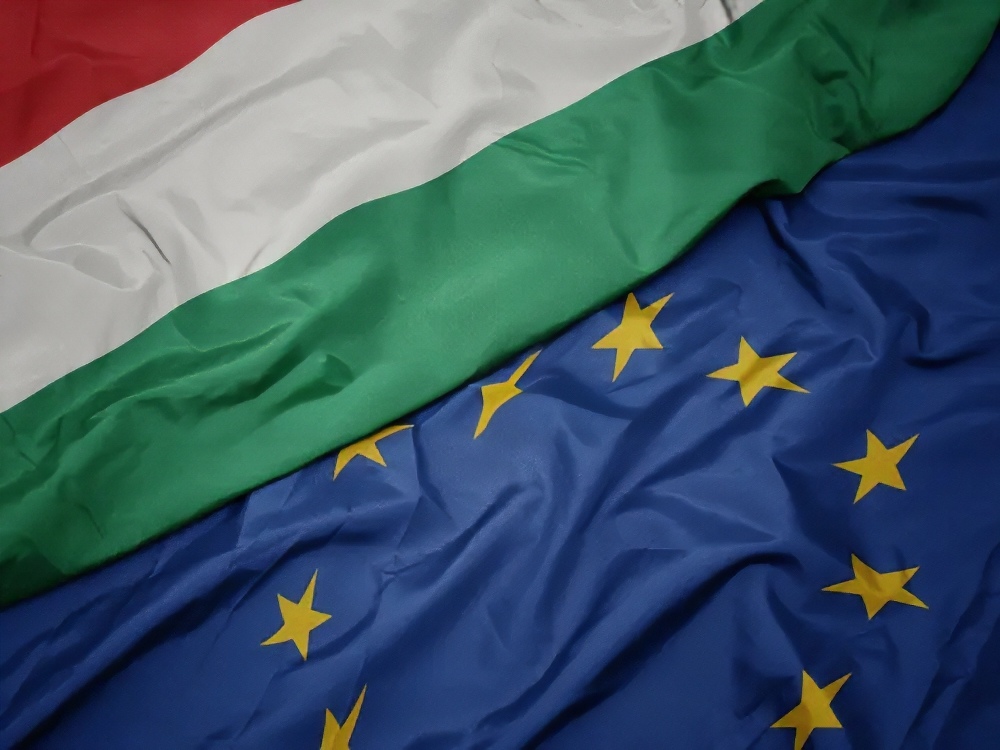
Hungary’s incoming government is already facing a major first test after the Court of Justice of the European Union ruled that the country’s so-called “LGBT propaganda” law was not only illegal, but a breach of the European Union’s foundational values.
The ruling lands just days after Viktor Orbán’s defeat and places immediate pressure on incoming prime minister Péter Magyar to decide whether his promised reset with Europe will include repealing Hungary’s anti-LGBTQ+ laws.
The case was brought by the European Commission and backed by 16 of the EU’s 27 member states, as well as the European Parliament, making it one of the most significant human rights confrontations in the bloc’s history. In its judgment, the court found that Hungary’s 2021 law breached Article 2 of the Treaty on European Union, which enshrines the EU’s core values, along with multiple internal market rules, data protection rules and several protections under the Charter of Fundamental Rights.
On Article 2 in particular, the court found that Hungary had infringed the rights of sexual minorities and transgender people, as well as the values of human dignity, equality and respect for human rights, including the rights of minorities. It said the law was “contrary to the very identity of the Union as a common legal order in a society in which pluralism prevails” and rejected Hungary’s attempt to justify the legislation on national identity grounds.
The ruling is especially important because Hungary’s 2021 law later became the legal and political foundation for wider anti-LGBTQ+ measures, including bans on Pride events. Reuters reported last year that Hungary used its tightening “child protection” framework to justify banning Budapest Pride, even as tens of thousands of people marched anyway in defiance of the restrictions.
Human rights organisations welcomed the ruling as a landmark moment. ILGA-Europe said the judgment removed any excuse for Hungary to keep the legislation in place, and argued that the country could not credibly enter a post-Orbán era without repealing both the 2021 law and the Pride ban. That reaction aligns with broader reporting describing the judgment as a direct challenge to Hungary’s legal and political treatment of LGBTQ+ people.
That now leaves Péter Magyar with an immediate and politically sensitive decision. Reuters reported that Magyar won April’s election on a platform centred on corruption, healthcare, transport and restoring Hungary’s relationship with Europe, rather than on LGBTQ+ rights specifically. During the campaign, he largely avoided detailed comment on queer issues.
Still, he has offered some signals that observers are now reading closely. In his victory speech, he said Hungarians wanted a country where “no one is stigmatised for loving differently or in a different way than the majority”, and declared that Hungary wanted to become a European country again. Reuters and other reports suggest that language was seen as markedly different from Orbán’s culture-war framing, even if it stopped short of a direct policy commitment on LGBTQ+ equality.
Magyar also criticised the Pride ban last year, arguing that Orbán’s government was using the issue to distract from the country’s real problems. But he did not attend the banned Budapest Pride march himself, and current reporting still does not show a clear promise from him to repeal the anti-LGBTQ+ laws outright. That means the court’s ruling is likely to become an early test of whether his pro-EU rhetoric will translate into concrete legal change. This last point is an inference based on the ruling, his campaign emphasis and his limited prior statements on LGBTQ+ issues.
For Hungary’s LGBTQ+ community, the verdict is a major legal victory. But whether it becomes a political turning point will now depend on what Magyar does next.