








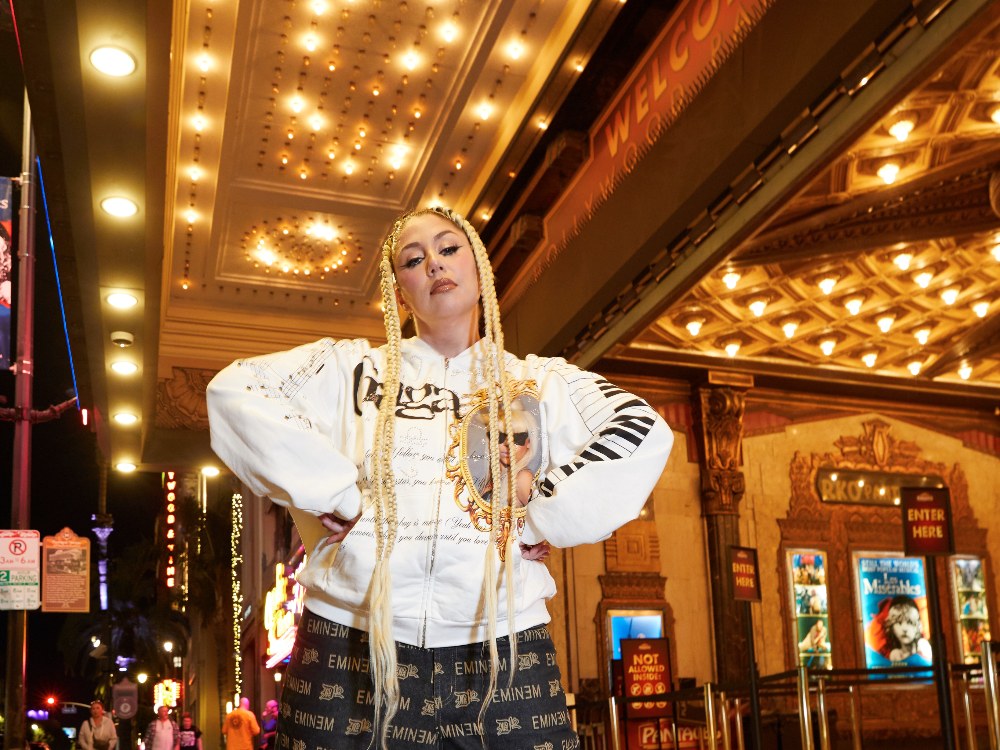
For the first time in three years, proudly Māori and lesbian artist Theia is at home in Aotearoa for New Zealand Music Month. She has just returned from New York after speaking at the United Nations, and is juggling the realities of being an independent musician with side hustles, tours and study. Despite the weight on her shoulders, this wahine has risen to the occasion.
There is a lot happening in Theia’s world right now. In the space of a few short months, the Aotearoa artist has released her long-awaited debut album Girl, In A Savage World, returned to university for a Masters, prepared for a Canadian tour, and delivered a powerful speech on an international stage at the United Nations Permanent Forum on Indigenous Issues in New York.
For some artists, that kind of schedule might read like pure pressure. For Theia, it feels more like alignment.
“My reo and my culture have always been very important to me,” she says. Music, academia and advocacy, she explains, now co-exist. They overlap in places, but also “stand firm in their own right too”.
That sense of hard-won integration sits at the heart of who Theia is today. Known to many as a fearless alt-pop force and to others through her te reo Māori project TE KAAHU, Em-Haley Walker (Theia) has spent the last several years becoming more fully herself in public. Not more polished or palatable. More authentically herself.
The songs on Theia’s debut album reach into colonisation, religious trauma, queerness, and tino rangatiratanga with a clarity that is both intimate and political.
“I wanted to write about issues that were central to my life and those around me,” she says. “So being a young Māori lesbian who grew up in a conservative Christian family, it was inevitable that my debut album was going to explore such themes.”
She also points to the coalition government coming to power in 2023 as a turning point in the emotional life of the album. “Tino rangatiratanga is a strong thread that runs throughout the album too. This was especially fuelled by the rage I felt when the coalition government came to power in 2023, undoing decades of progress for Māori, women and takatāpui communities.”
That rage has become part of Theia’s creative language. Rage as a way of naming what many others are feeling and turning it into something visible.
There is often a professional cost to that kind of honesty, especially for women, queer, and Māori artists expected to make themselves digestible. Theia knows this. She just refuses to let it govern her.
“I’m aware that my artivism through political protest music will have impacts,” she says, “but I wouldn’t be able to continue if I constantly worried about repercussions.”
“I stopped measuring my success in numbers when I became an independent artist,” she says. In an industry obsessed with streams, followers and likes, that shift feels deeply freeing. Theia speaks openly about being happier without the machinery of major label expectations behind her. There is less pressure to please everyone, and more room to make work that says exactly what it needs to say.
That freedom matters, especially at a time when building a life in music has become harder than ever.
“The brutal truth is music isn’t a lucrative or sustainable career for me,” she tells us. Her bluntness highlighting the lived experience of an artist, as opposed to the fantasy of endless riches the music industry can perpetuate.
Theia has returned to university this year to begin her Masters, fitting study around touring, recording, and the endless admin that comes with being an independent musician. It means exams during a Canadian tour. It means, as she puts it, “constantly hustling on the side”.
Her assessment of the wider industry is just as clear-eyed. Streaming does not pay enough. Commercial radio remains difficult to access for many local acts, especially outside pop. Touring is expensive and risky. AI adds another layer of uncertainty. And yet, amid all that, there is still community. There is still aroha. There are still fans buying merch, backing crowdfunding campaigns, and helping artists keep going. There are still fans buying merch, backing crowdfunding campaigns, there are still businesses who pay their annual music licencing fees to support artists and help keep them going.
But underneath every conversation about art, money, and visibility, sits the mental health of the artists who are trying to survive. Theia is frank about that too.
“The music industry is brutal and misogynistic,” she says. Protecting her mauri, she explains, means medication, karakia, and being surrounded by people who fight for her and hold her best interests at heart. “As a woman, as a Māori person and as a wahine-moe-wahine you are vulnerable and it is top priority to ensure I’m rooted in community,” she tells us.
“We rangatahi Māori carry much on our shoulders,” she says, “trying to survive in a system not made for us whilst trying to learn the language that was stolen from us and pay the rent.”
And that is an issue which Theia discussed on a world stage in late April.
Theia was one of only seven people selected from more than 2,000 applicants worldwide to attend and speak at the UN Permanent Forum in New York on Indigenous Issues. She represented Aotearoa and Māori, carrying with her not only her own voice but the voices of many rangatahi.
“Despite being terrified about it all, I was so proud to represent my people and my ancestors,” she says.
“I represent many other rangatahi Māori who are proud of our identity,” she says. “We are standing in the shadow of our ancestors, we are determined to not allow our Indigenous human rights to be undermined and will protect them for the next generations.”
Theia, a Māori lesbian, held space on a global stage. Her three-minute address received rousing applause at the United Nations and she received dozens of messages of support from people back in New Zealand who watched the live stream.
A woman standing in her mana. An artist refusing compromise. Despite exhaustion, financial pressure, and the reality of carrying so much at once. She stood in front of global leaders and remind them what Indigenous excellence looks like when it is self-defined, political, personal, unapologetically queer, and rooted in whakapapa.
On her own terms, Theia is showing the world exactly what that can look like.
Girl, In A Savage World is out now
Photo | Chris Cuffaro
The Music Loop: How it works
When you hear your favourite local artist in a cafe, gym, hairdresser or retail store, their music is working for that business – building brand and atmosphere. Through OneMusic, businesses pay a small licensing fee that goes directly back to the music creators. These public performance royalties provide a critical financial foundation, ensuring that artists like Theia can continue to write, record and thrive in Aotearoa.
By holding a music licence, businesses help ensure:
- Music creators are paid for the use of their work
- Music continues to be created and shared
- The music ecosystem remains sustainable
Learn more about the importance of music licensing at onemusicnz.com