









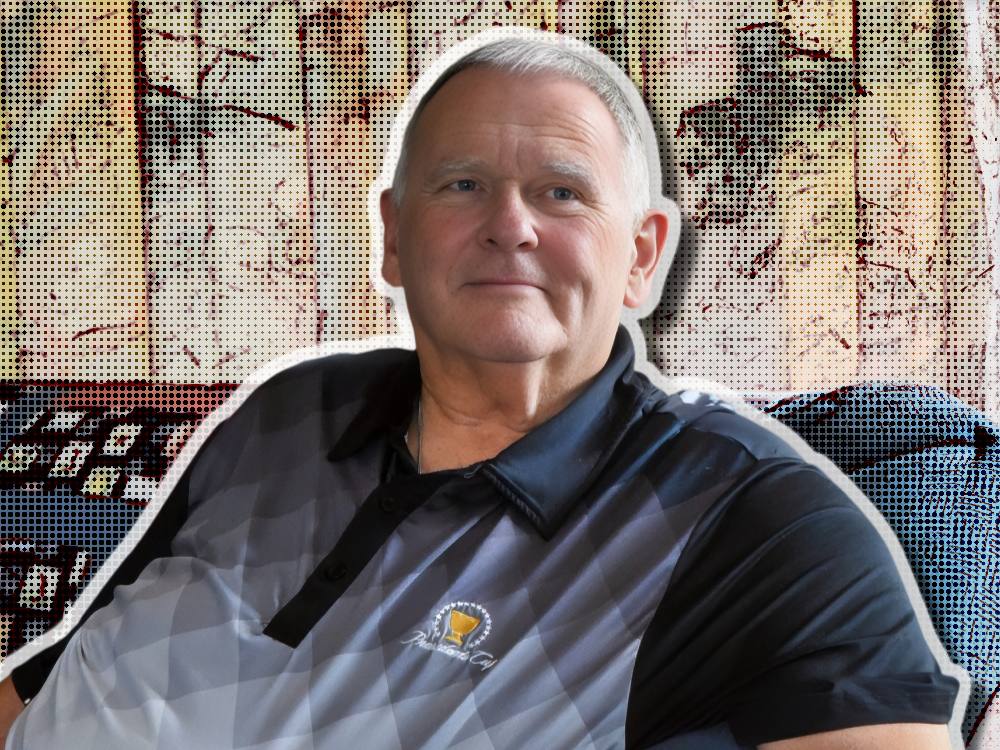
For most of his life, Bill Costello lived behind what he calls a mask.
Born and raised in Whanganui, Bill knew he was gay as a teenager, but the world around him made that truth feel dangerous. When he was young, his mother noticed how close he and a male friend were becoming and threatened to expose him to his employer and cut him off from the family if he acted on his feelings. At a time when being gay could cost someone their job, their place in their family, and their standing in the community, fear settled in early and stayed there.
So Bill did what many men of his generation felt they had to do: he built a life that looked acceptable from the outside.
He married a woman who knew he was gay, and together they committed to a marriage and family. They had a daughter, later adopted two more children, and became deeply involved in church life. Bill gave up his passion for performing musical theatre, and for 47 years, he stayed faithful to his wife and committed to the family they built together.
Looking back, Bill speaks with remarkable honesty about the cost of all those decades spent hiding. A mask glued to his face, performing a version of himself to others to keep the truth at bay. Even as the world changed, through gay liberation, the AIDS crisis, civil unions, and marriage equality, Bill tells us the fear remained. His mother’s threats never left him, and neither did the church’s condemnation of homosexuality.
When his wife died, Bill was in his 70s and confronting not only grief, but his true self. He had already penned an autobiography, but left out “the gay side” entirely. That omission began to trouble him. If he was going to tell his story, why was he still editing himself out of it?
“I’m sick of wearing this mask,” he remembers thinking. “I’ve worn it for 75 years. I just want to be me.”
That realisation became the turning point. Bill began writing a new book, one that finally told the whole truth. But before getting it published, he decided his family needed to hear it from him first. Rather than tell each person separately and risk the story being retold and distorted, he sent one message to the whole family on a group chat.
The response was painful.
Some family members felt shocked and betrayed. Some stood up for him. A few responded with Bible verses. The fallout was immediate, emotional, and deeply difficult. But even in the middle of that upheaval, Bill knew there was no going back. He had done it. The truth was finally out.
Bill describes a liberating sense of freedom in being open now, particularly returning to his local theatre community, where his openness has been met with warmth, support, and acceptance. After decades of silence, Bill is finally speaking with his full voice.
His advice to others who may also be older and still closeted is simple: “Don’t wait any longer. Take that mask off and be who you’re meant to be!”
Coming out at 76 did not magically fix everything for Bill. It caused hurt, conflict, and misunderstanding. But it also gave him something he had been denied for most of his life: the chance to live honestly.
For younger queer people, it can be hard to imagine a lifetime spent hiding in plain sight. But Bill’s story is a reminder that coming out is never governed by one timetable, and that authenticity can still matter just as much in your 70s as it does in your twenties.
Bill assures us, “It is never too late to be your true self.”
Bill’s book, Removing the Mask, My Journey to Freedom, is available on Amazon.