










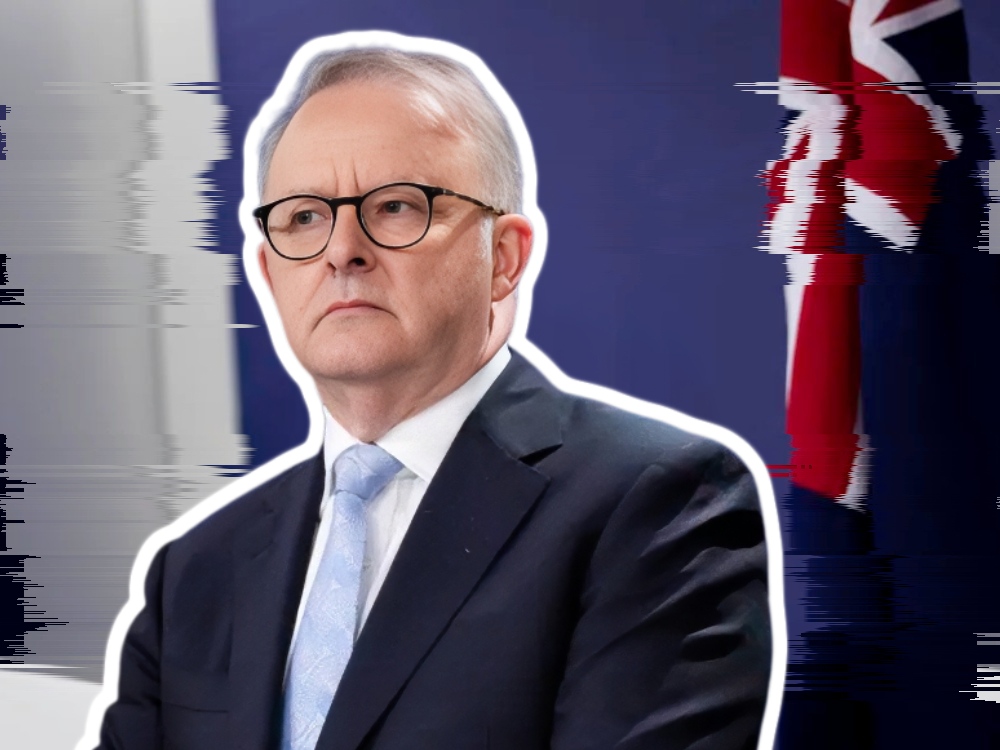


Advocates have criticised the Australian Government for declining all of the United Nations’ recent recommendations aimed at improving LGBTQIA+ rights.
In a media release, Equality Australia said it was “bitterly disappointed” by the Federal Government’s lack of action in response to recommendations offered during a UN human rights peer review of Australia.
As part of the Universal Periodic Review process, every UN member state receives a comprehensive peer review from other member states every four and a half years.
Australia’s most recent review was delivered in January 2026. More than 120 countries delivered over 330 recommendations on improving Australia’s human rights protections, with focus areas including the rights of First Nations people, refugees and asylum seekers, and people with disabilities.
The review also urged reform of outdated federal discrimination laws, including exemptions that allow religious schools to discriminate against LGBTQIA+ students and teachers — an issue the UN has criticised Australia over for years.
LGBTQIA+ recommendations rejected
As part of Australia’s fourth Universal Periodic Review, eight recommendations were made regarding LGBTQIA+ rights.
Belgium, Iceland and Mexico recommended removing exemptions that allow religious schools to legally discriminate against students and staff on the basis of sexual orientation and gender identity.
The review also recommended a national ban on conversion and suppression practices “aimed at effecting a change from non-heterosexual to heterosexual and from trans or gender diverse to cisgender”, which it likened to torture.
A federal ban on non-medically necessary surgeries on intersex infants was also recommended.
Other recommendations included public education campaigns and awareness-raising activities to counter discrimination, as well as broader measures to protect LGBTQIA+ communities from discrimination and violence.
According to Equality Australia, the Federal Government has declined to accept a single one of the LGBTQIA+ recommendations.
“An embarrassing lack of care”
Savanh Tanhchareun, international advisor at Equality Australia, said the Universal Periodic Review offered countries a chance to listen to their peers and show leadership on human rights.
He said Australia had failed to take that opportunity when it came to LGBTQIA+ communities.
“By refusing to accept any of the recommendations about LGBTIQ+ rights, the government has missed an opportunity to show it’s serious about equality, safety and dignity for all Australians,” Tanhchareun said.
“This is bitterly disappointing for everyone in our community and demonstrates an embarrassing lack of care for us on the world stage.”
Tanhchareun added that LGBTQIA+ people were the only marginalised group for which no Universal Periodic Review recommendations were adopted.
The government accepted at least some recommendations concerning other under-protected groups, including First Nations people, children, migrants, refugees and asylum seekers, older people, people with disabilities and women.
“No other marginalised group has seen recommendations about their lives being wholly ignored like this in the government’s response,” he said.
“The message seems to be that the government thinks there is nothing left to do for the LGBTIQ+ community in Australia.”
Intersex surgeries called a serious human rights violation
Associate Professor Morgan Carpenter of the University of Sydney School of Public Health and InterAction for Health and Human Rights also criticised the government’s response, highlighting the need to protect intersex children.
“Harmful, nonconsensual and medically unnecessary surgeries continue to be carried out on intersex children in Australia. The Australian government has declined to recognise this harm and its role in addressing this serious human rights violation,” Carpenter said.
“Australia is often held up as a leader on intersex issues, yet there is so much work to be done — especially in tackling misinformation and harmful practices. Like-minded countries — as well as community — will be disappointed to see the lack of firm commitments to tackle the work to be done.”
For LGBTQIA+ advocates, the government’s refusal to accept any of the recommendations sends a damaging message at home and internationally.
They say Australia cannot claim leadership on equality while continuing to leave gaps in protection for queer, trans and intersex people.