










The Australian author takes aim at publishing houses’ status quo of straight women writing gay men’s stories
When Invisible Boys found an audience, Holden Sheppard was not expecting it.
“The success was a massive surprise,” he tells YOUR EX’s Oliver Hall. “Not least because, as a book and as a manuscript, it was rejected by almost every publisher in Australia.”
He says publishers could not decide where it belonged.
“No one could work out how to market it. They said, ‘It’s too adult for young adult and too young for adults,’ or, ‘We’ve got same-sex marriage now, so we’re really looking for happy gay stories, not this trauma stuff,’ which made me f*cking furious because it was denying a whole part of the gay experience.”
That emotional range is central to Sheppard’s work. His stories often sit in the messy, painful and sometimes confronting realities of gay male life. When Invisible Boys was adapted for television, seeing that world reimagined was not always easy.
“It was harrowing, because when you’re in the writers’ room, you’re watching them tear your baby apart in front of you. You have to put your ego aside and let it happen.”
Sheppard wrote two episodes of the six-part series and was part of the writers’ room throughout the season.
“We had an all-gay writers’ room. So for every episode, we talked about our experiences growing up. It lent something really authentically gay and authentically Aussie to the whole show.”
For Sheppard, that authenticity mattered.
“The show was gritty and it was sexy. Not in a Heated Rivalry way, where it was for straight women to get off. It was for gay men. It was for us to show what we live through.”
When asked about Heated Rivalry, Sheppard laughs: “This is where I get cancelled!”
But his critique is not aimed at the book, the author or the fandom. It is about a much bigger issue.
“There is a huge problem in the publishing world, where stories written by women about gay men, which are male-male romance as opposed to gay fiction, are the ones that are getting the push. They are getting stocked en masse in bookshops and they sell millions.
“Guys who write gay fiction can’t even get published because Heated Rivalry, Red, White & Royal Blue and Heartstopper are being held up as ‘what the public wants’.
“Gay men aren’t authoring our own experiences anymore. They are being authored by people who want to put out a safe, consumable version of the gay experience that people won’t be threatened by.”
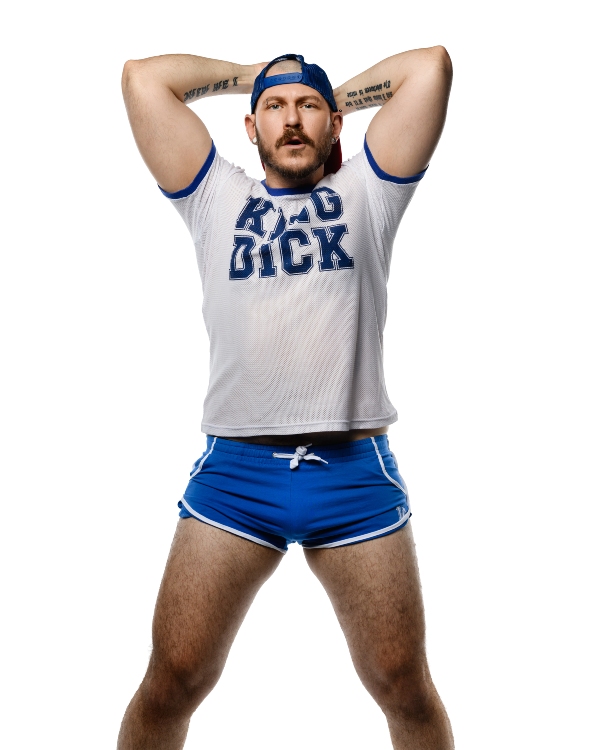
Sheppard says his own work resists that sanitised version of gay life.
“In my work there is sadness and trauma and a lot of dirty gay sex and characters not always behaving in a commendable way. They are flawed, self-destructive and angry. With Heated Rivalry, you might get that for a scene, but then it is quickly rectified.
“I have no hatred towards Heated Rivalry or author Rachel Reid, and I do believe everyone should be able to write outside their experience. I just think we are looking at an industry-level, global problem where gay fiction by gay men is being totally sidelined.
“Is there any other identity in this world, in the space of identity politics, where you can very blithely write outside of that experience and not give a f*ck?
“You can’t write a lot of identities without doing a heap of consultation, or having it written by someone from that background. Except gay men!”
Sheppard does not believe that issue is discussed enough.
“Often when I have seen gay authors raise it, they get quickly told to shut up. That is part of the reason the first two pages of Yeah, the Boys read like an angry manifesto against straight allies, which is what it is.
“I am fed up with straight allies telling us what to do in our own spaces. Readers are frothing for those pages. So I know I have tapped into something a lot of people are feeling.”
Much of Sheppard’s writing is set far from the big-city queer spaces that dominate many queer stories. For him, regional Western Australia is not just a backdrop. It is part of the emotional and sexual pressure cooker his characters inhabit.
“As a teenager in rural WA, I was desperate to act on my sexuality and explore it, because I was horny as hell. But you’re stuck in a town where, if you hook up with anyone, someone is going to see you, because there are people who know you on every street, and it can get straight back to your family, your school, everyone.
“As a 17-year-old, I was working in the supermarket, saving all my money, dreaming of going to London the moment I turned 18. The week after my birthday, I flew to London. I got to my hostel, went straight to a bathhouse, and I was like, ‘Finally, I can f*ck.’
“Growing up gay in a country space is so hard and so isolating, and it fucks you up.”
That experience has also shaped how he views queer spaces.
“I know the value of a gay bookshop or a gay bar that is just for gay men and doesn’t let straight people in.
“It makes me sad to see a lot of those spaces closing down, or going, ‘Let’s include all the straight people.’ Then it ends up being a bunch of hens’ nights, and that brings the straight men in, and that brings homophobia in, and suddenly it’s not a safe space anymore.”
Sheppard’s work frequently returns to masculinity, shame and the emotional damage many gay men carry. He says he is drawn to the subjects because they are the things that often felt unsayable.
“It was so curious to me that there wasn’t space for gay men with agency, or gay men to be angry, or gay men to be tough and masculine. If that was on screen, it was kind of like, ‘Oh, he’s a problem and we need to fix him, and once he comes out, he’ll be shitting rainbows and dancing on stage at the gay bar.’ That is not the truth for a lot of us.”
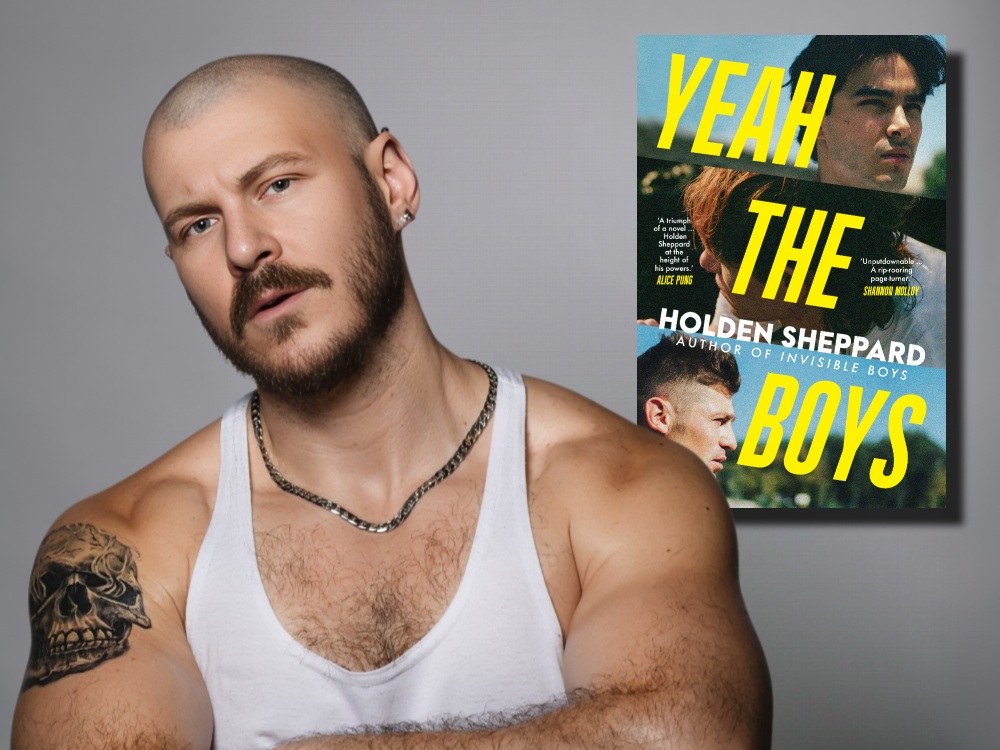
His new book, Yeah, the Boys, continues in the world of Invisible Boys, but Sheppard says it is not simply a sequel.
“Yeah, the Boys is the book I left uni 15 years ago planning to write.”
“I wanted to write a book about a gay football player. Yeah, the Boys was called Dead Straight initially, and it was a gay footy story about this bloke in his 20s. Then I thought, I don’t have a handle on this dude, because he would have worked out he was gay when he was a teenager.
“So I decided to write a short story about Cade, who became Hammer, when he’s 16, to flesh that out. Accidentally, that short story went for 100,000 words and became Invisible Boys.
“So it wasn’t Invisible Boys 2: The Search for More Money, but the plotline around the first gay male AFL player is suddenly very topical!”
The story returns to football, masculinity and the search for belonging. Sheppard says he was not interested in writing a straightforward condemnation of the AFL.
“I didn’t want that to be my contribution to the discourse. I wanted to do something different, especially through Zeke’s storyline, where he joins a gay footy team and that leads him to tap into masculinity he has not been part of before. A world of male bonding that can actually be really supportive, and really good for your mental and physical health.”
With Yeah, the Boys, Sheppard is making a case for gay men to take up space again, on the page, on the field and in the telling of their own lives.