









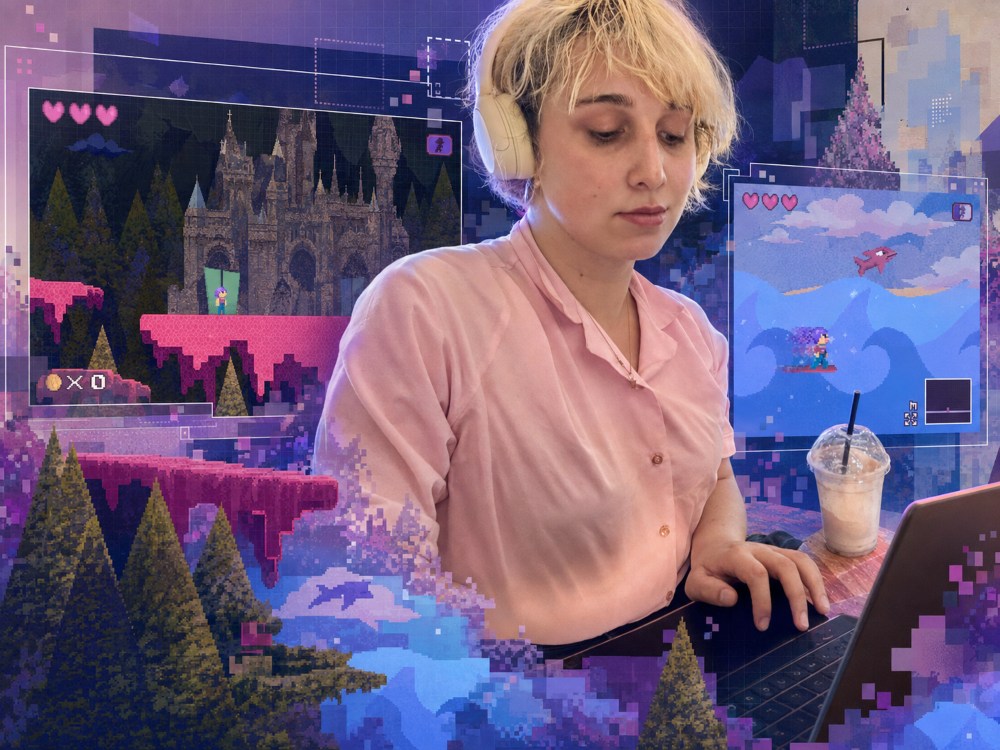
Christchurch developer Violet Bair talks to YOUR EX’s Oliver Hall about turning her dreams into reality and creating a new world for queer gamers
After four and a half years of late nights, multiple jobs and periods of financial uncertainty, Christchurch-based American developer Violet Bair has released a video game that is unmistakably her own.
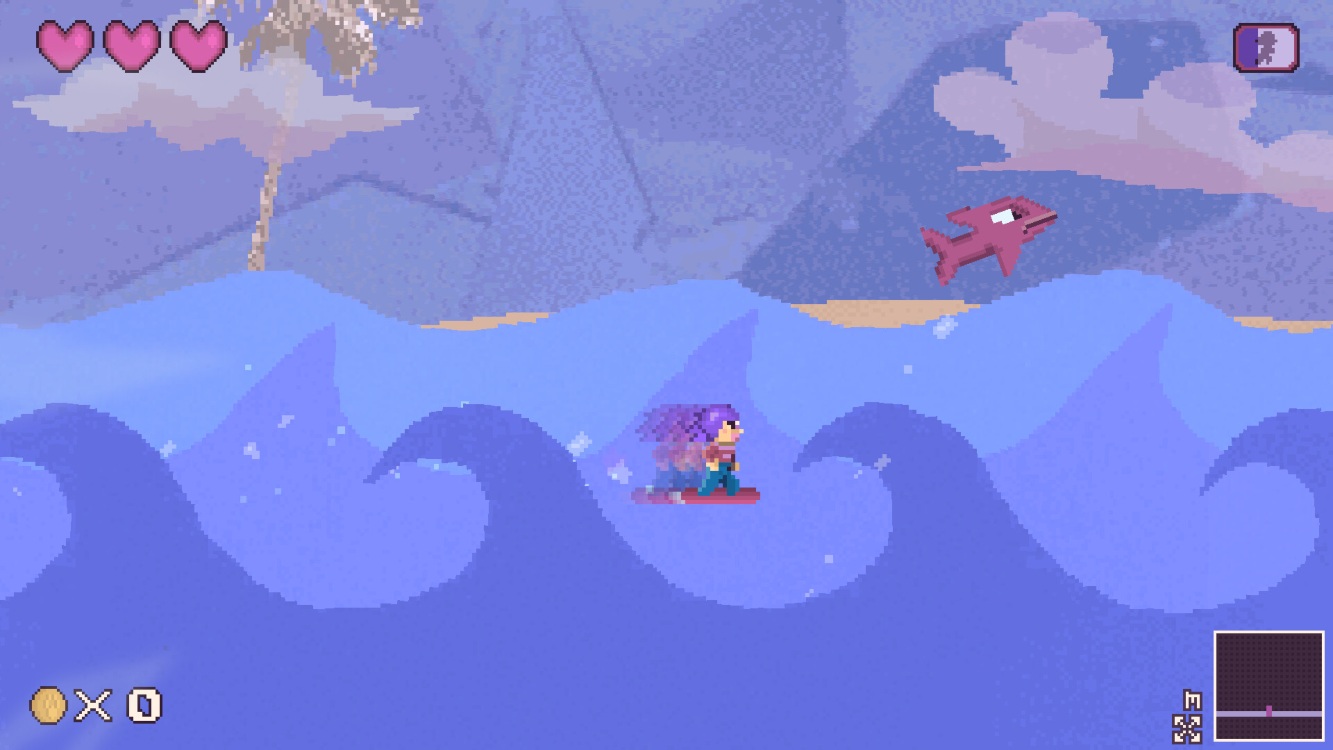
Indigo’s Dreams is a fast-paced, mixed-media platforming adventure in which players travel through forests, abandoned beaches and a town above the clouds, encountering strange mutants and collecting costumes along the way. Its dream worlds combine claymation, puppetry, stop-motion, pixel art, collage, painting and photography.
For Bair, bringing so many art forms together was a natural progression.
“I’m an artist, creative director and audio engineer,” she says. “Gaming has been a lifelong passion of mine, since it combines so many art forms — music, animation and storytelling — into one.”
Her creative journey began when she was seven, building fan games on the online platform Scratch using characters from worlds including Sonic, Mario and Scott Pilgrim. As she grew older, Bair taught herself more programming languages and began creating text-based adventures in HTML.
Those childhood experiments eventually developed into a professional career. After beginning work on Indigo’s Dreams in 2022, Bair was spotted by a recruiter through a game-development Discord community and entered the quality-assurance industry.
She went on to perform QA engineering work on Meta projects including Asgard’s Wrath II and Horizon Worlds. Her days belonged to other companies’ virtual worlds, but her evenings were reserved for building her own.
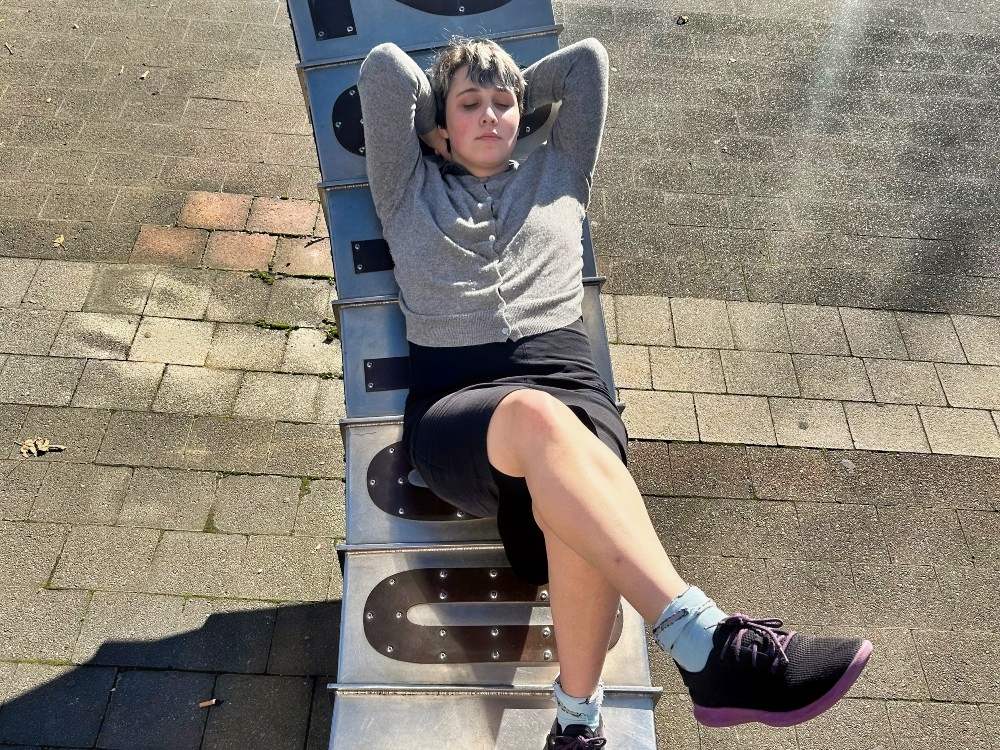
“After my days working as a QA engineer, I’d spend my nights as the creative director for Indigo’s Dreams,” she says.
The game was not the only major new chapter taking shape. While developing it, Bair was also preparing to leave the United States and begin a new life in Aotearoa.
As a transgender woman, she says the increasingly hostile political climate left her concerned for both her rights and her personal safety. She spent her final period in America involved in political advocacy and began seeking a visa for New Zealand, a country she had long dreamt of calling home.
Her fears were far from isolated. A survey of 302 transgender and gender-diverse people conducted after the 2024 US election found 93 per cent were concerned about what another Trump presidency could mean for trans people. Eighty-three per cent reported increased concern for their mental health, while 80 per cent were more worried about becoming the victim of a hate crime. Other trans Americans have also spoken publicly about preparing to move overseas because of policies affecting healthcare, identity documents and legal protections.
For Bair, a disturbing dream became the catalyst for turning an aspiration to relocate into a definite plan.
“In January, I had a nightmare where I dreamt that a crowd of people were chanting ‘Heil Trump’ in front of the White House,” she says.
The following day, Elon Musk made a straight-arm gesture during celebrations following Donald Trump’s January 2025 inauguration. The gesture was compared by many observers with a Nazi salute, although Musk and others rejected that interpretation. For Bair, the timing felt chillingly prophetic.
“Understanding the dangers I faced and believing my dream may have been prophetic, as woo-woo as that may sound, I decided I would be leaving for New Zealand by year’s end.”
In Christchurch, Bair found not only a new home but a creative community that became part of Indigo’s Dreams.
Through the Christchurch Game Developer Association, she met two local performers who joined the project. Dash Fletcher voices Shuvnol, while Lily Keenan made her voice-acting debut as Alice.
Queerness, however, reaches far beyond the people listed in the credits.
One side quest asks players to reunite a man with his husband, who has been transformed into a cloud. Players can also dress Indigo in a costume inspired by the transgender pride flag.
“As a transgender woman, it was important to me that the team working on the game was diverse,” Bair says. “Almost everyone credited in the title’s end credits is a member of the LGBTQ community.
“I want to make sure that when people play Indigo’s Dreams, they’re confident that the team behind the title celebrates queerness.”
That community spirit also helped carry the game through its final stages. A Kickstarter campaign reached its funding goal in fewer than eight days and eventually raised US$2,579 from 60 backers — 128 per cent of its target.
“What made it possible is word of mouth from the people who’ve been supporting me and Indigo’s Dreams the longest,” Bair says. “My friends, colleagues and family all blasted the Kickstarter page everywhere, and I’m deeply grateful.”
She is now developing additional content alongside the extra difficulty mode promised to supporters, extending a project that has already demanded extraordinary persistence.
At different points during development, Bair was working three jobs with almost no spare time. At others, she was unemployed, stressed and without a reliable income. She continued building the game regardless — an experience that informs her message for young queer and transgender creators who fear the gaming industry has no place for them.
“When we think of gaming, we often think of straight men and boys,” she says. “But gaming is art, and if anyone knows how to make art, it’s the mistreated, the under-represented, the bullied, the marginalised and the forgotten.
“It might not look like there’s space for you, but you can always build your own room.”
For Bair, Indigo’s Dreams is that room: handmade, defiantly queer and filled with the strange beauty of a dream she refused to abandon.
“I just kept chipping at it, and I made my mark on the industry,” she says. “Nobody can take that away from me.”
To find out more, visit indigosdreams.com