










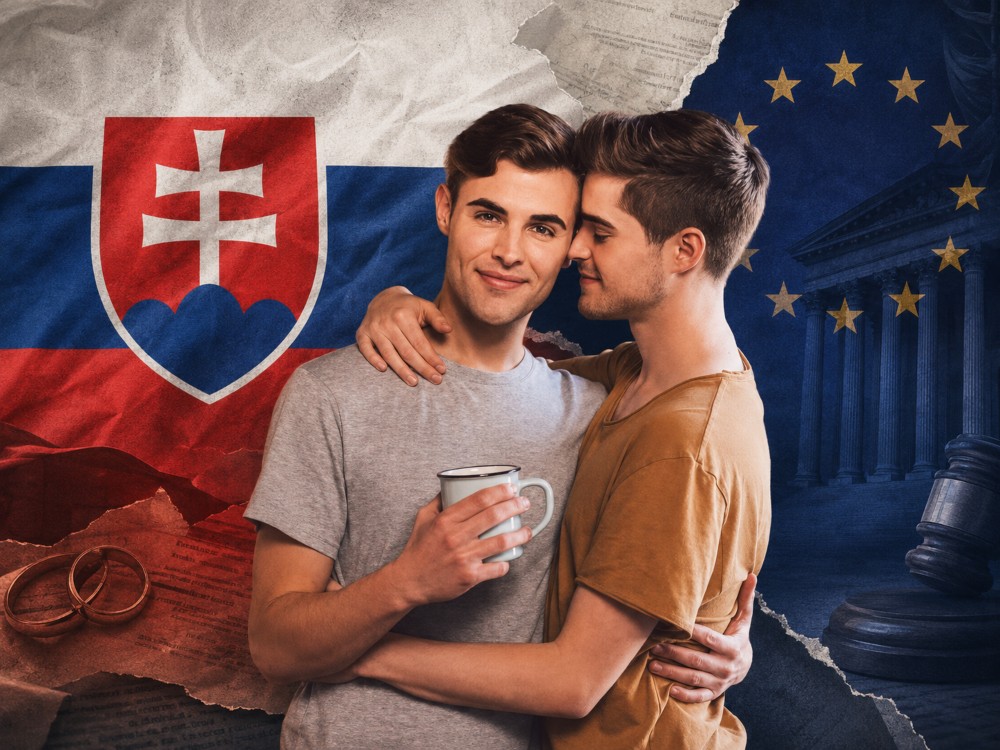

A gay Slovak couple is preparing to take legal action after authorities refused to register their Austrian marriage, escalating a growing clash between Slovakia and the European Union over LGBTQ+ rights.
Slovakia is facing fresh scrutiny over its treatment of same-sex couples after refusing to recognise the marriage of two men who wed in neighbouring Austria.
The dispute follows a landmark November 2025 ruling from the Court of Justice of the European Union (CJEU), which found that EU countries cannot simply refuse to recognise qualifying same-sex marriages legally performed in another member state because their own domestic law does not allow them.
The ruling does not force countries such as Slovakia to legalise same-sex marriage themselves.
Instead, it establishes that recognition is necessary when EU citizens have married while exercising their freedom of movement and seek to continue their family life in their home country.
Couple challenges Slovakia’s refusal
The Slovak couple married in Austria in 2020 and later applied to have their marriage entered into Slovakia’s civil register.
After months without a decision, they reportedly received a rejection communicated by Interior Minister Matúš Šutaj Eštok rather than the registry office they had applied to.
The couple alleges political interference and now plans to challenge the decision.
Their case comes as Prime Minister Robert Fico takes an increasingly confrontational approach towards LGBTQ+ rights and the EU’s authority.
Fico has publicly called for legislation preventing same-sex couples married overseas from having those marriages registered in Slovakia, arguing that the country’s constitutional definition of marriage should take precedence.
Slovakia remains one of the few EU countries without marriage equality or a nationwide registered-partnership system for same-sex couples.
For LGBTQ+ Slovaks, that means couples can legally marry just across the border in Austria yet return home to a country that continues to deny their marriage domestic recognition.
The wider question now is whether Slovakia can maintain that position while remaining bound by EU law.
The CJEU has made its position clear: where national law conflicts with the EU rights established in its ruling, domestic courts may be required to set aside those national provisions.