









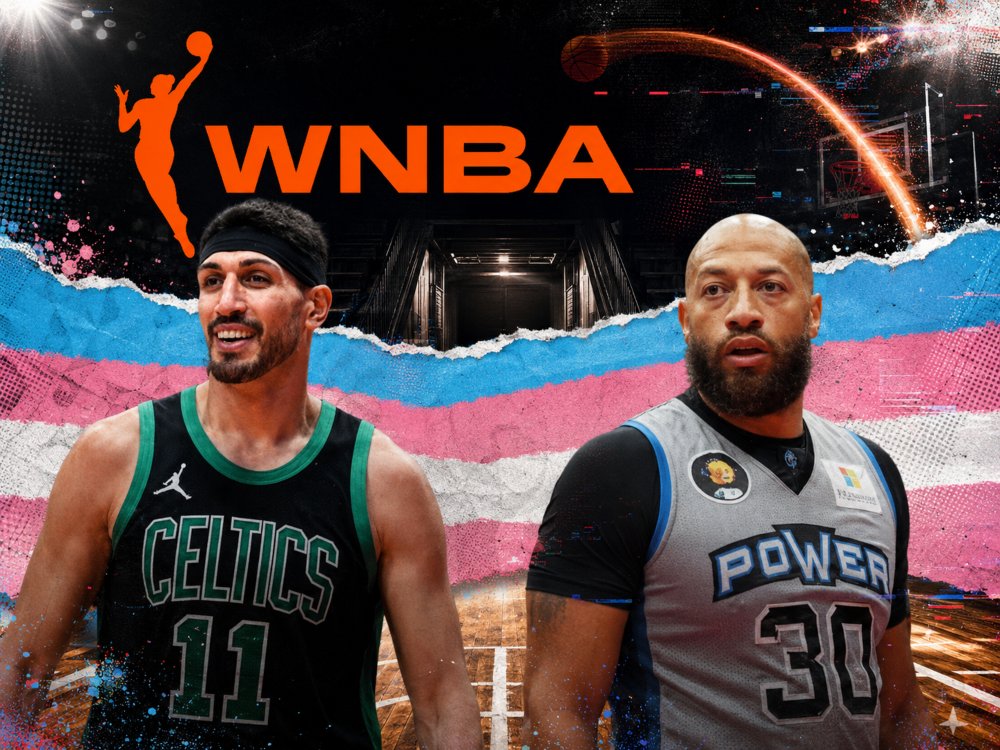
The WNBA has condemned what it describes as “bad-faith efforts” to demean or marginalise people after two former NBA players claimed they would enter the women’s league while invoking transgender identities.
Retired NBA players Enes Kanter Freedom and Royce White have both said they intend to enter the 2027 WNBA Draft, presenting their claims as a challenge to rules around transgender participation in women’s sport.
Freedom argued on social media that identifying as a woman should make him eligible for the league, while White similarly told Fox News that he was identifying as a woman “for purpose of basketball”.
However, their argument does not reflect what the WNBA’s current rules actually say. The league’s collective bargaining agreement states that only women are eligible to play in the WNBA, but does not provide a more detailed definition based on gender identity or sex assigned at birth. It does not state that simply declaring a gender identity automatically makes someone eligible.
The WNBA has also made clear that there is no current eligibility dispute involving a transgender athlete.
“There are no immediate eligibility matters affecting the WNBA,” the league said, while denouncing efforts to use the issue to “demean or marginalise others”.
Trans athletes drawn into wider WNBA culture-war debate
The controversy comes as transgender participation in sport has become an increasingly prominent political issue in the United States, despite there being no transgender woman currently seeking to compete in the WNBA.
The league’s anti-hate task force, made up of team presidents and general managers, recently discussed transgender athletes alongside growing concerns about online abuse and hostility directed at WNBA players. The WNBA said it intends to approach the discussions thoughtfully while maintaining fair competition and the values of the league.
The distinction between transgender women and transgender or non-binary athletes is also important.
Former WNBA All-Star Layshia Clarendon was the league’s first openly transgender and non-binary player. Clarendon, who played 12 seasons in the league, retired in September 2024. There has not, however, been an openly transgender woman competing in the WNBA.
That history makes claims that transgender identities have no place within the WNBA particularly misleading: gender-diverse people have already been part of the league and its community, even though the specific question of eligibility for transgender women has not arisen in competition.
Sophie Cunningham comments fuel controversy
The debate gained further attention after WNBA player Sophie Cunningham publicly backed excluding transgender women from women’s sporting competitions, framing her position around protecting girls and women in sport. Her comments attracted both criticism and support, including praise from prominent conservative political figures in the United States.
Other figures around the WNBA have pushed back against anti-trans rhetoric. Minnesota Lynx coach Cheryl Reeve and WNBA player Stefanie Dolson have publicly shown support for transgender people, while WNBPA president Nneka Ogwumike has warned about political agendas using women’s sport in ways that can marginalise the transgender community.
For LGBTQ+ communities, including those here in Aotearoa New Zealand, the controversy highlights an important distinction between legitimate discussions about sporting eligibility rules and using transgender identities as a rhetorical device or joke.
The WNBA has not announced a new transgender eligibility policy. For now, its position is that there is no immediate eligibility issue to resolve — while making clear that discussions about sport should not become an excuse to demean transgender people.