










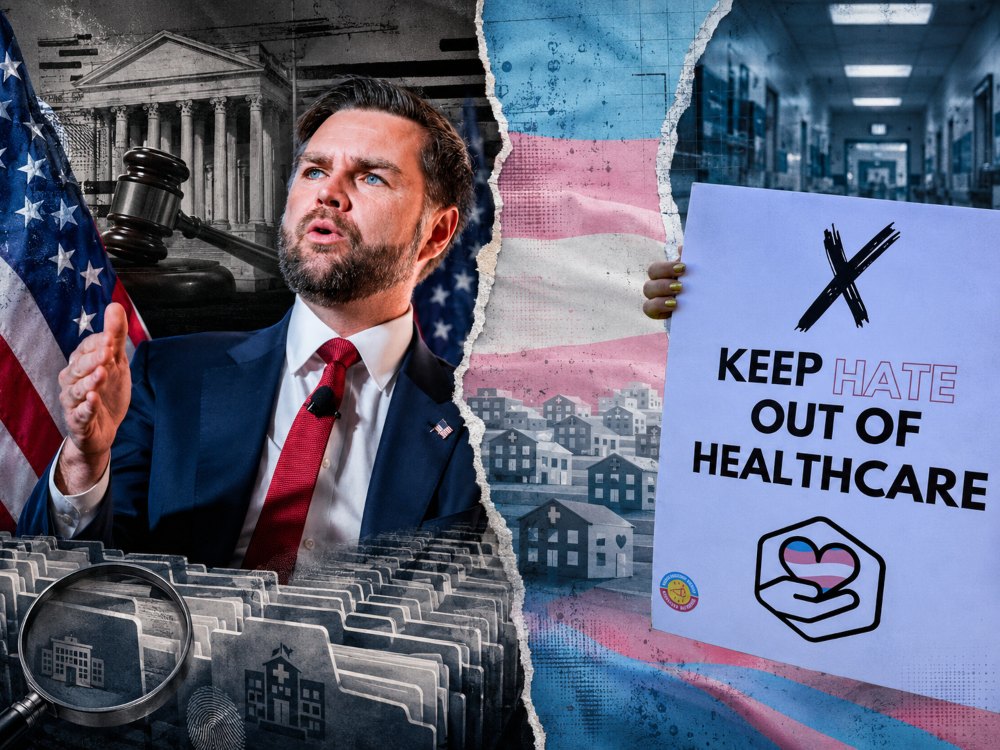
US Vice-President JD Vance has called for federal investigations into more than 200 hospitals and clinics over allegations relating to the billing of gender-affirming healthcare for young people.
The latest move is part of the Trump administration’s wider campaign to restrict access to gender-affirming healthcare in the United States, with providers already facing subpoenas, funding restrictions and legal scrutiny.
The administration alleges that some healthcare providers may have used incorrect or misleading diagnostic and billing codes when seeking insurance reimbursement for treatments including puberty blockers and hormone therapy.
However, the allegations have not established that the hospitals involved committed fraud.
A new US Department of Health and Human Services (HHS) report identifies billing patterns it argues deserve further investigation. HHS subsequently referred hospitals and clinics to its Office of Inspector General and the Department of Justice for scrutiny over possible violations of federal law.
The report, provocatively titled Wolves in White Coats: How Doctors and Hospitals Pushed and Profited from the Fraud of “Gender Medicine”, was commissioned by HHS and uses language highly critical of gender-affirming healthcare.
Reuters reports that the document alleges nearly US$120 million in billing associated with gender-affirming healthcare since 2019 and claims some puberty blockers and hormone treatments were submitted under diagnoses not explicitly referring to gender dysphoria.
In the report’s own appendix, HHS describes its findings as “signals” in claims data. It also acknowledges that appearing on its list does not indicate the volume of claims submitted by an organisation.
That distinction is important: unusual billing patterns can prompt investigation, but do not on their own demonstrate fraud or wrongdoing.
Vance pushes for federal scrutiny
Vance has argued that some paediatric gender clinics and children’s hospitals may have used misleading diagnostic codes so that insurance companies would cover treatment.
The administration is now seeking investigations into more than 200 healthcare organisations identified through its analysis.
The action comes amid an already extensive federal effort targeting providers of gender-affirming healthcare.
The Justice Department has issued subpoenas seeking information from providers, including patient, billing and personnel records. Several of those demands have faced legal challenges, with federal judges raising concerns about their breadth and their impact on patient privacy.
A divided federal appeals court recently revived one subpoena involving gender-affirming care provider QueerDoc, although the case was returned to a lower court to consider other objections to the government’s demands.
Trump administration further restricts care for trans young people
The investigation comes alongside significant new restrictions on federal funding for gender-affirming healthcare.
The Trump administration has announced that Medicaid and the Children’s Health Insurance Program will stop covering certain gender-affirming surgeries and hormone treatments for transgender people under 19, with changes beginning on 13 October 2026. Mental-health services will remain covered.
The measures are expected to face legal challenges and have been strongly criticised by LGBTQ+ advocates and healthcare organisations.
The National Alliance on Mental Illness (NAMI), for example, says research indicates access to gender-affirming care can improve mental-health outcomes for transgender and non-binary people, while restricting access can worsen distress.
Research published in JAMA Network Open has also found that gender-affirming surgery among minors is extremely uncommon.
A 2024 US study found a rate of 2.1 gender-affirming procedures per 100,000 young people aged 15 to 17 with a transgender or gender-diverse diagnosis, falling to 0.1 per 100,000 among those aged 13 to 14. No procedures were recorded among children aged 12 or younger. Most procedures identified among minors were chest-related rather than genital surgeries.
That evidence contrasts sharply with political rhetoric portraying gender-affirming surgery as routine among young children.
Gender-affirming healthcare extends well beyond surgery
Gender-affirming healthcare is not synonymous with surgery.
It can include social and psychological support as well as medical care, with puberty blockers or hormone therapy considered for some young people depending on their circumstances. Surgery is generally associated with adulthood and is uncommon among minors.
Research into outcomes continues to develop and remains the subject of medical and political debate. A 2022 prospective study published in JAMA Network Open found that access to puberty blockers and gender-affirming hormones among transgender and non-binary young people was associated with lower odds of depression and suicidality over 12 months.
Research examining regret following gender-affirming surgery has also generally reported low rates. A 2024 systematic review involving 3,662 patients estimated pooled regret at 1.94 per cent, although the authors noted differences between patient groups and the wider literature has limitations.
For LGBTQ+ communities in Aotearoa New Zealand, the developments offer another reminder to distinguish verified evidence from politically charged claims about trans healthcare.
Investigating genuine healthcare fraud is a legitimate function of government. But allegations of fraud should not be treated as proven simply because they appear in an official report — particularly when access to healthcare for an already marginalised community is at stake.