










Human rights groups are warning that life for LGBTQ+ people in Indonesia is becoming increasingly dangerous, amid rising reports of violence, surveillance and discriminatory state policies.
A major source of concern is a 2025 national defence policy that classifies the “spread of LGBTQ culture” as a non-military threat to the country.
Rights organisations say the language risks giving official legitimacy to discrimination against LGBTQ+ people and has emerged alongside a broader increase in raids, harassment and vigilante attacks.
LGBTQ+ People Face Growing Discrimination
Indonesia does not have a nationwide law expressly criminalising consensual same-sex relationships.
However, LGBTQ+ people can still face arrest or prosecution under morality, pornography and other broadly worded laws, while dozens of discriminatory regional regulations remain in place.
In Aceh, which operates under local Sharia law, consensual same-sex activity can be punished with public caning, fines or imprisonment.
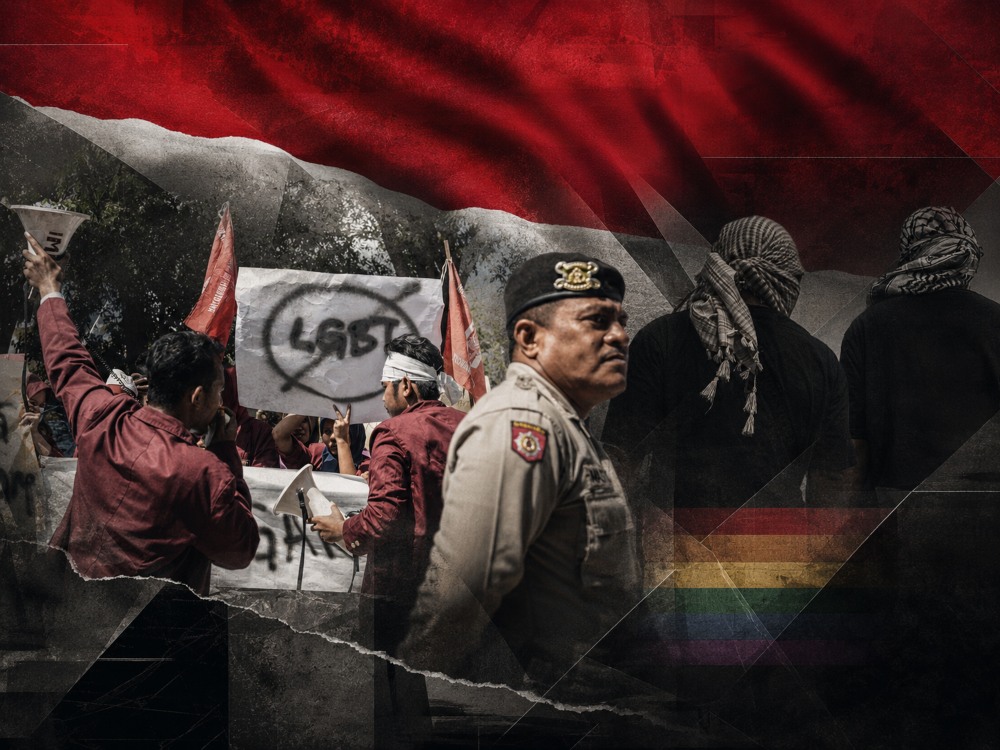
Authorities have also repeatedly raided private gatherings involving people perceived to be LGBTQ+, while activists say social media groups and queer communities are increasingly monitored.
Human Rights Watch has documented discriminatory treatment of LGBTQ+ students at universities, while community organisations, healthcare providers and human rights defenders have reported harassment, intimidation and doxxing.
Hundreds Affected In Just Three Weeks
Arus Pelangi and the Kami Berani Coalition documented 23 cases affecting 201 LGBTQ+ people between 16 July and 5 August 2026.
That follows 94 cases of violence involving 141 victims recorded across 2024 and 2025.
Recent incidents have included mob attacks against trans women, raids on private gatherings and online campaigns encouraging people to identify and target those perceived to be queer or gender-diverse.
Rights groups warn that the real scale of the violence may be significantly higher because many victims do not feel safe reporting attacks to authorities.
‘LGBTQ Culture’ Listed As A National Threat
In October 2025, President Prabowo Subianto signed Presidential Regulation No. 111/2025 on Indonesia’s General National Defence Policy for 2025–2029.
The document lists the “spread of LGBTQ culture” among a range of non-military threats.
ILGA Asia says placing LGBTQ+ identities and expression within a national-security framework is particularly dangerous because it can make greater surveillance, exclusion and state intervention easier to justify.
“When a state places the ‘spread of LGBTQ+ culture’ within its national defence doctrine, it crosses a dangerous line,” ILGA Asia executive director Henry Koh said.
Indonesia’s Government has rejected claims that the regulation targets LGBTQ+ people themselves, saying it concerns ideas or cultural influences it believes could affect national values and resilience.
It also says the policy does not authorise discrimination or violence.
Rights groups argue that, in practice, separating “LGBTQ culture” from LGBTQ+ people and their relationships, communities and expression is extremely difficult.
Anti-LGBTQ+ Policies Expand Beyond Defence
The defence policy has also been followed by moves in other parts of government.
In July, the Ministry of Religious Affairs began developing educational material intended to prevent what it describes as the “spread of LGBTQ culture” through religious education, counselling and public outreach.
Meanwhile, the Indonesian Ulema Council has been developing proposals that could seek broader criminal penalties relating to same-sex behaviour and LGBTQ+ advocacy.
For activists, these developments point to a wider institutional shift rather than a single isolated policy.
ILGA Asia Calls For Reversal
ILGA Asia is calling on the Indonesian Government to remove the reference to “LGBTQ culture” from its national defence policy and review laws and regulations that enable discrimination.
The organisation has also urged authorities to investigate vigilante attacks, harassment and violence against LGBTQ+ people and human rights defenders.
It says the Government and Parliament should reject any proposal to criminalise consensual same-sex relationships or LGBTQ+ human rights advocacy.
For Indonesia’s queer communities, the immediate concern is that prejudice is increasingly being reflected not only in social attitudes, but in official state policy.