









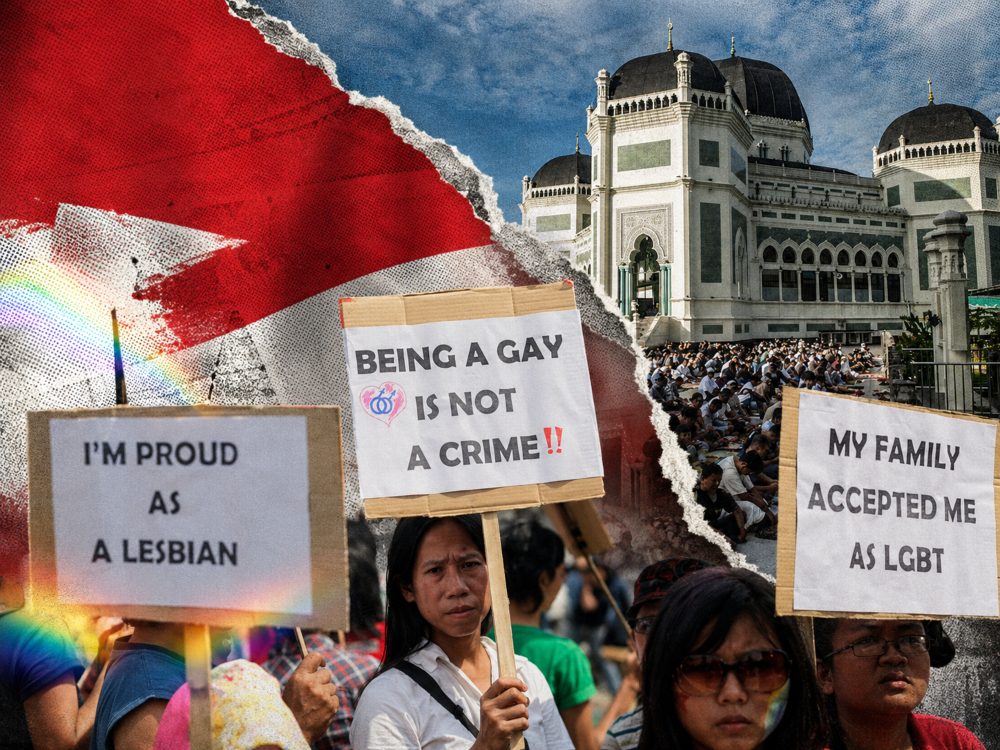
Indonesia has formally classified the “spread of LGBTQ culture” as a non-military threat under its national defence policy, prompting human-rights groups to warn that the language could further legitimise discrimination against queer and trans people.
Presidential Regulation No. 111 of 2025, signed by President Prabowo Subianto on 24 October last year, sets Indonesia’s General National Defence Policy for 2025 to 2029.
Within its section on social and cultural threats, the policy includes the “spread of LGBTQ culture” alongside issues including terrorism, radicalism, human trafficking and drug abuse.
The regulation has been in force for almost a year, but attracted significantly wider attention in 2026 as anti-LGBTQ+ political and religious campaigning intensified across the country.
For Australians, the development is particularly close to home.
Indonesia is one of Australia’s nearest neighbours, with the Indonesian island of Roti lying less than 150 kilometres from the Australian territory of Ashmore Reef.
Amnesty Warns Of ‘Systematic Discrimination’
Amnesty International Indonesia has condemned the regulation and called for it to be repealed.
Executive director Usman Hamid said categorising the spread of LGBTQ+ culture as a state threat placed already marginalised communities in an increasingly dangerous position.
“By classifying the spread of LGBTQI+ culture as a non-military threat to the state and placing it within the same category as terrorism, separatism and radicalism, this regulation institutionalizes systematic discrimination against already marginalized people,” Hamid said.
He warned that the policy could encourage harassment and discrimination from both authorities and private individuals.
Human Rights Watch has separately documented an increase in harassment of LGBTQ+ university students during 2026, as well as restrictions on student organisations and media discussing sexual and gender diversity.
University Pride Post Sparks Backlash
One of the controversies that brought the regulation into greater public view involved the University of Indonesia.
During Pride Month, the Student Executive Board of the university’s Faculty of Psychology published material explaining that homosexuality is not considered a mental disorder.
That position reflects longstanding medical and psychological consensus internationally.
The university later distanced itself from the student organisation’s post, saying it did not represent the institution’s official position, while the material was subsequently removed amid public backlash.
Amnesty said the episode demonstrated how the defence regulation could have a chilling effect on academic discussion and freedom of expression.
Hamid argued that sharing evidence-based information about sexuality should not be treated as a national-security concern.
Islamic Council Pushes For New Criminal Law
The controversy has also coincided with efforts by the Indonesian Ulema Council, known as MUI, to develop proposed legislation targeting LGBTQ+ expression and advocacy.
In June, the influential Islamic organisation announced it was preparing an academic paper and draft legislation seeking criminal penalties related to what it describes as the promotion of LGBT behaviour.
The proposal has not become law.
MUI has said it wants the draft considered for inclusion in Indonesia’s national legislative programme, while some politicians have expressed openness to discussing it.
Human-rights organisations have strongly opposed the proposal.
Amnesty has warned that criminalising LGBTQ+ advocacy or expression would further restrict freedom of speech and association.
LGBTQ+ Rights Already Under Pressure
Indonesia does not have comprehensive national anti-discrimination legislation specifically protecting people because of their sexual orientation or gender identity.
Human Rights Watch says at least six national laws or regulations currently discriminate against LGBTQ+ people, alongside more than 45 discriminatory regional regulations.
The legal position also varies significantly across the country.
Aceh province, which operates a local Sharia criminal code, explicitly criminalises consensual same-sex sexual activity and has imposed public caning as punishment.
Indonesia’s new national Criminal Code, which came into effect in January 2026, also criminalises sex outside marriage under certain circumstances.
Because same-sex couples cannot legally marry in Indonesia, human-rights organisations have warned those provisions can disproportionately affect LGBTQ+ people.
A Growing Climate Of Pressure
Human-rights groups say the significance of Presidential Regulation No. 111 goes beyond the wording of a single policy document.
By placing LGBTQ+ culture within Indonesia’s national-defence framework, critics argue it gives official legitimacy to the idea that queer visibility itself poses a danger to society.
Amnesty has also documented intimidation and attacks against LGBTQ+ people and student activists, while calling on authorities to protect freedom of expression and association.
“We urgently call upon the Indonesian government to repeal this regulation and uphold its constitutional mandates and the international human rights treaties it has ratified,” Hamid said.
For LGBTQ+ Indonesians, the immediate concern is not simply what the regulation says on paper.
It is what political leaders, institutions and members of the public may believe it gives them permission to do.