











The Labour leader tells YOUR EX’s Oliver Hall why he believes New Zealand politics has taken a step backwards for rainbow communities, how he would handle coalition partners and what he wants to change if he returns to power
“We’ve seen more overt attacks on the rainbow community, particularly the trans community, which has been totally inexcusable. We’re a better country than that.”
Three years after YOUR EX last interviewed Chris Hipkins, the former Prime Minister is reflecting on what has changed for rainbow New Zealanders. While he remains optimistic about the country’s broader social attitudes, he believes the political environment has become considerably more hostile.
“New Zealand is still making progress towards being a more respectful, more inclusive society, but our politics has been going in the opposite direction.”
“I don’t think that’s actually reflective of New Zealand’s overall societal attitudes. We are a pretty open, inclusive, respectful country. But there’s an ugliness to the way this is playing out in politics at the moment that feels like a big step backwards.”
When we spoke before the previous election, Hipkins identified protecting the rights rainbow New Zealanders had fought to secure as a central priority. That concern remains, but he now sees preventing hostility towards rainbow communities from gaining further political traction as the more pressing challenge.
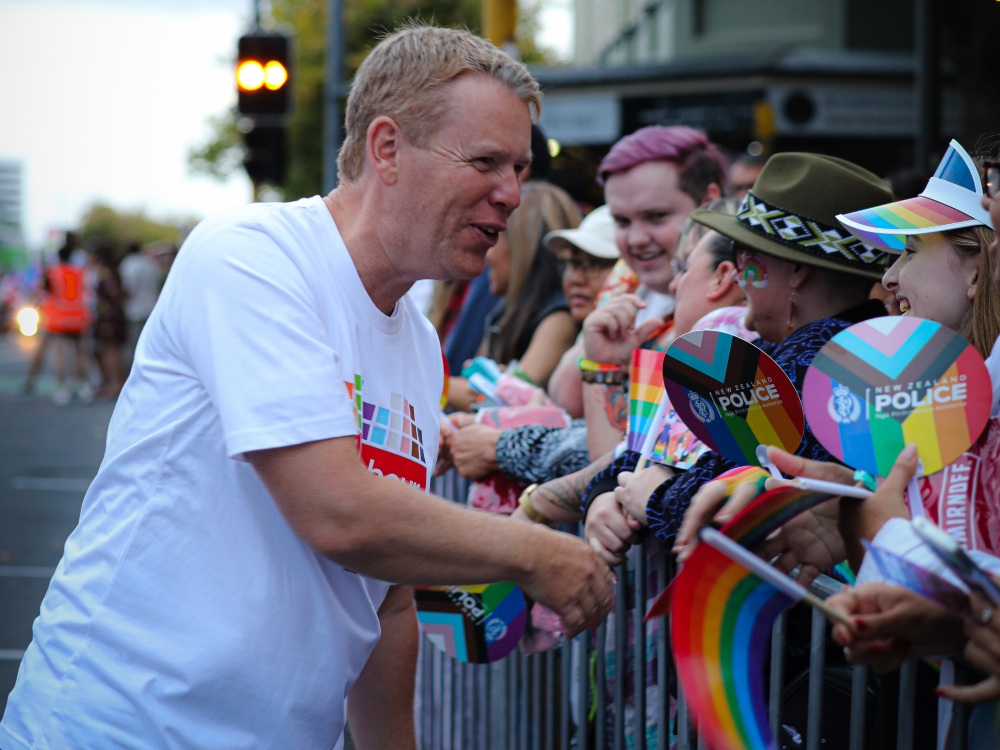
“The bigger priority is not allowing some of the minority voices who are trying to preach a very ugly politics to get more traction on those issues, and not allowing that to become a source of division.”
One organisation that has attracted attention through its protests against rainbow events is Destiny’s Church. I ask whether the organisation could lose its tax-exempt status under a future Labour government.
“We can’t ban organisations like that, but certainly we have no sympathy for Brian Tamaki and his thugs.”
“As to whether they should be a charity, that’s a very real and fair question. That’s really one for the IRD.”
For Hipkins, much of the responsibility for the current political climate lies with the National Party and the decisions it has made while governing alongside ACT and New Zealand First.
When asked whether National should have replaced Christopher Luxon as leader, he suggests a change at the top would do little to address what he sees as the root of the current government’s issues.
“Their problems are more deep-seated than just who their leader is, it’s the fact they’ve let David Seymour and Winston Peters put a whole lot of divisive issues onto the agenda.”
Hipkins is particularly critical of Peters, whose long parliamentary career has included working alongside prominent rainbow politicians such as Georgina Beyer, Tim Barnett and Grant Robertson.
Asked whether Peters’ current approach to rainbow issues reflects his personal convictions or an attempt to attract particular voters, Hipkins questions whether anyone can confidently distinguish between the two.

“You never know with Winston Peters.”
“He focuses on carving out whatever vote share he can. He only ever needs to get a minimum of 5%, and then whatever he can get on top of that, he’ll carve off any voter segments that he can.”
“If attacking the rainbow community gets him there, if attacking immigrants gets him there, if attacking vaccination gets him there, he’ll hoover up any of those votes that he can possibly get his hands on.”
But with Labour potentially needing the support of other parties to govern, Hipkins could find himself facing his own difficult coalition negotiations.
What would he do differently if a prospective coalition partner wanted to pursue policies he considered divisive?
“My key priorities for the election campaign are cost of living, jobs, health and homes, and that will be my focus in government as well.”
“I’ll work together with other parties to achieve those things because that’s what you have to do under MMP. But I’m not going to let the smaller parties force issues onto the agenda where there isn’t public support for that.”
He cites ACT’s Treaty Principles Bill as an example of a policy he believes should not have proceeded, before returning to the influence of New Zealand First.
“Winston Peters, in my view, doesn’t have the broader public support for his war on the rainbow community, and yet the National Party have stood idly by and allowed that to happen.”
It raises an important question about how much power a prime minister can realistically exercise over smaller coalition partners, particularly when their parliamentary seats are essential to maintaining a majority.
“Under MMP, if you can’t get a majority for what you’re trying to do, the status quo should prevail.”
“If the National Party had just said no to a lot of the crazier ideas that ACT and New Zealand First had been putting forward, where were they ultimately going to go? They were never going to support a government on our side of the aisle.”
“I’m not afraid of saying no in government where we need to do that, where there isn’t a public mandate for changes that are being proposed.”
Beyond the question of what a future Labour government might refuse to do, Hipkins identifies education as an area where he wants to revisit previous approaches.
During his time as Minister of Education, responsibility for the health curriculum was delegated to his associate minister, New Zealand First MP Tracey Martin.
“I actually think she did a great job of coming up with a health curriculum that was very focused on the rights of every individual.”
“Concepts like consent were in there. Very important issues were being properly addressed: respect, diversity and inclusion were all being well canvassed.”
Hipkins believes the changes of the past three years have taken the curriculum in the wrong direction and wants to return to an approach that addresses the needs of all young people, including their ability to develop healthy relationships.
For him, consent education is an important part of that.
“There’s been a traditional view around our education system for some time now that issues of consent are issues for parents to teach their kids about and for nobody else to do that.”
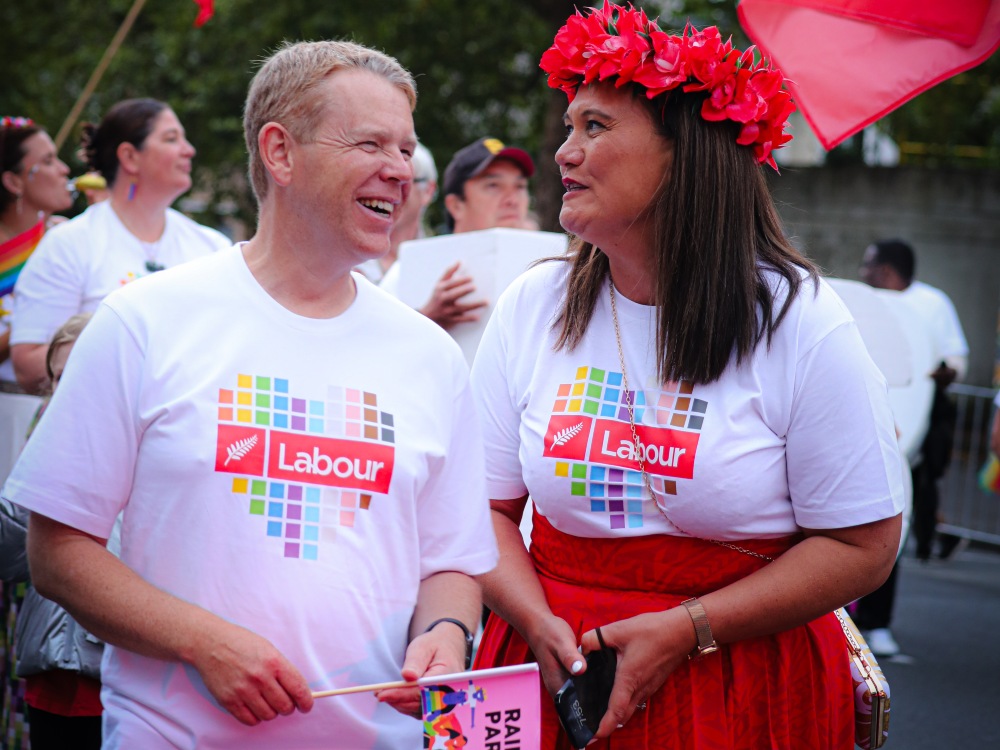
“I’ve long since moved beyond that in my own views. It’s not the sort of thing that should be left to chance.”
He also identifies surrogacy law reform as something he wants to pursue if Labour returns to government, describing the current legislation as an area that “desperately needs modernisation”.
Having already experienced the pressures of leading New Zealand, what makes Hipkins want another opportunity to be Prime Minister?
His answer moves beyond the political disputes that have dominated our conversation to the wider challenges facing the country.
“Because New Zealand can be so much better than we are now. We’ve got so much opportunity here, and yet I look at families struggling to pay their bills. I look at people not able to access the healthcare that they really desperately need. I look at young New Zealanders just giving up and leaving the country, in very high numbers now.”
“We’re such a better country than the one that this government thinks we are.”
Chris Hipkins, Labour Party, Rainbow Communities, LGBTQ New Zealand, Trans Rights, Winston Peters, David Seymour, Destiny Church, Sexuality Education, New Zealand Election
Focus keyphrase:
Meta description: