










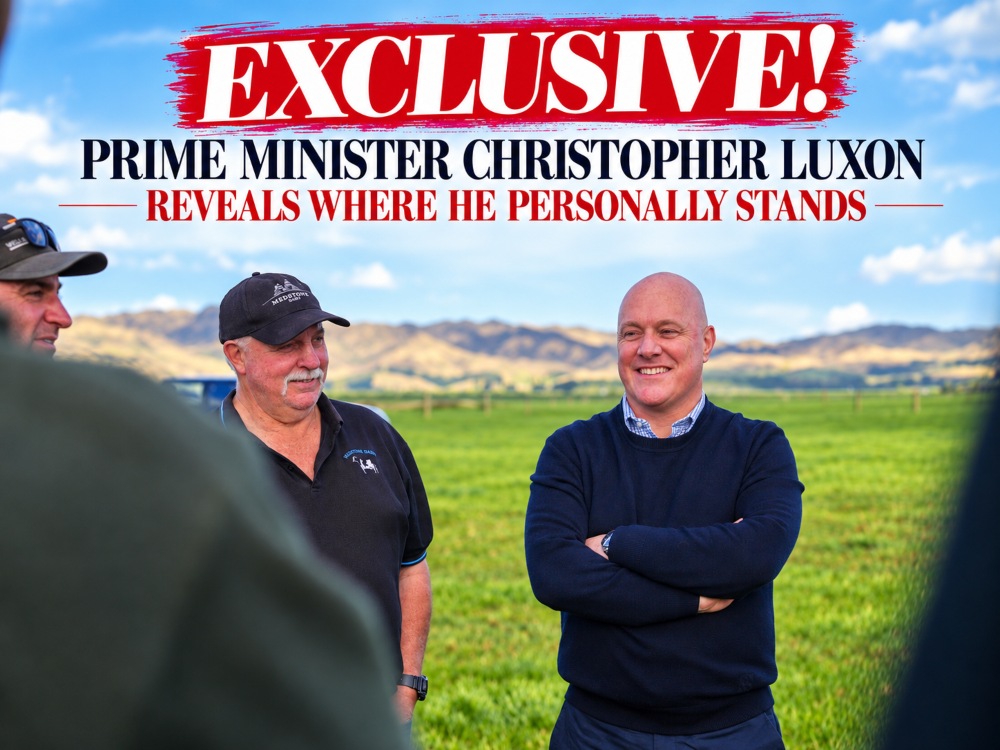
The PM tells YOUR EX’s Oliver Hall why sexuality should not be the sole reason anyone chooses their vote, where he personally stands on defining women and men in law, and why he wants rainbow New Zealanders to judge his Government on the bigger picture.
Christopher Luxon knows there are rainbow New Zealanders who are comfortable voting centre-right on the economy, taxation or law and order, but considerably less comfortable with some of the positions advanced by his coalition partners.
His message to them is direct.
“Sexuality shouldn’t be the sole reason by which you choose your vote.”
The Prime Minister argues that issues including inflation, interest rates, economic growth, education and healthcare should be at the forefront of New Zealanders’ minds, regardless of their sexuality.
His preferred solution to tensions within the current coalition Government is also straightforward.
“My ideal scenario is to have ministers that are all National Party ministers at that table and not have to go into coalition government with anybody.”
MMP, of course, rarely works that neatly.
“There are a lot of things I don’t agree with my coalition parties on. But I don’t get to run the country in a first-past-the-post system.”
Luxon says the parties find common ground where they can, while ACT and New Zealand First continue advocating positions National may not share.
But when YOUR EX asks about New Zealand First’s Legislation (Definitions of Woman and Man) Amendment Bill, the distinction becomes less clear.
The bill proposes inserting default definitions of “woman”, “female”, “man” and “male” into the Legislation Act. All 48 National MPs joined ACT and New Zealand First in supporting it at first reading in May, sending it to the Social Services and Community Committee, where it remains.
Luxon says National supported the first reading because MPs should hear from the public before making another decision.
“It is a highly sensitive issue. There are arguments and views and positions across all of New Zealand, held on all sides of that debate.”
“We supported that to first reading because we think a select committee process, hearing from the public and listening really carefully, is important.”
So does he personally want the bill to become law?
“I want to listen to the select committee because I think there are arguments on all sides of it.”
Then comes a clearer indication of where the Prime Minister himself sits.
“Personally, I lean more into having some definition around that,” he confirms, in an answer that may disappoint many trans New Zealanders.
When National supported ACT’s Treaty Principles Bill at first reading, Luxon had already made clear his party would not support it at second reading. No equivalent commitment has been made over the Definitions of Woman and Man Bill.
When YOUR EX asks whether that means National could potentially support the substance of this bill, Luxon is candid.
“There will be support across the National Party for the bill as well. I want to be upfront about that.”
What he does not do is commit National as a caucus to supporting the legislation beyond select committee. The bill itself currently defines a woman as “an adult human biological female” and a man as “an adult human biological male”, with those definitions intended to apply across legislation unless another Act says otherwise.
When YOUR EX last interviewed Luxon, before he became Prime Minister, he said that if either of his children came out, he would want them to feel safe, be themselves and know they had his love and support.
So what would he now say, as Prime Minister, to a young transgender person feeling anxious about the political conversation happening around them?
“I’ve actually met with young transgender people, and a lot of what we’ve tried to do is to say, look, we know that’s an incredibly difficult path.”
Luxon points particularly to Government investment in mental health and says he wants people from different communities and perspectives to feel respected.
“I want them to know that people coming from all sorts of different perspectives across New Zealand and communities are well respected.”
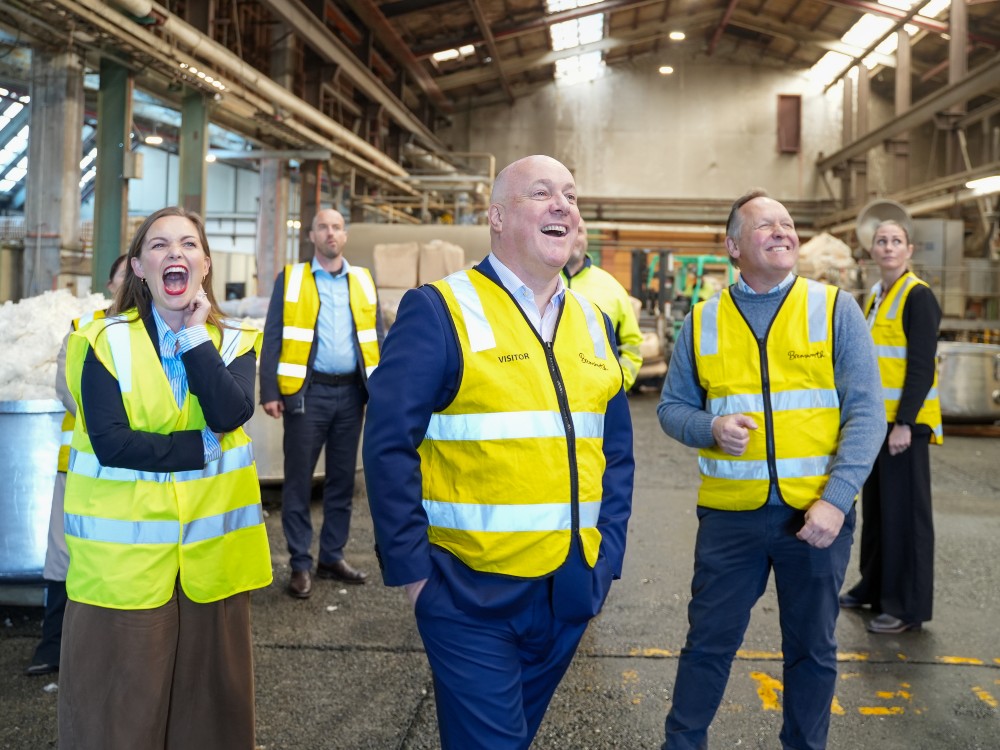
Luxon points out there are also rainbow issues where he sees room for further reform.
Surrogacy law has long presented additional complications for some gay male couples wanting to become parents. Parliament is already considering the Improving Arrangements for Surrogacy Bill, which the Health Committee unanimously recommended be passed when it reported the bill back in March.
Asked whether reform is something he could commit to progressing if National returns to government, Luxon sounds receptive.
“There’d be quite a lot of support across Parliament for that, and the more we can do in a bipartisan sense around issues like surrogacy would be really positive.”
“I know there’d be quite a lot of appetite in my party to explore that further.”
Luxon’s broader pitch is that voters should look at his Government in its entirety rather than through the prism of a single issue.
He also believes politics itself has become increasingly polarised, fuelled partly by social media and an online media business model that rewards outrage.
When I ask whether the public sees the real Christopher Luxon, he does not seem particularly interested in fighting over his media image.
“I haven’t changed. How the media portrays me or perceives me is up to them to deal with.”
Instead, he returns to the optimism that underpins much of his political pitch.
“The world has gone to chaos. It’s absolutely volatile. It’s uncertain. It’s completely out of control at the moment. That’s because we’re at an inflection point in global history again, and we will work our way through that in due course. But that’s an opportunity for us to strengthen New Zealand, where we sit in the world, and the opportunities we have.”
“Why don’t we change our mindset to a positive one and say, what’s possible?”
“Let’s find the 70% common ground where we can try and unite around some things, actually get them delivered for people and get better results.”
That optimism extends to artificial intelligence.
After a lengthy discussion about technological disruption, job losses and the possibility of AI creating new opportunities for New Zealand, I ask the obvious follow-up.
‘So you don’t think AI is going to wipe us out in the next decade?’
“No, I don’t, I don’t think so,” he replies, briefly tripping over the words before returning to safer territory.
“I really do think there’s much upside to it for New Zealand and our economy.”
Perhaps optimism is easier when you have more hours available in the day than most of us.
Explaining that improving the country for New Zealanders is what keeps him motivated, Luxon tells YOUR EX: “That’s what makes me bounce out of bed at 4.30 every day.”
4.30am! What time do you get to bed? I ask.
“Last night it was 1.30 or 12.30 by the time I got back and finished work. It varies, but I probably get four or five hours’ sleep a night, most days. That’s all I need.”
For Luxon, four or five hours’ sleep may be enough. Whether his promise of finding 70% common ground is enough for voters is another question entirely.