










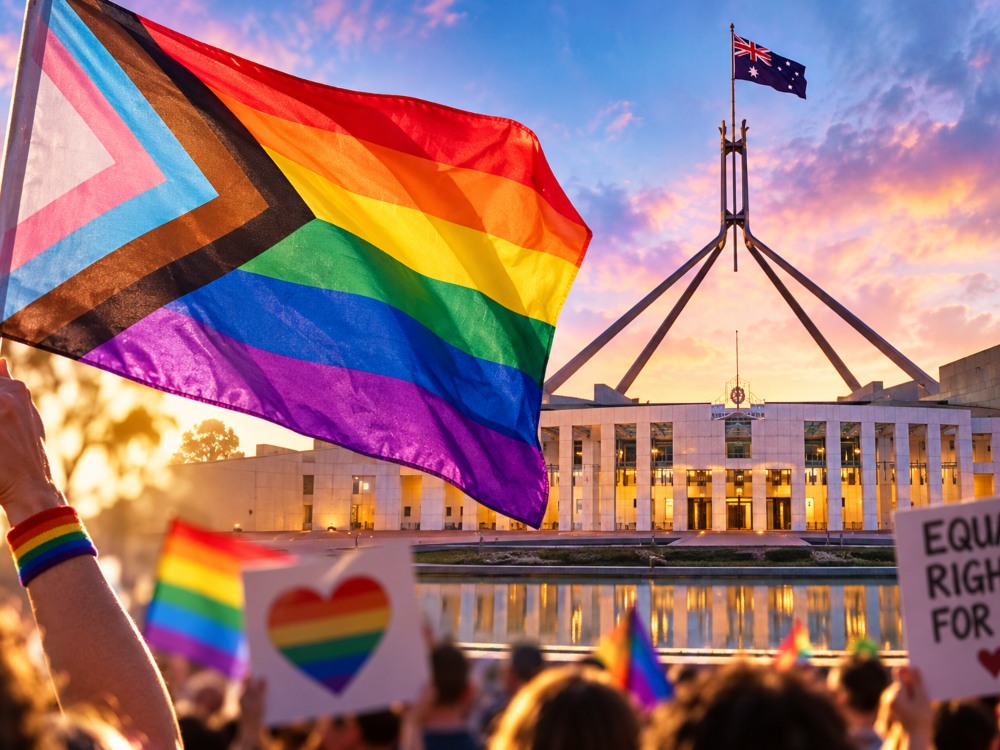

Independent MP Allegra Spender has introduced a federal bill aimed at stopping religious schools from discriminating against LGBTQ+ students and staff — but while Equality Australia is backing the proposal, Just.Equal Australia says it does not go far enough.
A new attempt to close long-standing exemptions allowing discrimination in Australian religious schools has divided LGBTQ+ advocates over whether reform should focus on education or go much further.
Independent MP Allegra Spender introduced the Sex Discrimination and Fair Work Amendment (Equality in Treatment in Religious Schools) Bill 2026 into the House of Representatives on Monday 12 October.
The bill would amend the Sex Discrimination Act and Fair Work Act, significantly narrowing federal exemptions that currently allow some religious educational institutions to treat people differently on grounds including sexual orientation, gender identity, marital or relationship status, pregnancy and sex.
Its central aim is straightforward: LGBTQ+ students should not be expelled, excluded from opportunities or otherwise discriminated against because of who they are, and staff should not lose their jobs for the same reason.
But the proposal would still preserve some scope for religious preference in particular roles genuinely connected to a school’s religious character.
What would Spender’s bill actually change?
The bill targets section 38 of the Sex Discrimination Act, which provides specific exemptions for religious educational institutions.
Under Spender’s proposal, schools would lose the broad ability to discriminate against students on protected grounds including sexuality and gender identity.
The bill would also narrow employment exemptions, allowing religious preference in more limited circumstances, such as certain positions involving substantial religious leadership, teaching or practice.
It would additionally strengthen protections for people discriminated against because of their association with someone who has a protected characteristic — for example, a child with same-sex parents.
The proposal follows recommendations from the Australian Law Reform Commission, which previously concluded that religious schools could maintain their religious ethos without retaining such broad anti-discrimination exemptions.
Equality Australia backs the bill
Equality Australia has welcomed Spender’s proposal and is urging the federal government to support it.
CEO Anna Brown said the existing carve-outs leave LGBTQ+ students and staff exposed to treatment that would be unlawful in many other settings.
“A gay student should not have to hide who they are to have a shot at leadership or live in fear of being expelled,” Brown said.
She also highlighted protections for women, including people who are pregnant outside marriage.
“These are basic questions of fairness,” she said.
Equality Australia argues the bill has a potential route through Parliament if it secures Labor support alongside the Greens and other MPs.
That outcome is not guaranteed. The bill is a private member’s bill, and after Spender introduced it on 12 October, debate was adjourned.
‘No young person should have to experience that’
Equality Australia also highlighted the experience of James Elliot-Watson, who attended a Christian school in Sydney.
Elliot-Watson said that after coming out as gay as a teenager, he was told he could not become a prefect, encouraged not to tell other people and referred to counselling intended to change his sexuality.
“My school treated me as less worthy of opportunities, acceptance and patience simply because of who I am,” he said.
“No young person should have to experience that.”
For advocates backing Spender’s bill, stories such as his demonstrate why the protections matter even if institutions argue that formal expulsions or dismissals are rare.
Just.Equal says the reform is too narrow
Other LGBTQ+ advocates have welcomed the fact that the issue is back before Parliament while questioning why the proposal stops at schools.
Just.Equal Australia argues that federal religious exemptions can also affect LGBTQ+ people in faith-based hospitals, aged-care facilities, disability services, employment agencies and other organisations receiving Commonwealth funding.
President Brian Greig said the bill was a useful intervention but should address what his organisation sees as the broader problem.
“The archaic religious exemptions that allow LGBTIQA+ people to be excluded, disadvantaged and stigmatised in Commonwealth-funded services extend far beyond schools,” Greig said.
Just.Equal is calling on Spender either to broaden the legislation itself or ensure any parliamentary inquiry looks at religious exemptions across other services.
Greig also questioned whether the government would allow the bill to progress to a vote.
His prediction that it will not pass is an advocacy group’s assessment of the politics, rather than an established outcome.
The broader religious-freedom debate
Religious organisations have long argued that faith-based schools require some freedom to preserve their ethos, including the ability to employ people who support and model their beliefs.
LGBTQ+ advocates counter that religious freedom should not include broad permission to disadvantage students or staff because of sexuality, gender identity or other protected characteristics.
Spender’s bill attempts to draw a line between those positions.
Rather than removing every religious consideration from school employment, it would preserve narrower faith-based preferences for specific roles while stripping away broader exemptions that permit discrimination unrelated to the genuine requirements of those positions.
That distinction will likely sit at the centre of any future parliamentary debate.
Years of unfinished reform
The issue has remained unresolved federally for years.
Labor committed before the 2022 election to reform anti-discrimination laws so LGBTQ+ students and staff in religious schools would receive stronger protections.
Equality Australia says that commitment remains unfulfilled.
Spender herself has repeatedly supported reform, including telling Equality Australia during the 2025 election period that she wanted section 38 of the Sex Discrimination Act repealed or substantially changed.
Her new bill now puts a concrete legislative proposal back before Parliament.
Whether MPs ultimately support that particular model — or decide that reform should go further — remains unresolved.
For LGBTQ+ Australians affected by religious-school exemptions, the disagreement between advocates is less about whether discrimination should continue and more about how much of the existing legal framework Parliament should change at once.