






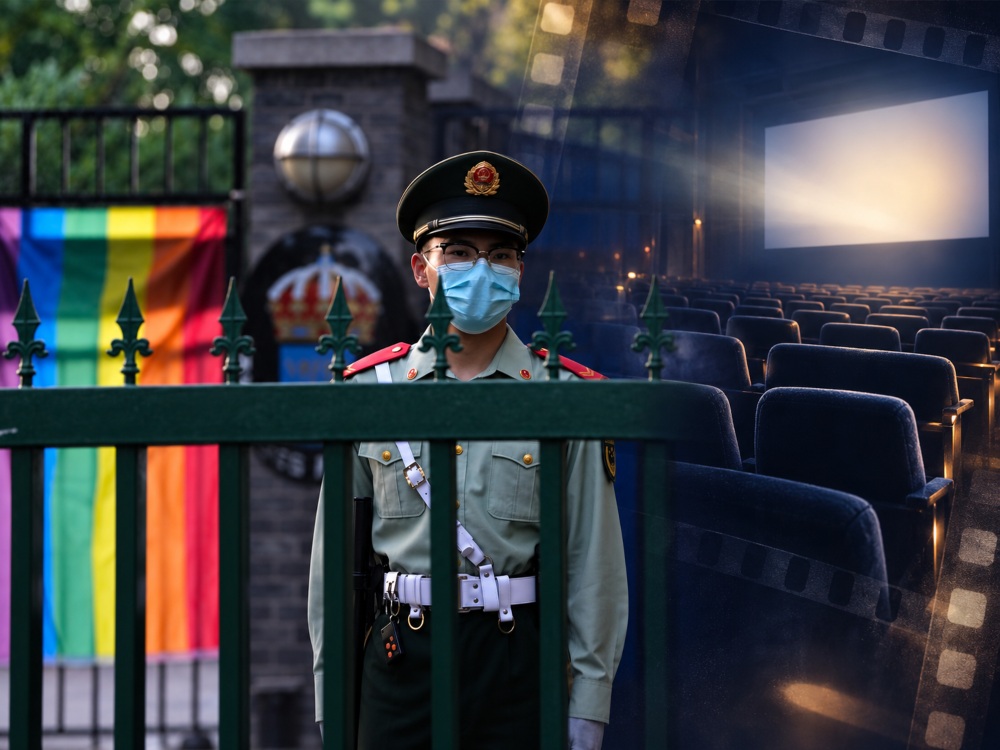

One of China’s longest-running LGBTQ+ film festivals has been cancelled just hours before opening, following reports of sustained pressure from authorities. The decision has raised fresh concerns about censorship and the shrinking space for rainbow communities to share their stories.
The Beijing Queer Film Festival, also known as Love Queer Film Week, was scheduled to begin on Friday 30 October 2026, bringing together LGBTQ+ filmmakers, audiences and advocates for a celebration of queer cinema.
However, organisers announced the cancellation on Instagram late on Thursday evening, leaving filmmakers and supporters disappointed.
“We regret to inform you that the Love Queer Film Week has been cancelled,” organisers wrote.
“We sincerely apologise for any inconvenience and disappointment that the cancellation of this event may cause to those who planned to participate or had been looking forward to the film week.”
According to reporting by The Guardian, police had allegedly increased pressure on festival organisers through repeated telephone calls in the weeks leading up to the event.
While organisers did not publicly explain the reason for the cancellation, the reported harassment has intensified concerns about the treatment of independent filmmakers and LGBTQ+ organisations in China.
A Queer Film Festival With 25 Years Of History
Founded in 2001 by students at Peking University, the Beijing Queer Film Festival has spent 25 years providing a rare public platform for LGBTQ+ storytelling in mainland China.
Originally established as the China Homosexual Film Festival, the event evolved into an internationally recognised celebration of films exploring sexuality, gender identity, relationships and queer experiences.
Over the years, the festival has featured independent films from China and overseas, creating opportunities for filmmakers to discuss subjects rarely represented in mainstream Chinese media.
It has also faced repeated challenges from authorities.
Earlier editions experienced cancellations, venue changes and restrictions, forcing organisers to adapt how and where screenings were held.
Despite these obstacles, the festival developed a loyal following and continued attracting growing interest from volunteers, filmmakers and audiences.
According to The Guardian, the festival received approximately 200 volunteer applications in 2025, four times the number received the previous year.
Several international filmmakers whose work had been selected for this year’s programme had reportedly already travelled to China before the cancellation was announced.
‘A Beacon For LGBT Resilience’
Academics and human rights advocates say the cancellation represents a significant loss for China’s LGBTQ+ cultural community.
Hongwei Bao, a professor of Chinese studies at the University of St Andrews who specialises in LGBTQ+ issues, described the festival as “a beacon for LGBT resilience” in China.
Speaking to The Guardian, Bao warned that shutting down the event could discourage other queer cultural organisations from holding public activities.
Film festivals provide more than entertainment. They offer opportunities for LGBTQ+ people to see their experiences represented, connect with others and participate in conversations about identity and belonging.
For communities where public discussions about sexuality and gender diversity face significant restrictions, these spaces can be particularly important.
The cancellation removes one of the country’s most established opportunities for queer filmmakers and audiences to connect through cinema.
Growing Pressure On LGBTQ+ Events In China
The festival’s cancellation comes amid wider concerns about restrictions on independent cultural organisations and LGBTQ+ advocacy under President Xi Jinping’s government.
Human rights organisations have documented increasing scrutiny of activities involving feminist movements, civil society groups and rainbow communities.
Maya Wang, Deputy Asia Director at Human Rights Watch, told The Guardian that independent film festivals are particularly vulnerable because they bring together several areas facing growing official pressure.
She said Chinese authorities have intensified their oversight of organisations operating outside government-approved structures, including LGBTQ+ groups and independent filmmakers.
The Beijing cancellation follows several similar incidents.
In June 2026, screenings of LGBTQ+-themed films at Beijing’s Institut Français, a French cultural centre, were cancelled following reported police harassment.
Human Rights Watch subsequently raised concerns about censorship of queer films and social media content around Pride Month.
The restrictions are not limited to LGBTQ+ events.
In 2014, the Beijing Independent Film Festival was shut down after authorities detained organisers and cut electricity to its venue.
More recently, an independent Chinese film festival scheduled to take place in New York in 2025 was cancelled following reported harassment linked to Chinese authorities.
These incidents have prompted concerns about the ability of Chinese filmmakers to present work independently, both within the country and internationally.
Why Queer Storytelling Matters
For LGBTQ+ communities in Aotearoa New Zealand, the cancellation highlights the importance of independent queer arts and cultural events.
Film festivals provide opportunities for rainbow and takatāpui filmmakers to share stories that may otherwise receive limited mainstream attention.
They also allow audiences to experience different perspectives on sexuality, identity, culture and belonging, including those of LGBTQ+ people living in countries where public visibility can carry significant risks.
The Beijing festival’s history demonstrates how community-led events can continue providing representation even under difficult circumstances.
Its 2023 edition, for example, screened 74 independent films from 25 countries, with discussions exploring queer identity, family relationships and community experiences.
While this year’s event will not proceed as planned, the festival’s contribution to LGBTQ+ cinema remains significant.
An Uncertain Future For Beijing’s Queer Film Community
Organisers have not announced whether Love Queer Film Week will be rescheduled or return in another format.
Beijing’s public security bureau did not provide a response when approached by The Guardian.
For now, the circumstances surrounding the cancellation remain based on reports of police pressure rather than an official explanation from organisers or authorities.
The outcome nevertheless represents another interruption to a festival that has spent a quarter of a century creating space for LGBTQ+ stories.