







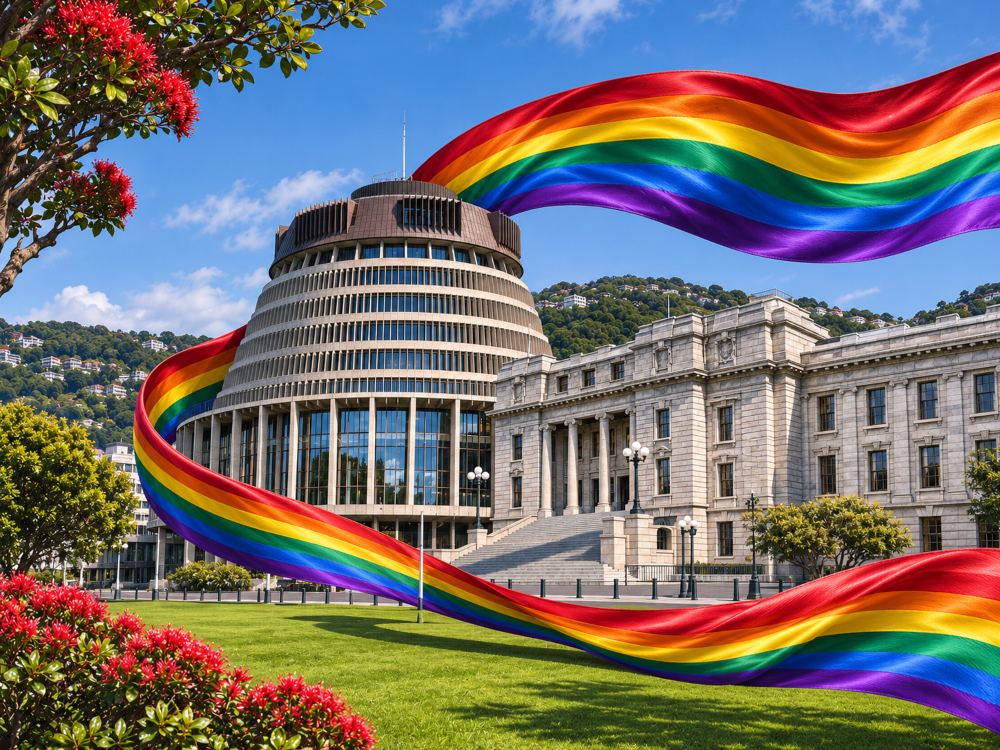

It’s election day in Aotearoa! 🏳️🌈🗳️ As New Zealand prepares to elect its next Parliament, YOUR EX looks at the key results, rainbow representation and LGBTQ+ policy issues worth watching when the votes start rolling in tonight.
New Zealanders are heading to the polls today, Saturday 7 November 2026, with voting places open from 9am until 7pm.
Once voting closes, the Electoral Commission will begin releasing preliminary results, giving the country its first indication of what the next Parliament could look like.
For rainbow and takatāpui communities, there are several things to watch beyond which party receives the most votes.
The election will help determine who represents LGBTQ+ New Zealanders in Parliament, which political parties have influence over the next Government and what happens to policies affecting healthcare, education, discrimination and community wellbeing.
But election night is only the beginning.
When Will We Know The Election Results?
The Electoral Commission will begin publishing preliminary results progressively from 7pm tonight.
Its current targets are:
- 7pm: Polls close and the first preliminary results begin appearing.
- 10pm: Results expected from approximately 50% of voting places.
- 11.30pm: Results expected from approximately 95% of voting places.
- Friday 27 November: Official election results are scheduled to be declared.
These are targets rather than guaranteed release times.
Importantly, tonight’s results will not include special votes, such as overseas votes and votes cast by people who were not on the printed roll at their voting place.
Those votes will be counted and checked during the official count.
That means a close electorate contest, a party’s final seat allocation or the fate of a candidate near the bottom of a successful party’s list could still change.
For the latest verified figures, follow the Electoral Commission’s official results website at electionresults.govt.nz.
Why The Party Vote Matters For Rainbow Representation
Under New Zealand’s Mixed Member Proportional (MMP) electoral system, voters cast two votes.
The party vote largely determines how many seats each qualifying political party receives in Parliament.
The electorate vote determines which candidate represents a particular electorate.
Both can influence the number of openly LGBTQ+ politicians elected.
Candidates who win their electorates enter Parliament directly.
Others can become MPs through their party’s list, depending on the number of seats their party wins and their position on that list.
Generally, a party needs at least 5% of the nationwide party vote or one electorate seat to qualify for parliamentary representation.
For rainbow candidates standing on party lists, even a relatively small shift in a party’s share of the vote can affect whether they enter Parliament.
That’s why it’s worth watching more than just the major parties’ overall totals.
Which Rainbow Candidates Will Make It To Parliament?
One of the key questions for LGBTQ+ communities tonight is which openly rainbow and takatāpui candidates will secure seats.
New Zealand has a history of LGBTQ+ political representation, including former MPs Georgina Beyer, the world’s first openly transgender mayor and later an openly transgender member of Parliament, and Chris Carter, the country’s first openly gay Cabinet minister.
Recent Parliaments have included politicians who publicly identify as gay, bisexual and other LGBTQ+ identities.
Tonight’s results will begin revealing how that representation could change.
For candidates contesting electorates, watch the margin between them and their nearest rivals.
For those relying on party lists, keep an eye on each party’s projected seat total and where candidates sit in the list ranking.
It is also worth remembering that LGBTQ+ representation should be measured using candidates’ publicly disclosed identities, rather than assumptions about their sexuality or gender.
The full picture may not become clear until special votes are included later this month.
What About Policies Affecting Rainbow Communities?
While representation matters, the next Parliament’s decisions will also affect LGBTQ+ people throughout Aotearoa.
Several areas of public policy have particular relevance to rainbow and takatāpui communities.
Healthcare And HIV Prevention
Access to gender-affirming healthcare, mental health support and HIV prevention services remains an important issue.
Rainbow communities continue to raise concerns about affordability, waiting times and access to inclusive healthcare.
PrEP, the medication used to prevent HIV, is one example of a service where cost and access can influence whether people receive preventative care.
The make-up of the next Government will help determine future health funding priorities and whether parties’ election commitments translate into policy.
Rainbow Rangatahi And Education
Schools are another area to watch.
Policies affecting bullying prevention, relationships and sexuality education, school sport and support for transgender and gender-diverse students can directly influence rainbow young people’s experiences.
The next Government may make decisions affecting how schools provide safe and inclusive learning environments.
Equality And Discrimination Protections
New Zealand has legal protections against discrimination, including on the grounds of sexual orientation, while questions remain about the scope and application of protections relating to gender identity.
Future decisions may involve human rights legislation, public-sector policy and how discrimination complaints are handled.
Community Funding And Wellbeing
Funding for mental health programmes, youth services, sexual health organisations and community support can also have a direct impact on rainbow New Zealanders.
These issues are not necessarily decided on election night.
They are more likely to become clearer once the next Government’s priorities, ministerial responsibilities and funding decisions are announced.
Will We Know Who Forms The Government Tonight?
Possibly — but not necessarily.
Under MMP, it is common for parties to negotiate coalition arrangements or other agreements to secure the confidence of Parliament.
The election-night results may indicate which combinations of parties have enough seats to govern.
However, the official count could change those calculations, particularly if the result is close.
Even when the likely governing parties are clear, negotiations over ministerial responsibilities and policy commitments may continue for days or weeks.
For LGBTQ+ communities, an important next step will be examining any coalition or confidence-and-supply agreements.
These documents can help show which election commitments have become priorities for the incoming Government.
They may also reveal which policies have been modified, postponed or excluded during negotiations.
A Big Night For Rainbow Aotearoa
Elections are about more than the final seat count.
They shape who participates in national decision-making and which issues receive attention during the next parliamentary term.
For rainbow and takatāpui New Zealanders, tonight provides an opportunity to track the representation of openly LGBTQ+ politicians and the political landscape in which future decisions will be made.
It’s also important not to draw conclusions too early.
An electorate lead at 8pm is not necessarily a final victory, and the number of projected list MPs may change before official results are released.
Whatever tonight’s preliminary results show, the next questions will be who makes it into Parliament, what commitments emerge from any governing agreements and how those decisions affect rainbow communities across Aotearoa.
Keep an eye on electionresults.govt.nz for official figures as they are released.