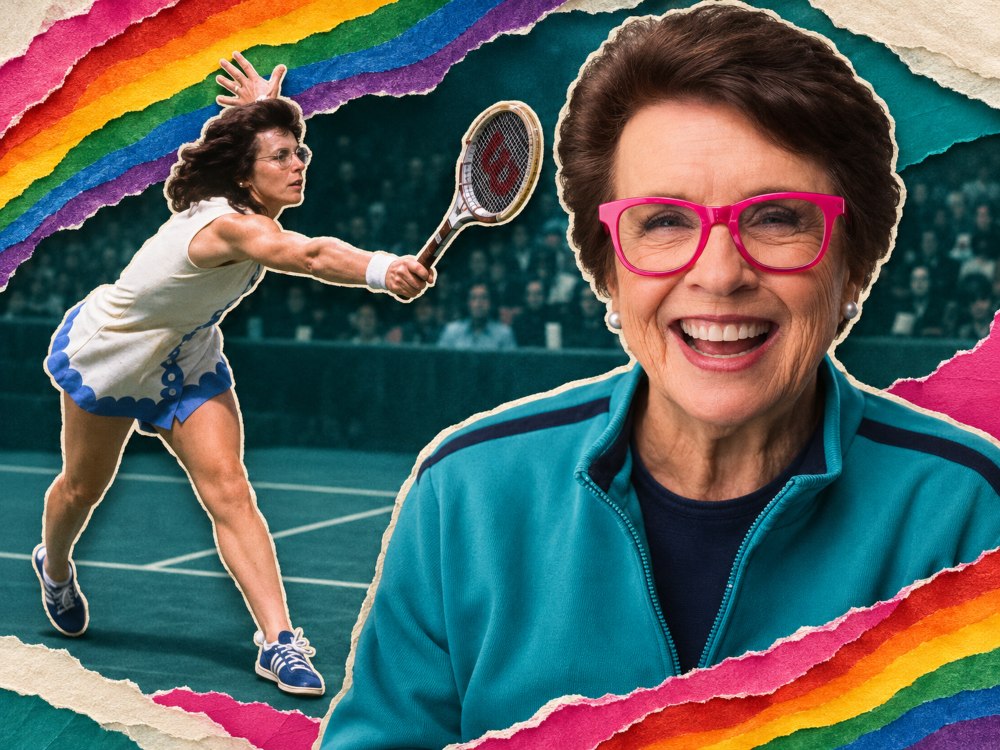
Tennis legend, LGBTQ+ trailblazer and all-round icon Billie Jean King is returning to our screens! A powerful new documentary explores the victories, personal sacrifices, and fight for equality that made her one of sport’s most influential figures.
At 82, Billie Jean King is still determined to challenge inequality, and she’s opening up about the extraordinary life that made her a sporting legend.
The 39-time Grand Slam champion is the subject of Give Me the Ball!, a new ESPN documentary that examines her remarkable career, her struggle to come to terms with her sexuality and the battles she fought to transform women’s tennis.
Directed by Liz Garbus and Elizabeth Wolff, the film features rare archive footage alongside interviews with King and some of sport and entertainment’s biggest names, including Serena Williams, Chris Evert and Elton John.
The documentary premiered at the Sundance Film Festival earlier this year and will make its US television debut on Sunday 22 November 2026.
Ahead of its release, King has also spoken candidly to The Guardian about coming out, losing lucrative endorsements and why the fight for LGBTQ+ equality remains deeply personal.
The Tennis Champion Who Changed The Game
Long before she became a global LGBTQ+ icon, Billie Jean King was challenging the sporting establishment.
Across her career, she won 39 Grand Slam titles, including 12 singles titles, and became one of the most recognisable figures in professional tennis.
But King wanted more than trophies.
At a time when women received significantly less prize money and fewer professional opportunities than their male counterparts, she helped organise a movement demanding change.
In 1970, King joined eight other players, collectively known as the Original 9, who signed symbolic US$1 contracts to establish an independent women’s professional tennis circuit.
Their decision helped lay the groundwork for the Women’s Tennis Association (WTA), established in 1973 with King as its first president.
That same year, the US Open became the first Grand Slam tournament to award equal prize money to its men’s and women’s champions.
It was a historic achievement, although equal prize money at all four Grand Slams would take several more decades.
The Battle Of The Sexes That Captivated The World
Another defining moment arrived in September 1973, when King faced former men’s champion Bobby Riggs in the legendary Battle of the Sexes exhibition match.
Riggs had publicly promoted the idea that men’s tennis was superior to women’s, turning the encounter into something much bigger than a sporting contest.
An estimated 90 million people around the world watched King defeat Riggs in straight sets.
The victory became a major cultural moment in the women’s equality movement, challenging dismissive attitudes towards female athletes.
But while King was achieving extraordinary success on court, her personal life was far more complicated.
She was struggling privately with her sexuality while navigating the pressures of fame, professional sport and her marriage to Larry King.
Those conflicting experiences are central to Give Me the Ball!, which explores the person behind the sporting legend.
Coming Out Came At A Huge Personal Cost
In her new interview with The Guardian, King reflects on the difficult circumstances surrounding her sexuality becoming public in 1981.
At the time, she was married to Larry King and had previously been in a relationship with Marilyn Barnett.
When their relationship became the subject of legal proceedings, King faced the prospect of deeply private details being exposed publicly.
She eventually confirmed the relationship during a press conference.
The consequences were immediate.
King recalled losing her endorsement deals following the revelations.
She also explained that she had previously concealed her sexuality partly because she feared sponsors would withdraw support from the emerging women’s professional tennis circuit.
For King, the pressure wasn’t only about protecting her own career. She was also concerned about the future of the opportunities she and other players had fought to create.
Looking back, she described reaching a point where she could no longer continue concealing the truth.
The experience became a defining chapter in her journey towards living openly.
Finding Love And Living Authentically
Today, King shares her life with former professional tennis player Ilana Kloss.
The couple have been together for more than four decades and married privately in 2018.
Their relationship has become an important part of King’s public identity, with both women continuing to champion equality and inclusion.
In The Guardian interview, King also reflects on the complicated path that led to her accepting her sexuality, including the lasting influence of her upbringing and family relationships.
She speaks warmly about Kloss and the life they have built together.
The couple’s work extends beyond sport.
In 2014, King and Kloss launched the Billie Jean King Leadership Initiative, which aims to address discrimination and inequality in workplaces.
Their advocacy continues to focus on creating opportunities for people who have historically faced exclusion.
Why LGBTQ+ Rights Still Matter To Billie Jean King
King has remained outspoken in support of LGBTQ+ people, including transgender communities.
In her latest interview, she acknowledged the difficult environment many transgender people currently face, while also recognising that questions about inclusion in elite sport can be complex.
She expressed hope that sporting organisations can find better ways to include transgender athletes and ensure people are treated with dignity.
Her comments reflect a wider philosophy that has guided much of her career: meaningful equality requires continuing engagement and practical action.
King has also defended the importance of dialogue with organisations and countries whose approaches to LGBTQ+ rights differ from her own, although she acknowledged the difficult questions involved.
For an athlete whose career has consistently crossed the boundaries between sport, politics and human rights, those issues remain deeply connected.
Rare Footage Of A Young Serena And Venus Williams
One of the documentary’s most fascinating elements is previously unseen footage of King working with a young Venus and Serena Williams in 1988.
The sisters were still children when they attended a tennis clinic where King offered guidance.
King recalled being impressed by Serena’s natural serving technique and encouraging her not to change it.
Serena also appears in the documentary, reflecting on the influence of the experience.
It’s a powerful reminder of the generations of athletes who benefited from King’s commitment to making tennis more accessible.
The documentary also includes rare material from the development of women’s professional tennis, the Battle of the Sexes and key moments in King’s personal life.
More Than A Tennis Legend
For LGBTQ+ and takatāpui audiences in Aotearoa, Billie Jean King’s story is a reminder of how visibility, representation and equality can intersect.
She achieved extraordinary success in a sport that did not always offer women equal opportunities.
She also experienced the consequences of being publicly identified as gay at a time when such visibility could damage an athlete’s career and livelihood.
And through it all, she continued advocating for change.
Give Me the Ball! promises to explore both the triumphs and the difficult personal experiences that shaped one of the most important figures in sporting history.