







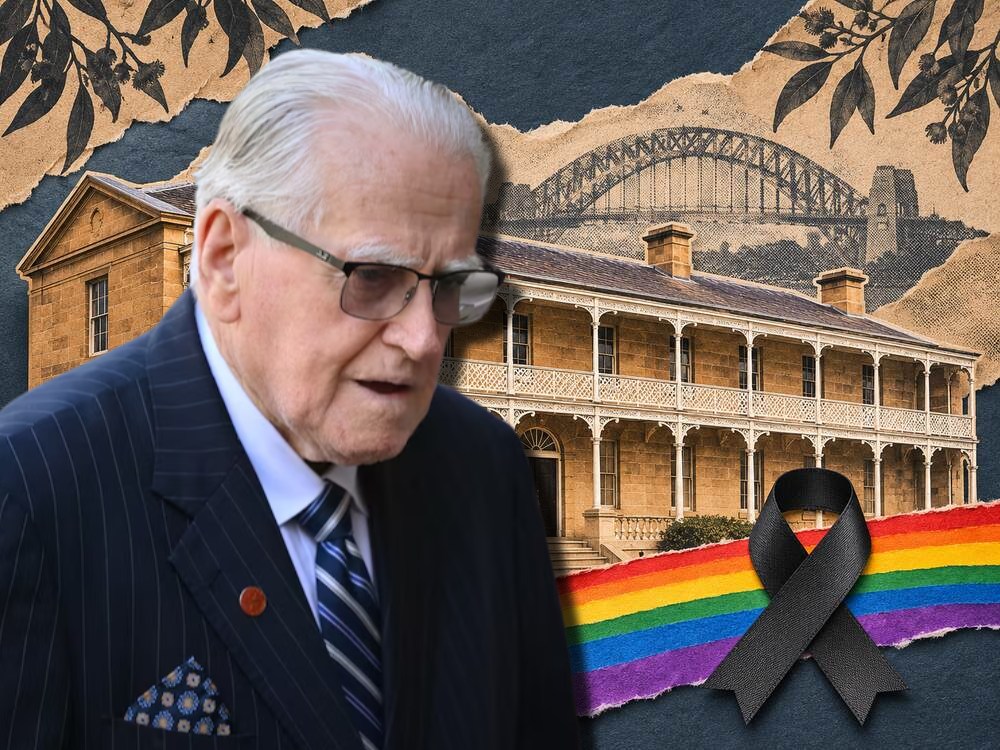

The death of longtime anti-LGBTQ+ campaigner and former New South Wales politician Fred Nile has sparked debate over whether he should receive a state funeral, with openly gay MP Alex Greenwich apologising after his request caused distress within Australia’s rainbow community.
Former New South Wales MP Reverend Fred Nile, who spent more than four decades in state politics and became known for opposing LGBTQ+ rights, died peacefully on Saturday 21 November 2026, aged 92.
His death has prompted reflections on a political career that included fierce opposition to marriage equality, same-sex parenting and Sydney Gay and Lesbian Mardi Gras.
But it has also sparked an unexpected disagreement within Australia’s rainbow community after Alex Greenwich, the independent MP for Sydney and a prominent marriage equality advocate, called for Nile to be honoured with a state funeral.
While Greenwich has highlighted Nile’s later support for some LGBTQ+ reforms, critics argue that those actions cannot erase the impact of decades of campaigning against rainbow communities.
A Political Career Marked By Opposition To LGBTQ+ Rights
Nile entered the New South Wales Legislative Council in 1981, becoming one of the state’s longest-serving parliamentarians before leaving politics in 2023.
As leader of the Christian Democratic Party, he was known for promoting socially conservative policies based on his religious beliefs.
Throughout much of his career, he campaigned against homosexuality, opposed same-sex marriage and criticised LGBTQ+ parenting.
He was also a longstanding opponent of Sydney Gay and Lesbian Mardi Gras.
Nile repeatedly called for the festival to be shut down and became particularly well known for praying for rain ahead of the annual parade.
For many LGBTQ+ Australians who lived through the 1980s and 1990s, Nile’s political campaigning formed part of a period when rainbow visibility and equality were fiercely contested.
His public comments and opposition to LGBTQ+ reforms made him a controversial figure within the community.
Why Did Alex Greenwich Call For A State Funeral?
Despite their political differences, Greenwich developed a working relationship with Nile during his final years in Parliament.
Following Nile’s death, Greenwich revealed that he had contacted NSW Premier Chris Minns to request a state funeral in recognition of Nile’s lengthy parliamentary service.
Greenwich said the two had worked together on legislation protecting First Nations cultural sites.
He also credited Nile with helping pass reforms allowing people to have historical convictions for consensual same-sex sexual activity removed from their criminal records.
The legislation helped address the consequences of laws that had criminalised gay men in New South Wales.
Greenwich said Nile had acknowledged the harm caused by his earlier campaigning and had apologised in 2022.
The Sydney MP also pointed to Nile’s support for several LGBTQ+ reforms during his final parliamentary term.
For Greenwich, those later actions demonstrated that people with very different political views could sometimes find common ground.
However, his request for a state funeral was met with criticism from people who remembered Nile’s earlier positions.
LGBTQ+ Community Members Question The Honour
NSW Greens MP Cate Faehrmann was among those questioning whether Nile’s record justified a state funeral.
Faehrmann argued that the honour should be reserved for people whose life’s work had made an exceptional contribution to the state.
She also questioned whether Nile’s later change in approach could outweigh his decades of opposition to LGBTQ+ equality.
Other community members shared their experiences of discrimination and hostility during the years when Nile was campaigning against rainbow rights.
Some argued that a state funeral could be interpreted as official recognition of a political legacy that included significant harm to LGBTQ+ communities.
The criticism reflects a wider disagreement about how public figures with complicated political records should be remembered.
Greenwich Apologises For Causing Distress
Following the criticism, Greenwich issued a public apology acknowledging that his initial comments had upset members of the LGBTQ+ community.
He said he had heard from people who shared their experiences of Nile’s political campaigns during the 1980s and 1990s.
Greenwich also acknowledged that Nile’s later support for some reforms did not erase the discrimination and hurt associated with his earlier actions.
However, he maintained his belief in recognising Nile’s parliamentary service and did not withdraw the request for a state funeral.
The apology highlighted the tension between acknowledging changes in someone’s views and recognising the lasting consequences of their earlier public positions.
A Complicated Political Legacy
Nile’s later parliamentary career included cooperation with politicians he had once strongly opposed.
His involvement in legislation addressing historical convictions for consensual same-sex activity was welcomed by Greenwich.
However, Nile’s earlier campaigning against marriage equality, Mardi Gras and same-sex parenting remains a significant part of his public record.
His death has therefore prompted different assessments of his contribution to New South Wales.
Some former parliamentary colleagues have praised his commitment to public service and his willingness to work across political differences.
Others have emphasised the effect his campaigning had on LGBTQ+ people and questioned whether a state funeral is an appropriate form of recognition.
Will Fred Nile Receive A State Funeral?
At the time of reporting, the New South Wales Government had not announced a decision on whether Nile would receive a state funeral.
The request remains with Premier Chris Minns.
Any announcement would determine whether Nile receives an official state service or whether arrangements proceed privately through his family.
For LGBTQ+ communities in Australia and Aotearoa, the debate raises broader questions about public memory, accountability and how societies recognise the legacies of political figures whose records include both opposition to equality and later cooperation on reform.
Fred Nile’s death closes a lengthy chapter in New South Wales politics, but the debate over how his life should be officially commemorated shows that the impact of his campaigns on LGBTQ+ communities remains deeply felt.