








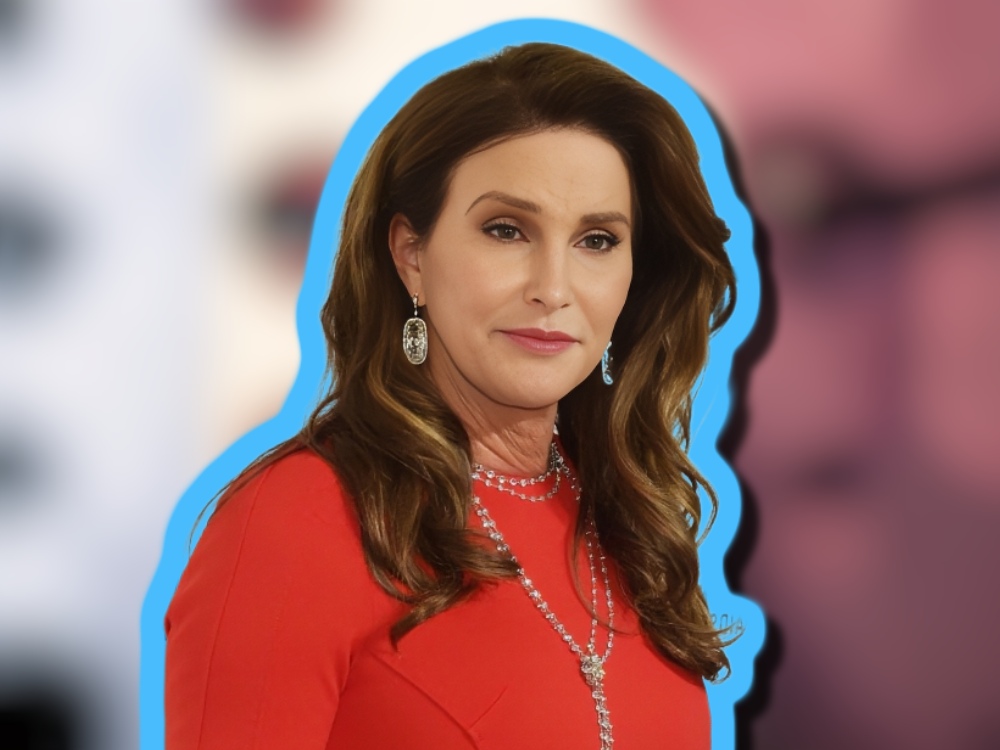

Caitlyn Jenner has revealed that she originally planned to transition decades before she publicly came out in 2015, saying she had hoped to do so before the age of 40.
In a new interview recorded for AOL’s Maker Conference, Jenner spoke candidly about the years she spent struggling with her gender identity and the decision that ultimately changed the course of her life.
“Those were real dark days for me,” she said. “I got a house in Malibu. I basically stayed there for six years, and I really started struggling with my identity, about ‘Who am I?’”
Jenner explained that during that period she began taking hormones and intended to transition well before midlife.
“I tried to start doing things to make me feel better about myself. I started on hormones. My mission at that point was to transition before I was 40. Got to 39, I just couldn’t go any farther.”
A few months later, she met Kris Jenner.
“And like three or four months later, I met Kris. We hit it off from day one and I was very honest with her, I had to be, I was a 36B.”
Jenner, who turned 40 on 28 October 1989, said that when she chose to build a life with Kris, she stopped hormone therapy and tried to leave those feelings behind.
“Everything was really heading in the right direction and I made this decision to move on with my life, Kris and I together and this family,” she said. “And, OK, I’ve got to get rid of these gender things and get off hormones and this and that.”
She also made a striking admission about that period.
“I actually had my boobs removed: I never told anybody that.”
Jenner said she and Kris had an understanding about how her gender dysphoria would be handled during their marriage.
“The rules with Kris and I [were]: Don’t dress up, certainly around the house. If you really need to do that, when you’re on the road, take stuff and do that,” she said. “So I did that for years.”
Kris and Caitlyn went on to have two daughters together, Kendall and Kylie Jenner.
Less than a year after their split, Jenner publicly came out as transgender on the June 2015 cover of Vanity Fair, in one of the most high-profile trans celebrity coming-out moments in recent memory.
Since then, Jenner has become an increasingly divisive figure within the LGBTQ+ community, largely because of her continued support for Donald Trump despite his record of anti-trans rhetoric and policy.
That tension has only grown sharper in recent years. Trump, after returning to office as the 47th president, once again targeted trans people in his inauguration speech and signed executive orders aimed at dismantling so-called gender ideology protections, declaring that US government policy would recognise only “male and female”.
Even so, Jenner said she was “just as happy, actually more happy, than the first time, to be celebrating the inauguration of President Trump.”
That stance drew widespread disbelief, particularly from critics who pointed out that she was openly backing a leader whose policies directly undermined trans rights.
More recently, Jenner acknowledged that she herself has been affected by one of those policies.
In November 2025, the US Supreme Court allowed the Trump administration to restrict passport sex markers to male or female, with those markers required to reflect sex assigned at birth. Jenner later said in an interview with Tomi Lahren that the policy had created serious problems for her.
“What do I do? This is a safety factor. I can’t travel internationally anymore. I can’t use my passport,” she said.
She described having an “M” marker on her passport as a major issue, but still refused to blame Trump.
“I don’t blame President Trump, I love him. But for a lot of people, this is an issue.”
Jenner said she had written to Trump at Mar-a-Lago two months earlier asking for help, but had received no response.
“I’m not blaming him whatsoever. I love the guy, and I love what he’s doing,” she said.
“I haven’t heard from him. He’s kind of busy right now. My gender marker is not big on the issues, okay?”
She added that the policy could now affect even basic civic participation.
“I’m trying to figure out now, what is the next step to try to figure this out because as we know, even to vote now you have to have proper identification. I don’t have that.”
The result is a portrait of a life shaped by long-suppressed identity, difficult personal choices and, more recently, a striking political contradiction: Jenner is now openly grappling with the consequences of policies she continues to defend.