









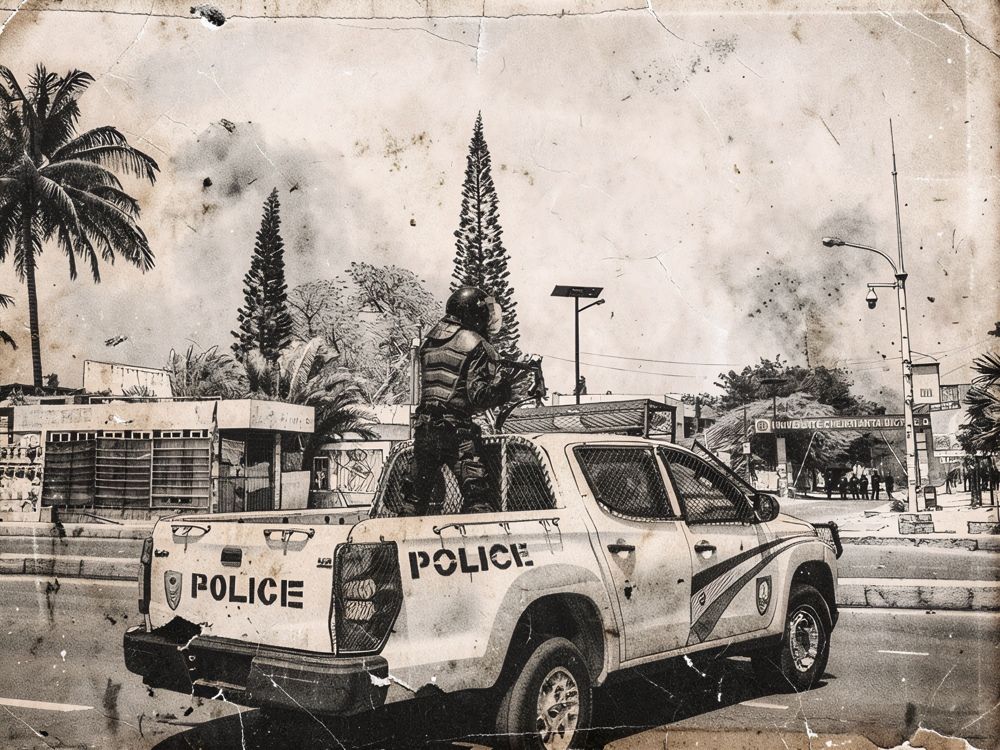

Police in Senegal say they have “uncovered a vast network of suspected homosexuals” after arresting 18 men, while reportedly continuing to search for another 15. The arrests are the latest in a widening anti-LGBTQ+ crackdown that has accelerated since Senegal toughened its already harsh laws earlier this year.
According to reports, the investigation began after an apprentice hairdresser accused a customer of sexually harassing him after the man gave him his mobile number. Another complainant also reportedly came forward with similar allegations. Police say that after the first man was arrested, he admitted to being part of a group of men who met for sex, which led officers to target others.
Police allegedly used the men’s mobile phones to identify further suspects, with messages, photos and videos reportedly leading to additional arrests. Senegalese media also published the names and occupations of many of those accused before they had even appeared before a public prosecutor in Louga, in the country’s north-west.
The arrests come just weeks after Senegal formally doubled the maximum prison penalty for same-sex sexual activity from five years to 10. The new law, signed by President Bassirou Diomaye Faye after parliament passed it overwhelmingly in March, also criminalises the so-called “promotion” or financing of homosexuality and imposes heavy fines.
Earlier this month, Senegal recorded its first known conviction under the new law. A 24-year-old labourer was sentenced to six years in prison and fined 2 million CFA francs, or about US$3,300, for what the court described as “acts against nature and public indecency”.
These latest arrests fit a broader pattern. Human Rights Watch reported in February that at least 12 men had already been arrested under Senegal’s anti-gay laws, while Reuters later reported that 27 men had been detained in February alone amid rising anti-LGBT sentiment. Other reporting has described continuing arrests linked to WhatsApp groups, alleged sex parties and broader police sweeps.
Rights groups and health advocates warn that the crackdown is doing more than criminalising same-sex intimacy. It is also pushing LGBTQ+ people further underground, worsening fear and stigma, and threatening years of HIV prevention work in a country where community-based outreach has been crucial. The Guardian recently reported that more than 60 people had been arrested since February and that the climate of repression is undermining access to care.
Historically, this is not some timeless “African tradition”. Senegal criminalised homosexuality in 1966, after independence from France. France itself had decriminalised same-sex relations in 1791, meaning the current law is not a colonial inheritance from French anti-gay criminal statutes, but a post-independence Senegalese choice. That last point is a historical inference based on the dates of French decriminalisation and Senegal’s later criminalisation.
So while police are framing this as the exposure of a criminal “network”, critics say what is really being revealed is a state increasingly willing to use surveillance, public humiliation and harsher penalties against LGBTQ+ people simply for existing. That final sentence is an inference based on the recent law, the arrests, and the documented concerns raised by rights groups.