









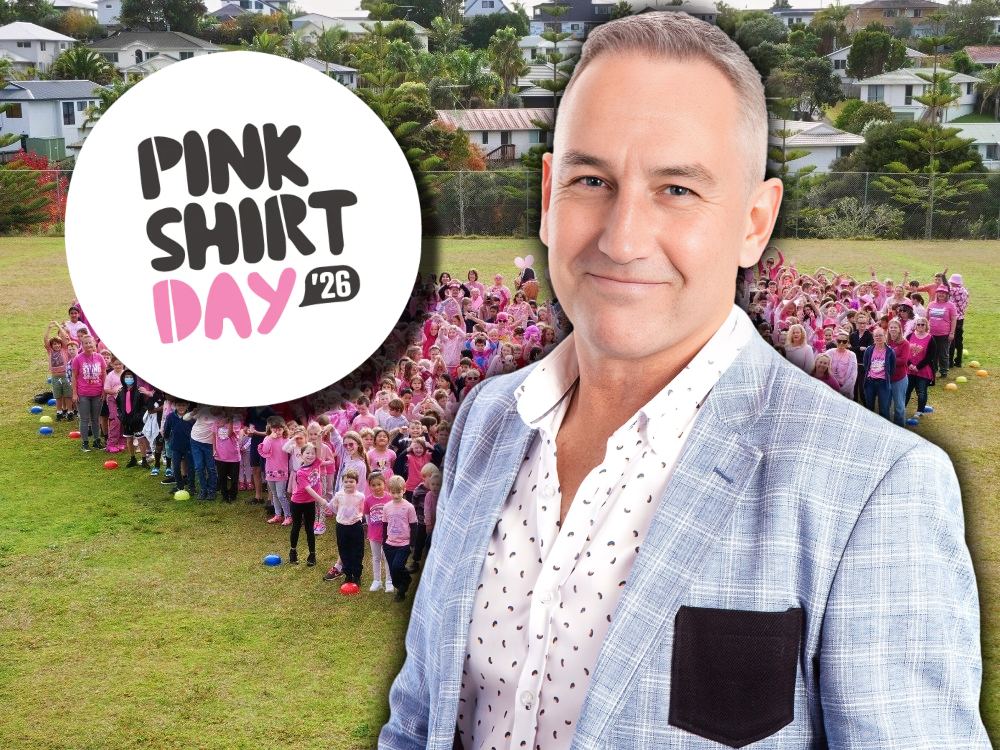
Pink Shirt Day is now widely recognised as a national call to stand against bullying, but for Shaun Robinson, Chief Executive of the Mental Health Foundation of New Zealand, it is crucial that people do not lose sight of where that kaupapa began.
As Aotearoa prepares to mark Pink Shirt Day 2026 on Friday 15 May, Robinson says the day’s connection to solidarity against homophobic bullying remains as important as ever.
“It’s important to honour the whakapapa of Pink Shirt Day as a school community response to homophobic bullying. Members of the rainbow community still experience higher rates of bullying and disproportionate negative impacts on their mental health, so it’s vital to keep that highly visible. We can’t stop homophobic and transphobic bullying without creating environments where all bullying can’t thrive. Environments that celebrate diversity and cultivate kindness and inclusion.”
For Robinson, that means Pink Shirt Day should be about more than one day. It should also be a reminder that meaningful anti-bullying work is ongoing and collective.
A big part of that is encouraging people to be Upstanders rather than bystanders when they witness bullying. Robinson says even small actions can make a real difference.
“Being an Upstander means taking positive action when you see bullying taking place. The first is to awhi or support the person being bullied – stand beside them and let them know you have their back. If it’s safe to do so, you can intervene and interrupt the bullying. It can be hard to speak up in the moment, but saying something like ‘that’s not okay’ can make a huge difference.”
Asked whether Aotearoa is making genuine progress on inclusion, Robinson says there are reasons for hope, but also cause for concern. While more schools and workplaces are embracing inclusion in meaningful ways, he says public debate and political rhetoric can still undermine that progress.
“When there is a backlash against inclusion it is a sign that there has been progress and some people aren’t comfortable with that. So that means we have to keep advocating and promoting inclusion even harder.”
That same conversation extends beyond schools and into the workplace, where bullying remains an issue. Robinson says employers need to understand that the impact is not just personal, but financial too.
“Bullying is bad for business. It costs employers in NZ $1.3 billion each year. A business with a culture of kindness, inclusion and celebration of diversity will have happier staff who will be more productive. A staff member who feels marginalised and unsafe due to bullying simply can’t give of their best and is not likely to stay in an organisation if they have an option to leave. There are real costs involved in internal conflict, lower productivity, absenteeism and turnover.”
Robinson says organisations also need to be better at recognising the quieter, less visible forms of bullying and exclusion that many rainbow people experience. Harm is not always loud or obvious, and workplaces need tools to identify it early and respond properly.
Asking staff anonymously via surveys, providing training around offensive and unwanted behaviour, and supporting rainbow staff networks are all part of that work, he says.
For queer young people who may be experiencing bullying this Pink Shirt Day, Robinson’s message is one of reassurance, support, and affirmation.
“Number one: you are a lovable and beautiful human! There are people who care about you and what you are going through. If you feel you are being bullied talk to a teacher or senior student you trust – Pink Shirt Day isn’t just about dressing in pink for a day, it’s also about year-round positive action. Get support from Rainbow Youth or Youthline, and look at the Mental Health Foundation’s Pink Shirt Day website for advice and support. And kia kaha. Be strong. You’re worth it.”