








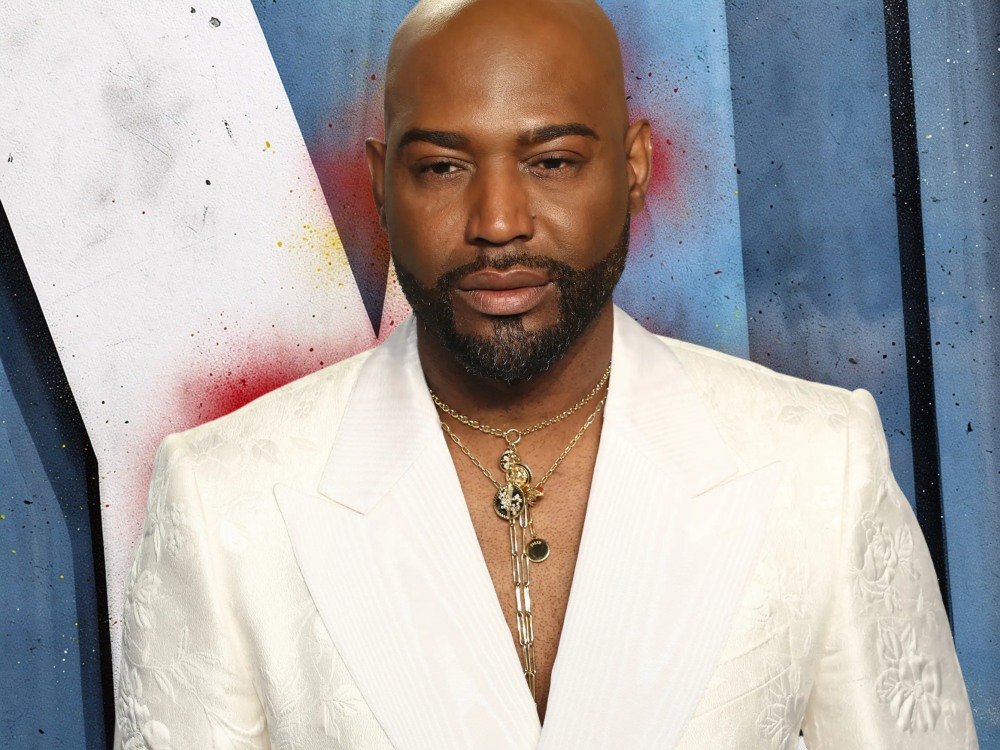
Four months after Karamo Brown skipped a live TV reunion with the rest of Netflix’s Queer Eye Fab Five, he is opening up about what he says was years of behind-the-scenes tension, toxic dynamics, bullying and the relapse that followed.
Brown spoke about the experience in a new interview with People for its June cover story, saying the public positivity of the show did not always match what he was experiencing privately.
“I was depressed,” Brown said. “It felt shameful because I was teaching people that they could be better, but in my own life I was trapped.”
In January, Brown’s co-stars Antoni Porowski, Jonathan Van Ness, Tan France and Jeremiah Brent appeared together on CBS Mornings and Today to promote the premiere of Queer Eye’s 10th season. Brown, however, sent a last-minute message saying he would not appear with them.
“I hope everyone remembers the main theme I have tried to teach them over the past decade,” co-host Gayle King read from Brown’s statement on CBS Mornings. “Which is to focus on and to protect their mental health/peace from people or a world who seek to destroy it, which is why I can’t be there today.”
King added that Brown’s assistant said “he’s worried about being bullied.”
On Today, co-host Sheinelle Jones shared a similar message, saying: “Karamo has felt mentally and emotionally abused for years, and he’s been advised by his therapist to protect himself and his peace by not attending.”
Brown also sent a video message to Today, thanking fans for supporting the show across 10 seasons.
“I just want to say thank you to all the fans who supported us and rocked with us for 10 seasons. This new season is going to be amazing. You’re going to love every minute of it,” he said.
Now, Brown says he is ready to explain why he made that decision.
“Enough is enough,” he told People.
“Whose peace am I protecting?”
Brown said he and his cast-mates had previously been able to come together for the sake of the show’s fans, but his own personal work led him to question whether silence was helping anyone.
“We had always come together because of the fans, but because of the work I’d done on myself, I asked, ‘If I stay quiet right now and pretend I’m sick or something, whose peace am I protecting?’” he said.
According to Brown, several relationships within the Queer Eye cast had become toxic over the years. He also accused executives and members of production of allowing bullying and bad behaviour to continue unchecked.
Without naming specific people, Brown said producers failed to protect him from harassment.
“Everyone would just say, ‘Well, that’s just that person,’ instead of saying, ‘This behaviour does not fly in a professional environment,’” he said. “It impacted me negatively, consistently.”
In a statement to People, production companies ITV America and Scout Productions rejected Brown’s characterisation of the workplace.
“We strongly disagree with any characterisation that concerns raised during the production of Queer Eye were ignored, dismissed or allowed to continue unchecked,” the statement read.
“Throughout the series’ run, any issues brought to production leadership were taken seriously and addressed appropriately. Production consistently fostered a respectful and professional environment for the cast and crew — which included ongoing training, coaching and other support for the cast — maintaining clear workplace policies and practices throughout filming.”
The producers added: “We remain incredibly proud of Queer Eye’s lasting impact and the community the series helped build over more than 20 years.”
However, People also quoted an unnamed insider who said that while Queer Eye “helped a lot of people”, the environment behind the scenes was “toxic as hell in reality”.
Early divisions within the Fab Five
Brown said the cracks between himself, Van Ness, France, Porowski and former cast member Bobby Berk began early in the show’s run, after a sexual harassment complaint was filed against him within the first few weeks of filming.
According to Brown, he and an unnamed Fab Five member had a “fun and flirty” dynamic during the casting process. He initially believed that co-star had filed the complaint, but later learned it had come from an anonymous third party.
“It broke us,” he said. “We all knew the divide between us.”
Brown said he was cleared of any wrongdoing. A source inside production disputed his “characterisation of events”, but confirmed to People that an investigation took place and said, “all parties wanted to move on with the show.”
Multiple sources also told People that Brown’s relationships with France and Van Ness were significant sources of tension behind the scenes. Van Ness previously denied allegations of emotional and verbal abuse on set in 2024, after Rolling Stone investigated claims about their alleged behaviour.
“Jonathan was someone whose frustrations were often expressed openly,” one source familiar with the cast dynamics said. “Others were more likely to create tension behind the scenes.”
Brown said he does not hold hostility towards Van Ness, despite the pair not speaking directly in months.
“The work I have seen Jonathan pouring into himself is commendable and inspiring,” he said. “Growth isn’t always public-facing, but I respect him for how he’s currently moving through life.”
Brown also acknowledged his own mistakes.
“There were times I was hurt and would lash back out,” he said. “I recognise my part and how things I did impacted people.”
“I thought they were your friends”
Brown said one of the most painful moments came when his mother overheard several of his co-stars speaking negatively about him during a set visit last year.
People reported that multiple sources confirmed Van Ness, France and Porowski were involved in the conversation. Brown said he was too embarrassed to ask his mother exactly what had been said.
“The thing I know is the tears I saw in my mother’s eyes,” he recalled.
He said she kept repeating: “I thought they were your friends.”
Brown said the moment made him realise he could no longer stay silent about how often he felt like an outsider.
He also described the show’s early production culture as unsustainable, recalling that a senior production leader once told him: “You are not a star. I will get rid of you tomorrow.”
A show insider told People that employment threats were common between the Fab Five and the senior figure during season one, often linked to creative disagreements.
The insider said there was a disconnect over what the new Queer Eye was supposed to be.
“[They] wanted them to come in and rip the heroes’ houses apart and tell them how ugly everything was because that’s what the original Fab Five did,” the source said. “That catty gayness worked in the early 2000s, but that’s not who the new cast was.”
Antoni Porowski responds
Brown’s former co-stars did not respond to People’s request for comment, but Porowski has since addressed the situation while promoting his new reality show, Best of the World With Antoni Porowski.
Speaking to Variety, the Queer Eye food expert said he still had more questions than answers about Brown’s decision not to join the January media tour.
“For anybody who’s paying attention to how all of that ended, I was sad that I felt like it served as a distraction in honoring the countless people who’ve worked on the show from day one up until the very end, and those who have come and gone — both in front of and behind the camera,” Porowski said.
“If I’m honest, I think I’m left with more questions than answers, but what I hope is that the people who honor the show understand the help that we did and the commitment we [had].”
Karamo Brown discusses relapse and recovery
Brown also revealed that, after 12 years of sobriety, he relapsed during the show’s third season.
“A drink would lead to weed, cocaine, pills,” he said. “I wasn’t coping right, but I pretended like I was. I was so broken.”
He said he is now sober again and actively working on his recovery.
“I’ve not had a single drink, cocktail — nothing,” Brown said, adding that he attends meetings and follows a 12-step programme.
For Brown, speaking publicly appears to be part of reclaiming his peace after years of feeling unable to say what was happening behind the scenes.
The public image of Queer Eye was built on healing, vulnerability and transformation. Brown’s comments suggest that, for him, some of that work had to begin after the cameras stopped rolling.