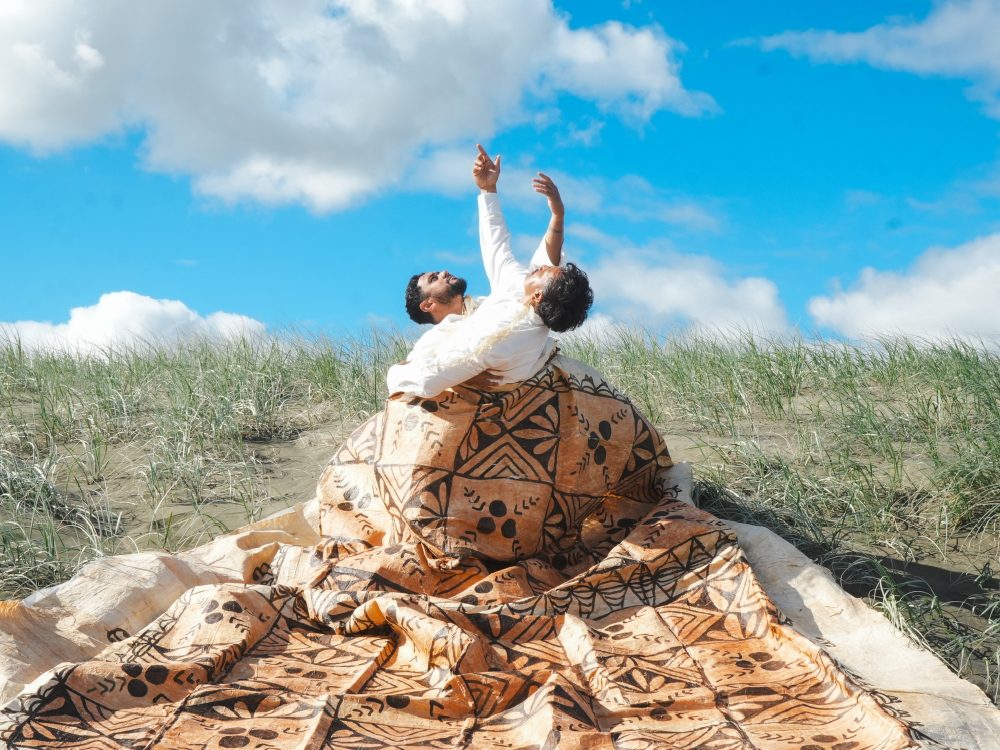










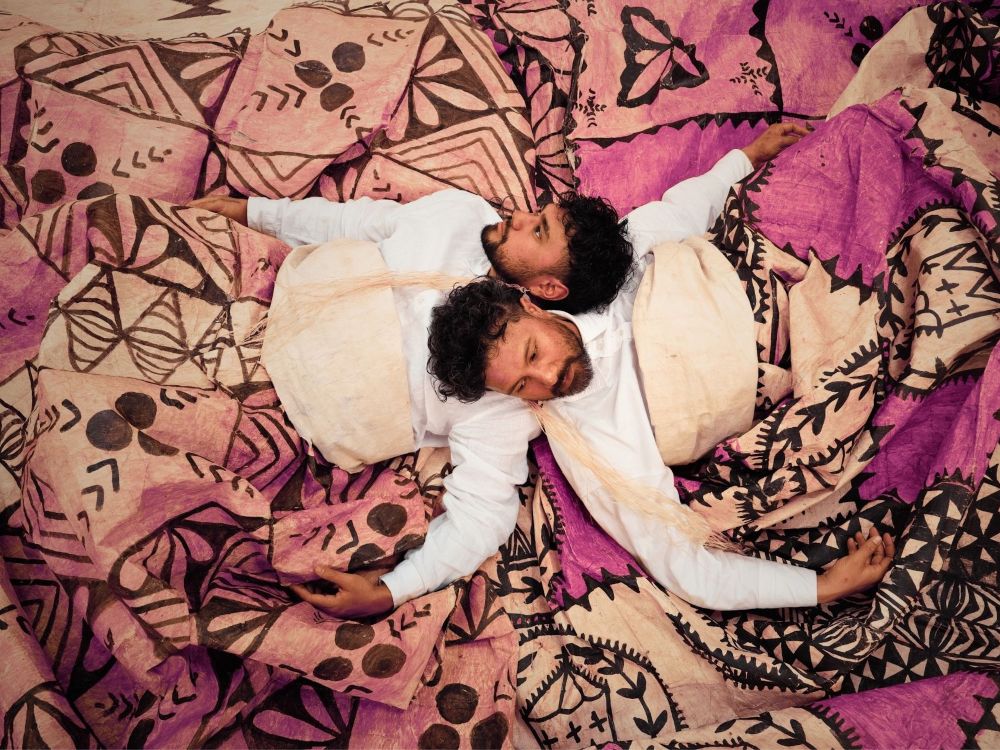
Partners in life and choreography, Kapieri Samisoni and Antonio Matagi talk to Oliver Hall about coming out, creative differences, and bringing their first shared work, Kamata(a)ga, to the Pacific Dance Festival.
How and when did the two of you first meet, and what were your first impressions of each other?
K: We first met in 2018 during a dance collaboration workshop between Auē Dance Company and Rako Pasefika Dance Company. Nio was already a member of Auē, while I was dancing with Rako. Later, I auditioned for Auē Dance Company because I loved its Pacific contemporary fusion style, and since Rako is based in Fiji, it felt like the perfect opportunity… My first impression of Nio was that he was always late to rehearsals and that he was the oldest member of the dance company.
A: I didn’t really have a strong first impression of Kapi because we were still getting to know each other. I also never imagined I’d end up meeting or dating someone from the same dance company.
When did you realise this relationship was something special?
K: During the 2018 summer break, we started spending more time together and slowly fell for each other. We kept our relationship a secret because there was a rule in the dance company that members weren’t allowed to date. At first, we told ourselves it would just be a summer romance and that we’d leave it there once the break ended. As the summer came to an end, we realised we couldn’t let each other go, and from that moment on, we’ve been together ever since.
What do you admire most about each other?
K: I admire Nio’s kindness and his heart full of love. I admire his creativity, his passion for the things he loves and how hardworking and dedicated he is in everything he does.
A: I admire Kapi’s intelligence, youthful spirit and fun-loving nature.
What did coming out look like for each of you?
A: Simply being myself without having to say anything or openly announce that I was gay. It was about growing into a place where I felt confident, comfortable within my family, and able to fully embrace who I am.
K: It was the complete opposite for me. Coming out was a disaster at first, a real rollercoaster of emotions and one of the lowest points in my life. I felt like I had disappointed my parents especially. Back then, my sisters were the only ones who truly supported me and stood by me through everything. Thankfully, times have changed. My parents now fully support me and love me for who I am, and that’s all I ever wanted. Surprisingly, it didn’t take long for my dad to come around, but my mum definitely took the longest. I like to think it’s because I’m such a mama’s boy.
Did you have examples of queer Pacific love around you growing up?
Both: No, not that we can remember. Growing up, it was always quite a touchy subject, especially when it came to seeing queer relationships on TV or in movies. It just wasn’t something we saw openly represented around us very often.
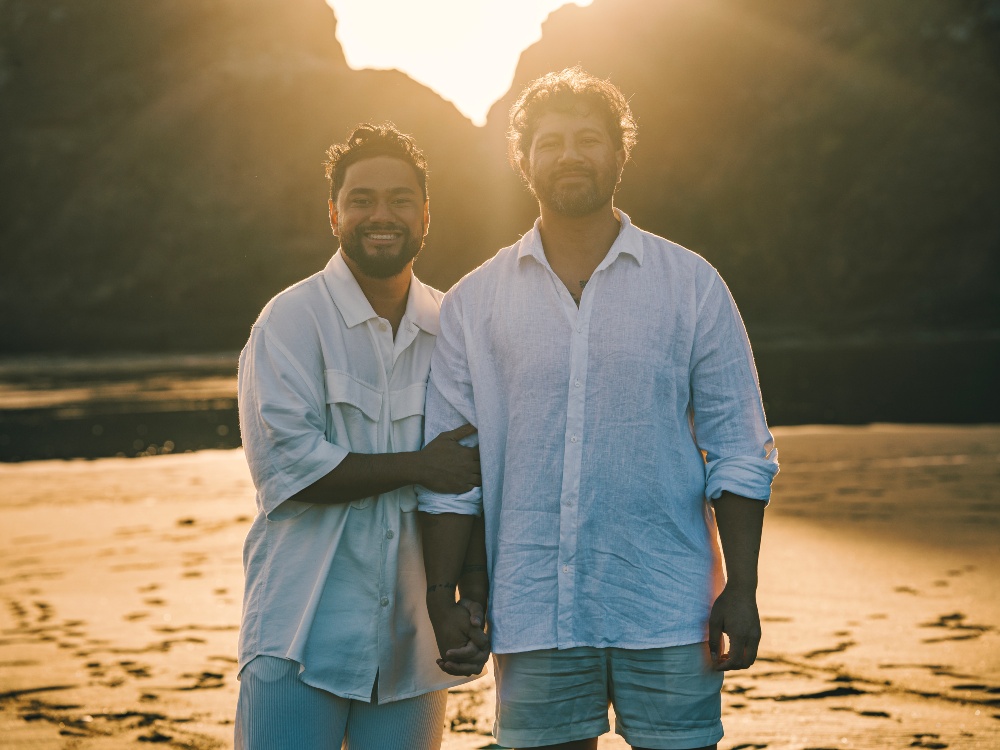
What would you say to young queer Pacific people who may be scared to come out, or unsure where they fit?
A: First and foremost, YOU FIT. You deserve to express yourself and be exactly who you are, just like everyone else. It’s sad that “coming out” still has to be such a big thing, or even a question people feel they need to face, especially in this day and age. Always remember that you are worthy, you belong and there is a place for you exactly as you are.
Kamata(a)ga is your first creative collaboration as choreographers and dancers. How did the idea first come about?
K: We wanted to tell our own stories and share our narratives through our own lens. At the same time, we wanted to honour both of our parents and create something that was just as much for them as it was for ourselves. This feels like only the beginning of what we hope will be many good things to come.
What have you discovered about each other as artists through this process?
A: What’s interesting is how creatively different we are in both our choreography styles and thought processes, but that’s also the beauty of it. Where I might lack, Kapi makes up for, and vice versa. It’s always a learning process for both of us, and we’re constantly finding ways to meet in the middle with all of our crazy ideas.
How did you navigate moments where your creative instincts were different?
K: We’ve definitely had our heated moments during rehearsals, nothing like trying to choreograph while arguing in 8-counts. Through it all, we learned to really listen to each other and trust one another’s creative instincts… Sometimes it meant compromising, sometimes it meant trying both ideas out, but in the end, those differences usually made the work stronger and more meaningful.
How do you hope this work contributes to Pacific contemporary dance?
A: I hope it spreads light and brings connection into spaces that may not always have culture at the centre. I also hope it inspires a new generation to pass on our traditions, values and culture in a new, contemporary way that feels relevant to today while still staying true to who we are.