








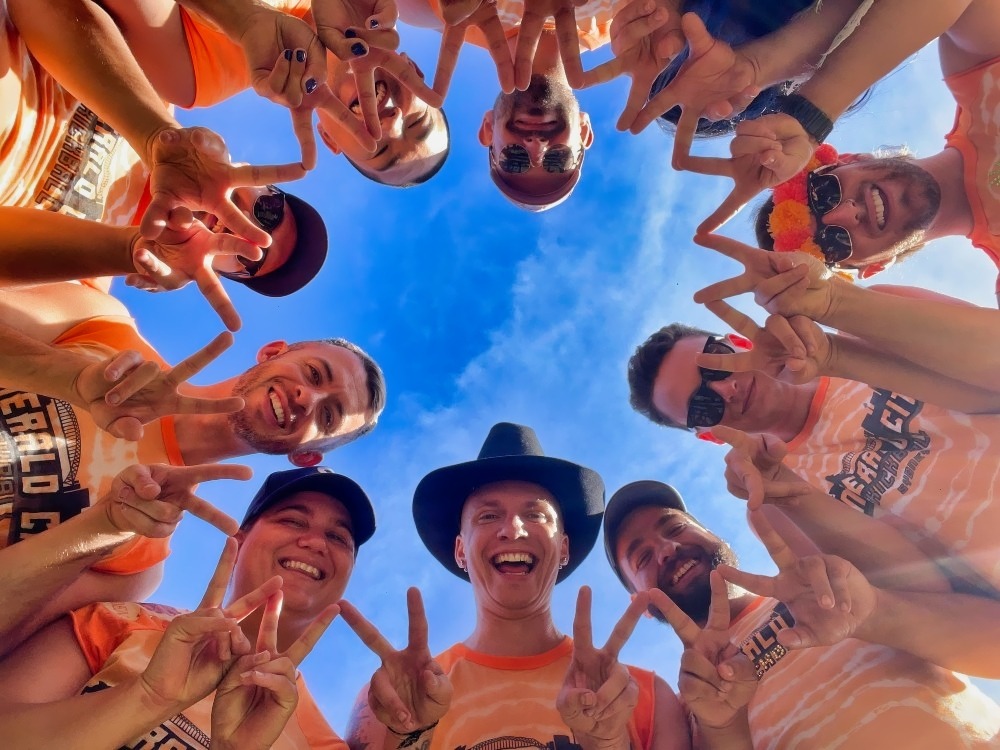

Kickball may still be unfamiliar to many New Zealanders, but for Emerald City Kickball’s Marcus Gadd, that is part of the excitement.
As Rainbow Games Tāmaki Makaurau Auckland 2026 approaches, the Australian team is preparing to make its mark on Kiwi players and spectators, bringing with it a mix of softball-style rules, beginner-friendly play and a strong sense of queer community.
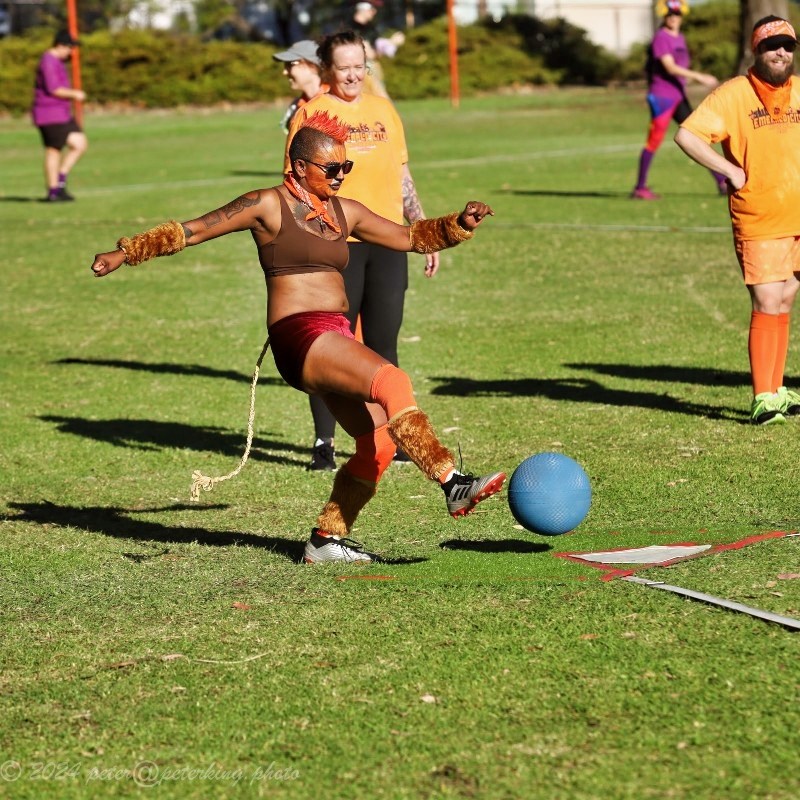
Emerald City Kickball is Australia’s national queer kickball association, with teams in Sydney, Melbourne and Perth. For those who have never seen a game, Gadd describes kickball in the simplest possible terms: “If dodgeball, baseball and football had a baby together.” The game follows the same basic structure as baseball, but instead of hitting a ball with a bat, players kick a large dodgeball with their feet.
The rules are easy to understand, which is part of the sport’s charm. If the ball you kicked is caught, you are out. If the ball hits you, you are out. If the ball reaches a base before you do, you are out. Otherwise, as Gadd puts it, you “kick the ball and run”.
For New Zealanders more familiar with football and rugby, kickball has the closest resemblance to softball, “but with a twist”. The ball is bigger, the pitching is slower and the target is easier, making it an accessible sport for people who may not consider themselves especially athletic.
In fact, Gadd is quick to dismiss the idea that players need to be sporty or fit to enjoy it.
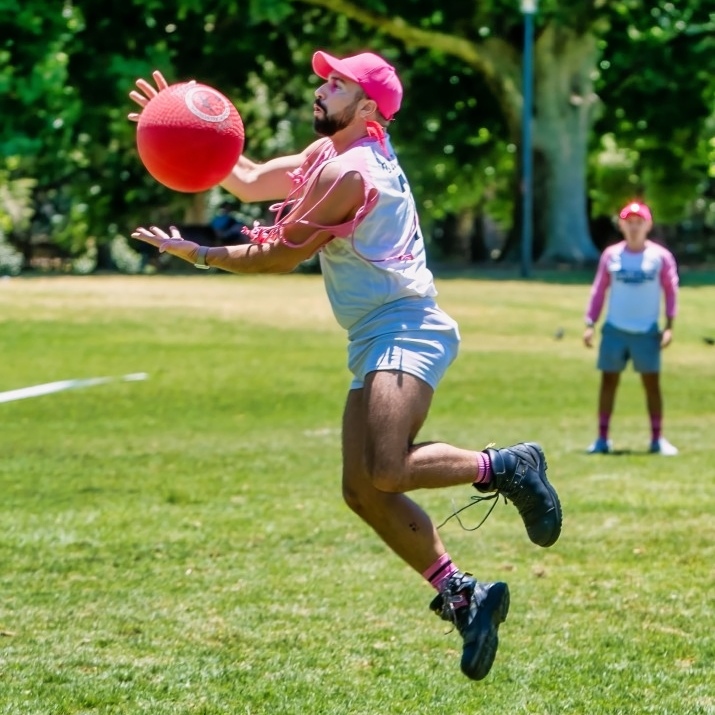
“It’s the kind of sport where the biggest cheer normally goes to someone making their first catch of the season, eight games in,” he tells us.
From the sidelines, a kickball game may look a little like softball, but Emerald City Kickball brings its own unmistakable flavour. Gadd says spectators can expect “a lot more colour, costumes, dancing and music”, creating an atmosphere that feels as much about connection as competition.
That sense of welcome is central to the experience. For anyone signing up to play kickball at the Rainbow Games with no previous experience, Gadd says the focus is on community, confidence and fun.
“If they want to get involved in a community and meet people without feeling like they need to be Michael Phelps, it’s the sport for them,” he explains. “Yes, there is a Guardians division for those who want to push themselves competitively, but otherwise it is the kind of sport where you leave feeling better about yourself and more connected to the community.”
New players do not need specialist gear either. Gadd recommends runners and clothing they feel comfortable moving in. As for etiquette, the most important rule is simple: everyone is welcome. Within Emerald City Kickball, players are placed into random teams each season, whether they are new or returning, giving everyone the chance to meet a fresh group of people.
Gadd’s own introduction to kickball came through his partner, who was already playing. During that first season, he watched from the sidelines and spent time with the players. The friendliness of the community made an immediate impression.
“People were so welcoming that it made me want to join in,” he says.
What brought him back was not the sporting glory, but the people. Gadd says kickball attracts a wide variety of participants, many of whom are there to socialise first and play sport second. “The little bit of exercise is just a bonus.”
His first time playing was memorable precisely because there was no pressure to be perfect.
“It was liberating,” he says. “I got everything wrong, dropped catches, got out, and nobody cared. Not having that pressure was amazing.”
That low-stress, high-support environment has helped Emerald City Kickball become an important space for LGBTQIA+ people across Australia. Gadd says the league has put significant time and effort into diversity and inclusion, and continues to evolve. In Perth, for example, he says approximately half of players do not identify as gay cis men.
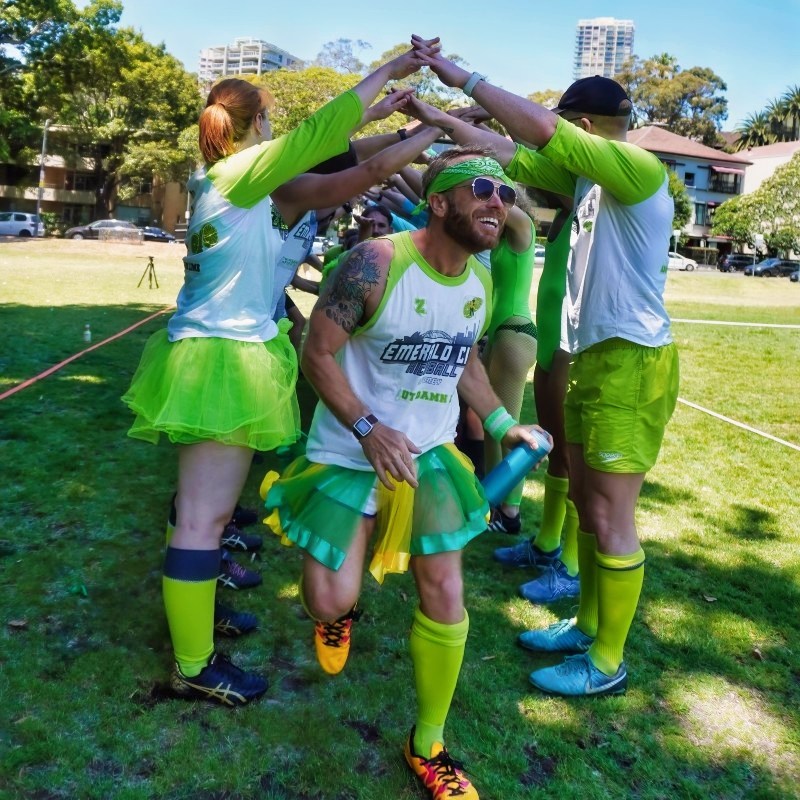
For Gadd, social sport has a powerful role to play in Rainbow wellbeing, particularly at a time when rainbow spaces can feel less visible and available.
“It’s a way for people to get out and meet one another outside of the club scene,” he says. “It promotes better mental health and community participation. With LGBTQ+ spaces feeling like they are declining, it is more important than ever to create spaces where people can find their people.”
Bringing Emerald City Kickball to New Zealand for the Rainbow Games is about more than adding another sport to the programme. Gadd hopes it helps spark a wider movement.
“We would love to see kickball in every city in Australia and New Zealand,” he says. “It’s great when you go on holiday somewhere, head down to watch a game, and say where you’re from. The family will continue to grow, and it will mean more safe, welcoming communities.”
For Kiwi players and spectators, Gadd hopes the Rainbow Games will show the value of kickball and the space it can fill within the LGBTQIA+ community. While he admits it can seem like “a childish sport” at first glance, the impact can be profound.
“We hear time and time again from people who did not know about kickball, then found it and finally discovered a place in the LGBTQ+ community where they felt they belonged,” he says.
For anyone keen to play but who does not have any teammates, the Rainbow Games organisers can help place individual participants into a team, making it easy to sign up solo and still be part of the action.
After the Rainbow Games, Gadd’s dream is simple: for New Zealand to fall in love with kickball and create its own teams, families and communities. Looking further ahead, he hopes those future Kiwi teams will be ready to travel to Australia for the 2030 Gay Games.
His message to anyone unsure about registering or attending is direct: “Do it. You won’t regret it. You’ll make friends, you’ll compete in a ‘sport’, and you’ll even get to say you competed at an international sporting event.”
Above all, Gadd believes spaces like Emerald City Kickball thrive because people choose to support them.
“People make these safe, engaging and fun spaces,” he says. “It’s important to get involved and give things the energy they need to thrive and grow so they can keep giving back to our LGBTQ+ community. People took a chance on kickball in Australia, and it has flourished because of what it can provide to people.”