










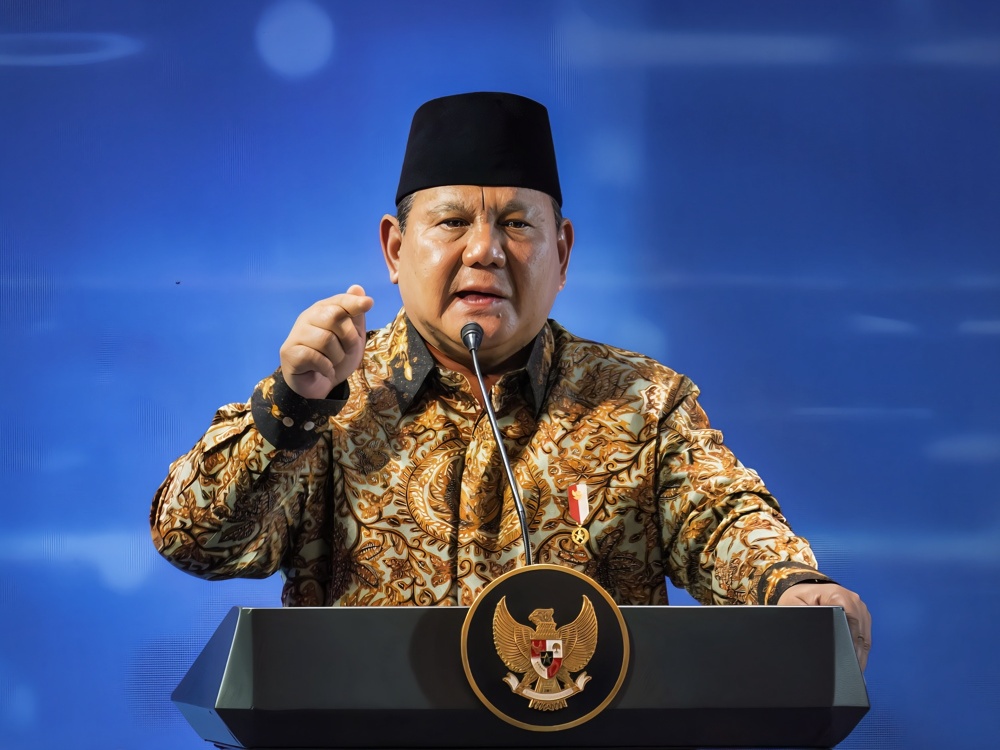
LGBTQ+ people in Indonesia are facing growing discrimination, harassment and violence after President Prabowo Subianto classified the promotion of queer “culture” as a threat to national security.
In October 2025, Subianto issued a 70-page presidential regulation outlining Indonesia’s national defence policy.
The document listed several so-called nonmilitary threats, including illegal trafficking, the theft of national resources, terrorism, radicalism, atheism, online gambling and drug abuse.
“The promotion of LGBTQ culture” was also included.
According to the Jakarta Post, the regulation defines nonmilitary threats as activities that do not involve weapons but are considered dangerous to state sovereignty, territorial integrity or public safety.
It also instructs government ministries, state institutions and regional administrations outside the defence sector to respond to the identified threats.
Regulation Could Encourage Discriminatory Laws
Human rights advocates have warned that the classification could give authorities greater justification to introduce policies targeting LGBTQ+ people.
“The presidential regulation provides new legitimation both for the central government and regional administrations to enact legislation that penalises and discriminates against LGBTQ individuals merely because of their identities,” Albert Wirya, executive director of the Legal Aid Institute for the People, told the Jakarta Post on 7 July.
Human Rights Watch has also reported an increase in harassment and attacks against LGBTQ+ university students, particularly during Pride Month 2026.
On 7 July, the New York-based organisation said at least 10 public universities in Indonesia had recently adopted discriminatory rules and begun restricting discussions about gender and sexual diversity.
“Indonesian authorities are looking the other way during an upsurge of attacks on LGBT university students and others,” said Meenakshi Ganguly, deputy Asia director at Human Rights Watch.
“Indonesia’s universities are contributing to the problem by discriminating against students on the basis of gender identity and sexual orientation.”
Religious Body Calls for Harsher Criminal Penalties
During Pride Month, the Indonesian Ulema Council, a conservative body of Islamic scholars, called for same-sex relationships to be criminalised more harshly than adultery.
The council told MUI Digital that what it described as “sexual deviation” should carry criminal penalties “harsher than the punishment for adultery”.
“Currently, there’s no punishment for LGBT. There’s no legal provision for that,” said the organisation’s deputy chairman, Kiai Cholil.
“Ultimately, when a case is discovered, the pattern is simply initiated by the regional head to provide guidance or barracks. This is because there’s no fixed sentence of years.”
Trans Women Reportedly Attacked in Bogor
LGBTQ+ people have also reportedly faced direct physical violence following the government’s classification.
Pelangi Nusantara, an Indonesian LGBTQ+ advocacy organisation, recently shared details of attacks against transgender women in Bogor, a city on the island of Java.
“A hate account called @bogorbersihlgbt recently uploaded videos showing attacks carried out against a trans woman,” the group wrote.
“The footage shows a group of men punching, kicking and dousing a victim with urine. In another video, several trans women are chased.”
The organisation said the attacks may have affected at least 15 transgender women.
“Based on the information we’ve gathered, at least 15 trans women have been attacked. Most of the victims are poor trans women who survive by working on the streets. In addition to being beaten and doused with urine, some were also stripped naked. The victims are now suffering from trauma as well as serious physical injuries.”
LGBTQ+ Identities Remain Vulnerable Under Indonesian Law
LGBTQ+ identities are not explicitly criminalised across most of Indonesia.
However, same-sex relations are illegal under Sharia law in Aceh, the country’s westernmost province. People convicted under those rules can face imprisonment of up to 18 months.
Transgender and intersex people are permitted to change their legal gender, but only after undergoing gender-affirming surgery and obtaining approval from a court.
Human Rights Watch says at least six national laws continue to discriminate indirectly against LGBTQ+ people.
These include the Pornography Law, the Marriage Law, regulations covering child adoption, the Electronic Information and Transactions Law, the Criminal Code and Ministry of Health Regulation No. 2 of 2025.
Rights advocates warn that describing LGBTQ+ identities as a national threat risks legitimising further discrimination, encouraging hostile policies and leaving already marginalised people more vulnerable to violence.