









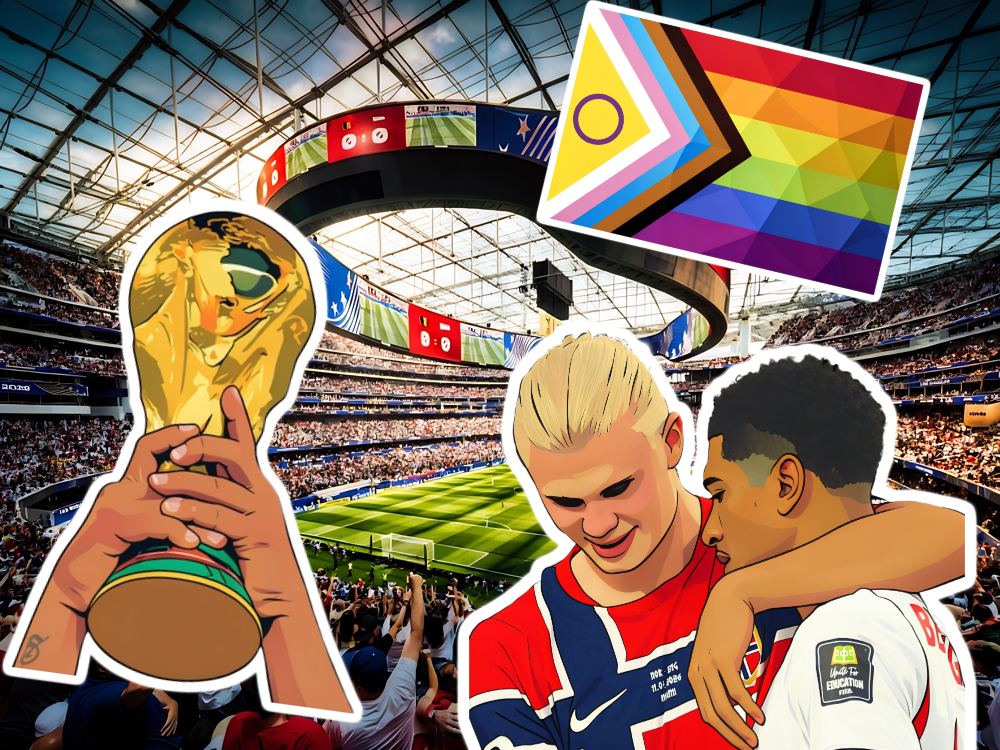

The 2026 FIFA World Cup has been an illuminating — and often complicated — tournament for LGBTQ+ football supporters.
For the first time, the competition was jointly hosted by three countries: the United States, Mexico and Canada. It was also the largest men’s World Cup to date, expanding to 48 teams and 104 matches played across 16 host cities.
While the tournament delivered moments of visible LGBTQ+ inclusion, it also raised serious questions about safety, political hostility and whether queer supporters genuinely felt welcome.
Here are some of the biggest LGBTQ+ stories from the 2026 FIFA World Cup.
The Controversial Pride Match
One of the tournament’s most closely watched moments was the so-called Pride Match between Iran and Egypt at Seattle Stadium on 26 June.
Seattle’s local organising committee had designated the Group G fixture as the first Pride Match in World Cup history because it coincided with the city’s annual Pride weekend.
The designation immediately attracted controversy because both participating countries have deeply troubling records on LGBTQ+ rights.
Same-sex relationships are criminalised in Iran, where men have previously been executed on sodomy charges. While homosexuality is not explicitly illegal in Egypt, LGBTQ+ people have been arrested and prosecuted under broadly worded laws covering indecency and public morality.
Officials from Iran and Egypt objected to the Pride branding.
Mehdi Taj, president of the Iranian Football Federation, said both countries had raised “objections” and reportedly described the match designation as an “irrational move that supports a certain group”.
Despite those protests, Seattle’s organising committee continued with the Pride-related celebrations surrounding the fixture.
FIFA Distances Itself From Pride Branding
FIFA president Gianni Infantino attempted to distance football’s governing body from the designation.
“First of all, I must clarify that there will be no ‘Pride Match’ at the World Cup,” Infantino said. “There will be a FIFA World Cup match in Seattle, and on the same day, events organised by external organisations will be taking place in the city. But that has nothing to do with the match itself.”
Ahead of the game, the coaches of both teams also pushed back when asked about the Pride celebrations.
Iran head coach Amir Ghalenoei said he was not there to discuss “anything that is banned in our league”.
“All our thoughts are focused on football, the beautiful game, our people, our success,” he said, stressing that the team would speak only about the match.
Egypt head coach Hossam Hassan took a similar position.
“We are all focused on football, it is all we think about and FIFA is of course taking care of the organisational side,” he said.
Despite FIFA’s reluctance to officially recognise the Pride Match branding, rainbow flags were permitted inside the stadium.
“General statements of human rights, including rainbow flags and other flags representing sexual orientation and gender identity, are permitted under the FIFA World Cup 2026 Stadium Code of Conduct and may be displayed inside stadiums,” FIFA said.
For supporters who remembered the controversy over rainbow symbols at the 2022 World Cup in Qatar, the sight of Pride flags being openly displayed marked a notable change.
LGBTQ+ Supporters Boycott the Tournament
Long before the first match kicked off, LGBTQ+ football groups were warning that many queer and transgender supporters did not feel safe travelling to the tournament.
Three Lions Pride, the official LGBTQ+ supporters’ group for England’s national team, announced that it would not have a visible presence at the World Cup.
The organisation said it could not confidently advise members that they would be safe attending matches as openly LGBTQ+ people, particularly in the United States.
A Three Lions Pride member told Amnesty International that the group could not “in good conscience” reassure supporters about their safety.
“This is probably the one that has disenfranchised LGBT+ fans like no other World Cup because it had so much hope,” the supporter said.
Queer Football Fanclubs, Football Supporters Europe and the Sport & Rights Alliance also supported the group’s concerns.
Queer Football Fanclubs spokesperson Sven Kistner said there were “serious concerns regarding the safety not only of LGBTQ individuals travelling to the USA, but of all travellers to the 2026 World Cup”.
“The ever-worsening conditions for minorities in the USA under this administration leave us with practically no other conclusion than to advise our members against travelling,” Kistner added.
Kistner stressed that the group’s concerns related to government policy rather than the American public.
“The Trump administration is putting more and more pressure on minorities and LGBTQI+ people […] and that makes it difficult to say ‘yes, we are willing to go there and willing to attend the games’,” he said.
Anti-discrimination organisation Fare described it as “sad and regrettable” that such a prominent LGBTQ+ supporters’ group felt unable to attend.
The boycotts demonstrated the gap between FIFA’s claims that the competition would be its most inclusive World Cup and the experiences of queer supporters who believed attending could place them at risk.
Erling Haaland and Jude Bellingham’s Wholesome Bromance
Not every LGBTQ+-adjacent highlight involved political controversy.
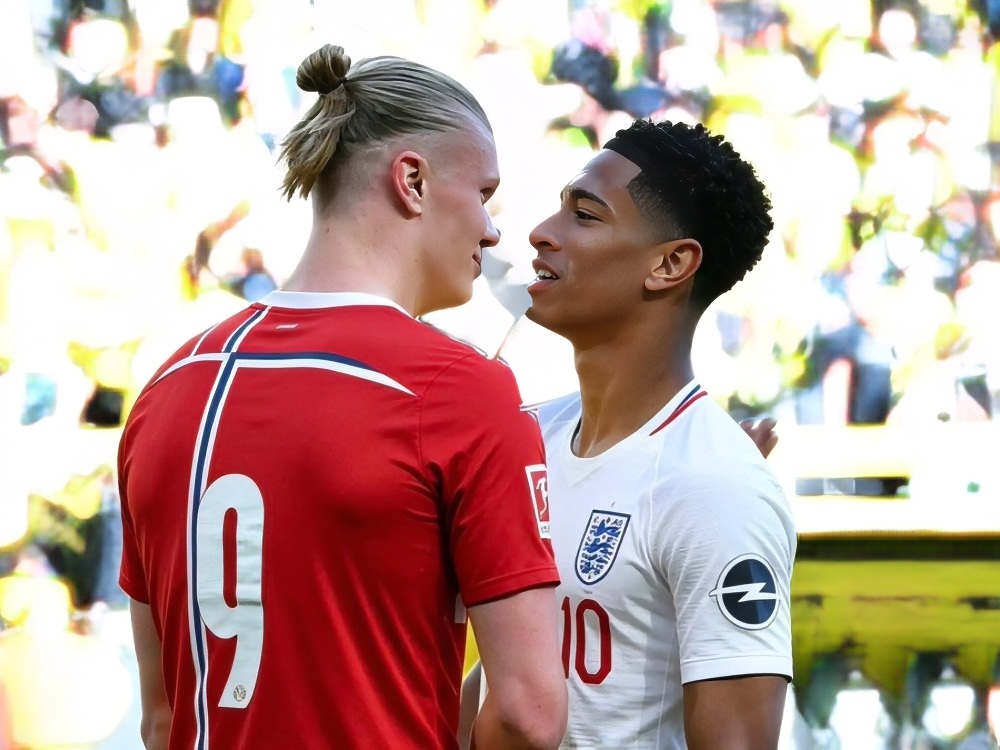
Norway’s Erling Haaland and England’s Jude Bellingham delighted fans with their affectionate friendship when their teams met in the quarter-finals.
England defeated Norway 2–1 in extra time, but the friendship between the two former Borussia Dortmund teammates quickly became one of the match’s biggest online talking points.
Haaland and Bellingham played together at Dortmund from 2020 until 2022 and have remained close since leaving the German club.
Their friendship was already familiar to supporters through interviews, playful social media appearances and a particularly giggly Valentine’s Day video in which they tested pick-up lines on each other.
At the World Cup, fans created videos celebrating their relationship, including Chappell Roan-soundtracked edits that attracted more than one million views.
From teasing each other on the field to throwing themselves into hugs, the pair offered an affectionate alternative to the rigid masculinity often associated with men’s football.
After England eliminated Norway, Haaland made a point of embracing and congratulating his former teammate. Their friendship was subsequently celebrated as one of the tournament’s most popular viral moments.
A Complicated Tournament for Queer Football Fans
The 2026 World Cup provided several moments of LGBTQ+ visibility, from rainbow flags inside Seattle Stadium to the online celebration of affectionate male friendship.
However, those moments existed alongside boycotts, safety warnings and concerns about whether queer and transgender supporters could travel freely and openly.
The result was a mixed tournament for LGBTQ+ fans: more visible than some previous World Cups, but still far from the fully safe and inclusive event promised by organisers.