









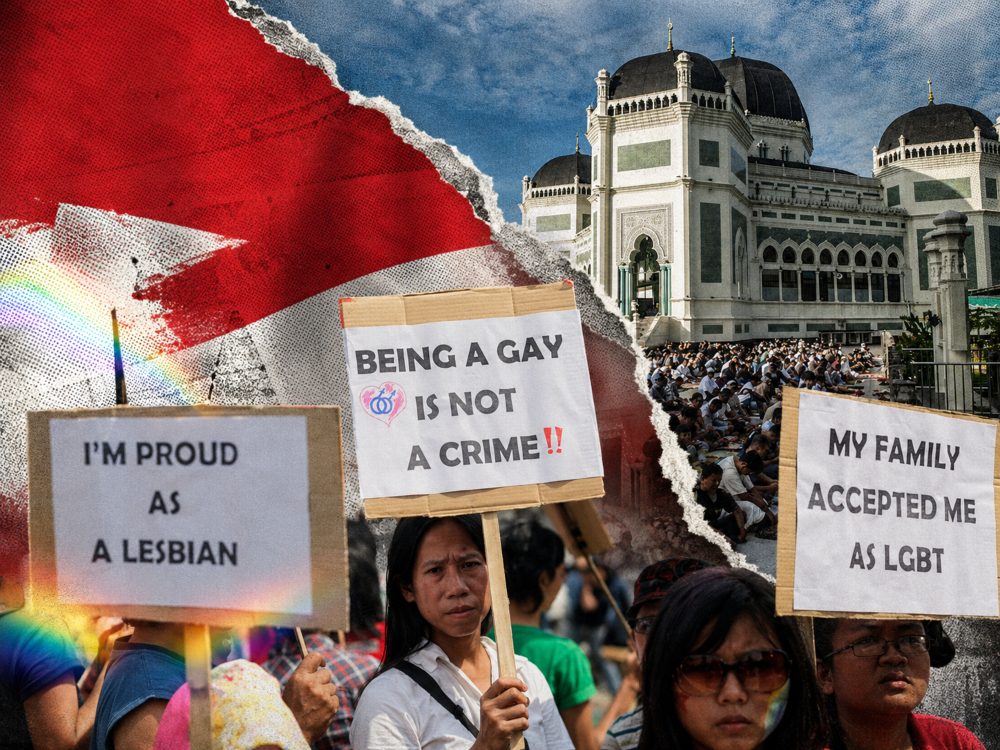

Indonesia’s influential Ulema Council has warned against traditional cross-dressing festivities, linking them to what it describes as an LGBTQ+ “movement”.
Indonesia’s top Islamic clerical body has warned people against taking part in cross-dressing traditions during Independence Day celebrations, claiming they could promote LGBTQ+ identities.
Indonesia celebrates Independence Day on 17 August, commemorating its declaration of independence in 1945.
Celebrations traditionally include parades, games and community competitions, some of which feature men dressing in women’s clothing for comedic or practical effect.
One example is “sarong football”, where male participants play football while wearing traditional clothing associated with women, adding an extra challenge to the game.
The tradition itself has not historically been associated with homosexuality or transgender identity.
However, the Indonesian Ulema Council (MUI) has declared such cross-dressing “haram”, or forbidden under Islam, while linking the practice to what it controversially called the “Lesbian, Gay, Sodomy and Obscenity” movement.
The council said its warning was intended to prevent what it characterised as covert LGBTQ+ campaigning.
Growing pressure on Indonesia’s LGBTQ+ community
The comments come amid an increasingly difficult environment for LGBTQ+ people in Indonesia.
Same-sex relationships are not explicitly criminalised nationwide, but LGBTQ+ people face widespread discrimination and have increasingly been targeted through policing, local regulations and anti-pornography laws.
In Aceh province, which enforces Sharia law, consensual same-sex sexual activity can be punished by public flogging.
Indonesia’s new Criminal Code, which took effect in January 2026, also criminalises sex outside marriage in certain circumstances. Prosecutions require a complaint from a spouse, parent or child, but LGBTQ+ advocates have raised concerns because same-sex couples cannot legally marry in Indonesia.
The Ulema Council has also advocated for greater restrictions on LGBTQ+ visibility, including proposals targeting public LGBTQ+ activities and supportive content.
For Indonesia’s queer and trans communities, the Independence Day warning highlights how even traditions with no historical connection to LGBTQ+ identity are increasingly being drawn into a broader political and religious campaign against queer visibility.