









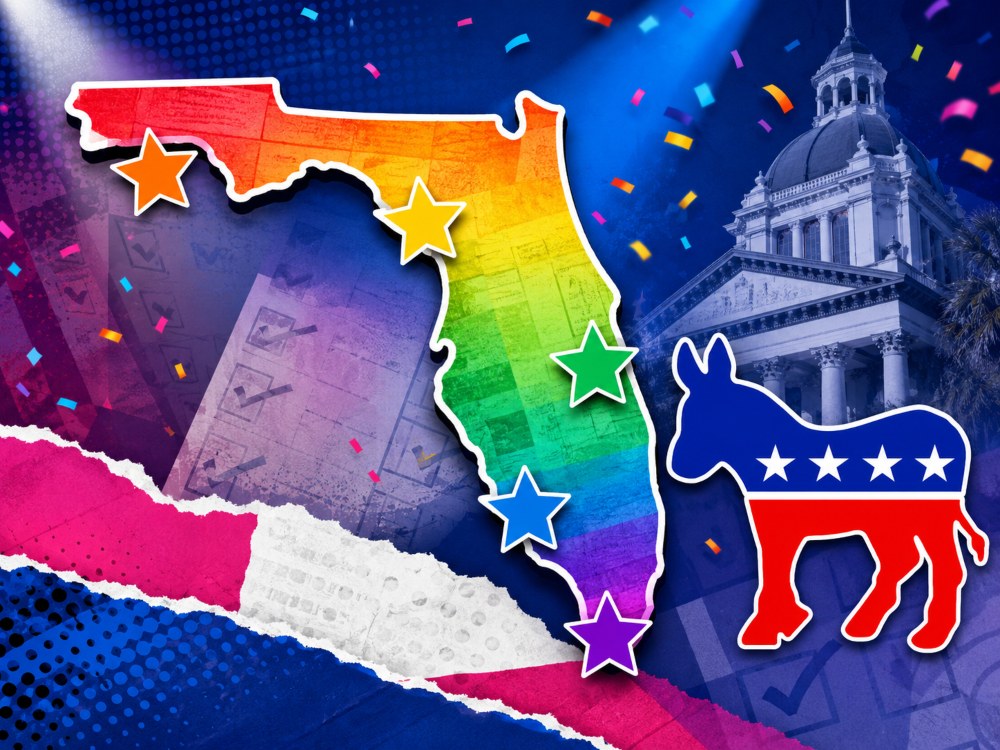
Florida voters delivered a series of wins for openly LGBTQ+ candidates in the state’s 18 August primary, with five Democrats advancing in races for the Florida House.
Jane Aman, Felipe Sousa-Lazaballet, Samuel Vilchez Santiago, Luis Salazar and Todd Delmay are all heading to the November general election. Each was endorsed by Equality Florida Action PAC, which says 81% of its endorsed candidates either won their races or advanced.
The results come after years of increasingly restrictive LGBTQ+ policies in Florida and are being celebrated by advocates as a chance to grow queer representation in Tallahassee.
Equality Florida Celebrates Strong Results
Equality Florida Action PAC executive director Joe Saunders said the results showed voters were pushing back against culture-war politics in schools and state government.
The organisation is hoping the November election can increase the number of openly LGBTQ+ lawmakers in the Florida Legislature and weaken conservative supermajorities in both chambers.
However, the primary victories do not guarantee seats. Each of the five candidates must still win their general election race in November.
School Board Candidates Also Make Gains
Equality Florida-backed candidates also performed strongly in local school board contests.
In Sarasota County, Megan Tennimon and Beth Mayberry both won seats outright, defeating conservative-backed opponents and changing the balance of the board.
Other endorsed candidates advanced to runoffs, while Angie Gallo won the Orange County school board chair race against Alicia Farrant, who had been associated with conservative education campaigns.
Equality Florida says 25 of its 31 endorsed school board candidates either won or progressed to a runoff.
A Pushback Against Anti-LGBTQ+ School Politics
Florida school boards have become major political battlegrounds in recent years, particularly over book restrictions, LGBTQ+ inclusion and how schools teach sexuality, gender and race.
Groups including Moms for Liberty have played a prominent role in those debates, supporting candidates who favour tighter restrictions on classroom content.
This year, several Moms for Liberty-backed candidates lost or were forced into runoffs, while some previously elected members chose not to seek another term.
For LGBTQ+ advocates, those results are significant because local school boards directly influence the policies affecting queer students and teachers.
November Will Be The Bigger Test
The primary results give LGBTQ+ candidates momentum, but the November election will determine whether that translates into greater representation in the Florida Legislature.
Equality Florida says its goal is to grow the state’s LGBTQ+ legislative caucus and reduce the Republican supermajorities that have allowed major social-policy bills to pass with limited opposition.
For now, five openly LGBTQ+ candidates remain in the running for Florida House seats — a notable sign that queer political representation in the state is continuing to grow.