








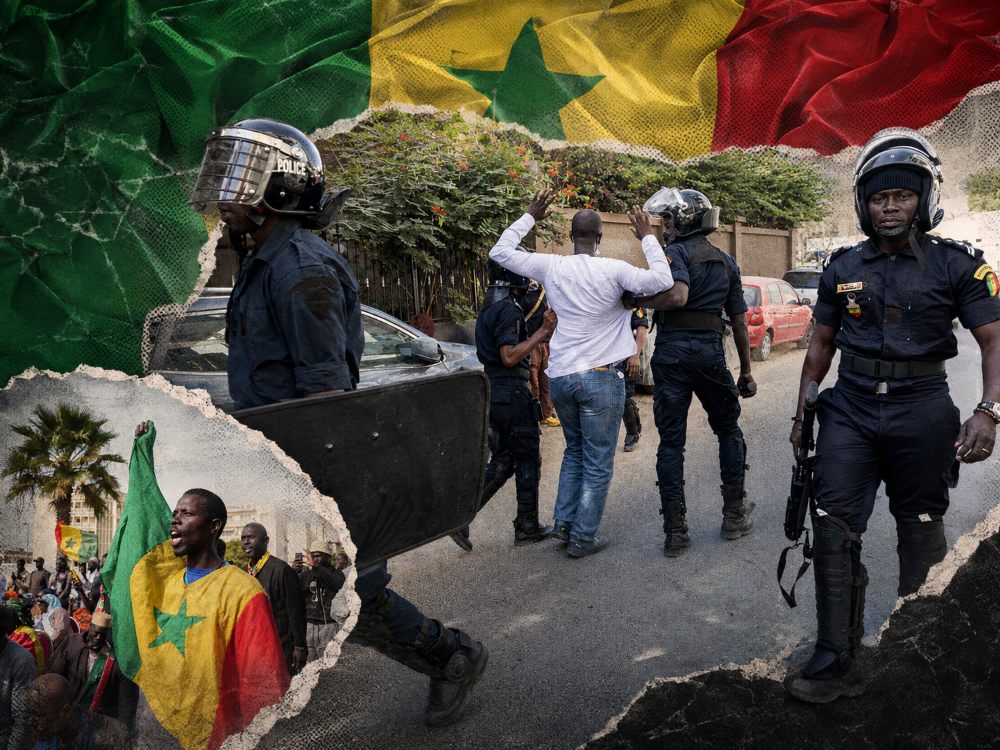
Senegal’s escalating crackdown on LGBTQ+ people has taken another alarming turn, with 71 men referred to court following a mass arrest operation targeting people accused of same-sex intimacy.
The case is part of a much broader wave of repression that has swept the West African country throughout 2026, alongside a new law that dramatically increased penalties for consensual same-sex sexual activity and criminalised the so-called “promotion” of homosexuality.
At least 99 men were caught up in the investigation at the centre of the latest court proceedings.
Of those, 28 had charges dismissed by an investigating judge, while the remaining 71 were sent to court to face charges including criminal conspiracy and what Senegalese law describes as “acts against nature”.
The public prosecutor has appealed the decision involving the 28 men, meaning their legal situation may not yet be resolved.
HIV Allegations Dismissed
The investigating judge also dismissed some of the most serious allegations that had been levelled against defendants, including claims involving endangering others and intentionally transmitting HIV.
Those accusations had raised particular alarm among HIV and LGBTQ+ advocates because of the danger of reinforcing stigma that falsely associates HIV with criminality or with gay and bisexual men.
HIV status does not establish criminal intent, and people living with HIV can live long, healthy lives with treatment.
Modern antiretroviral medication can also reduce HIV in the body to an undetectable level, at which point it cannot be sexually transmitted — known as U=U, or Undetectable = Untransmittable.
Against a backdrop of widespread fear and stigma, advocates have warned that linking HIV to criminal investigations targeting LGBTQ+ people risks driving people away from testing, treatment and other essential healthcare.
Crackdown Expands To Women
The arrests are not limited to men.
Eight women were reportedly arrested in the Pikine-Guédiawaye area in late July in a separate case linked to authorities investigating suspected same-sex relationships.
Their detention has increased concern that women perceived to be lesbian or bisexual are also becoming more visible targets of enforcement.
For many LGBTQ+ Senegalese, the arrests have created an environment in which private messages, relationships and social connections can carry the risk of police scrutiny.
Reports throughout 2026 have described people going into hiding, leaving their communities or avoiding healthcare because they fear being identified as LGBTQ+.
Senegal Doubles Prison Terms For Same-Sex Activity
The current repression accelerated after President Bassirou Diomaye Faye approved a sweeping new anti-LGBTQ+ law in March.
Under the legislation, consensual same-sex sexual activity can carry prison sentences of between five and 10 years.
Maximum fines were also increased to 10 million CFA francs.
The law goes further than criminalising sexual activity.
It also introduces penalties for what authorities describe as the “promotion” or financing of homosexuality, raising serious concerns for LGBTQ+ organisations, human-rights advocates and groups providing health services.
United Nations human-rights chief Volker Türk criticised the legislation before it took effect, warning that it threatened fundamental rights including dignity, privacy, equality, freedom of expression and freedom of association.
First Convictions Have Already Followed
The tougher law has already been used to imprison people.
In April, a 24-year-old man became the first person known to be convicted under the strengthened legislation.
A court in Pikine-Guédiawaye sentenced him to six years in prison and fined him two million CFA francs after convicting him of “acts against nature” and public indecency.
The speed at which arrests and convictions followed the law’s introduction has fuelled fears that the legislation has given authorities greater scope to target people based on actual or perceived sexual orientation.
Human-rights organisations have described the resulting atmosphere as one of growing fear for LGBTQ+ people.
HIV Services Are Being Hit
One of the most serious consequences of the crackdown is emerging in public health.
Health workers and organisations working in HIV prevention have reported people avoiding clinics because they fear that seeking treatment could expose their sexuality or HIV status to authorities.
Attendance at some HIV services dropped sharply during the early months of the crackdown.
That creates risks well beyond the LGBTQ+ community.
Successful HIV prevention depends on people being able to access testing, PrEP, treatment and sexual-health services without fear of arrest or discrimination.
When people are frightened away from healthcare, infections are more likely to go undiagnosed and untreated.
For public-health experts, punitive laws can therefore undermine the very health outcomes governments claim to protect.
Attempt To Constitutionally Restrict Marriage Was Blocked
Senegalese lawmakers also moved this year to place an opposite-sex definition of marriage into the country’s Constitution.
On 29 June, the National Assembly voted unanimously among members present for a wider package of constitutional reforms that included defining marriage as a union between a man and a woman.
However, the Constitutional Council later ruled the amendment process unconstitutional, blocking the package before it could take effect.
Same-sex marriage was already not legally recognised in Senegal, but the failed constitutional proposal demonstrated the extent to which LGBTQ+ issues have become embedded in the country’s political agenda.
A Wider West African Backslide
Senegal’s crackdown is part of a troubling regional trend.
Several West African countries have introduced or strengthened legislation targeting same-sex relationships and LGBTQ+ advocacy in recent years.
Human-rights campaigners have warned that these laws do more than regulate private sexual behaviour.
They can legitimise discrimination, encourage harassment and violence, restrict freedom of expression and make it increasingly difficult for LGBTQ+ people to find housing, employment and healthcare safely.
Senegal had already criminalised same-sex sexual activity before 2026, but the new law has significantly increased both the penalties and the reach of the state.
For LGBTQ+ communities in Aotearoa New Zealand, the developments are a stark reminder that legal equality remains far from universal.
While debates about rainbow rights can sometimes be treated as abstract political disagreements, the situation in Senegal shows what criminalisation means in practical terms: arrests, imprisonment, fear, interrupted healthcare and people being forced to hide who they are.
With 71 men now heading to court and prosecutors continuing to pursue others, the pressure on Senegal’s LGBTQ+ community shows little sign of easing.