










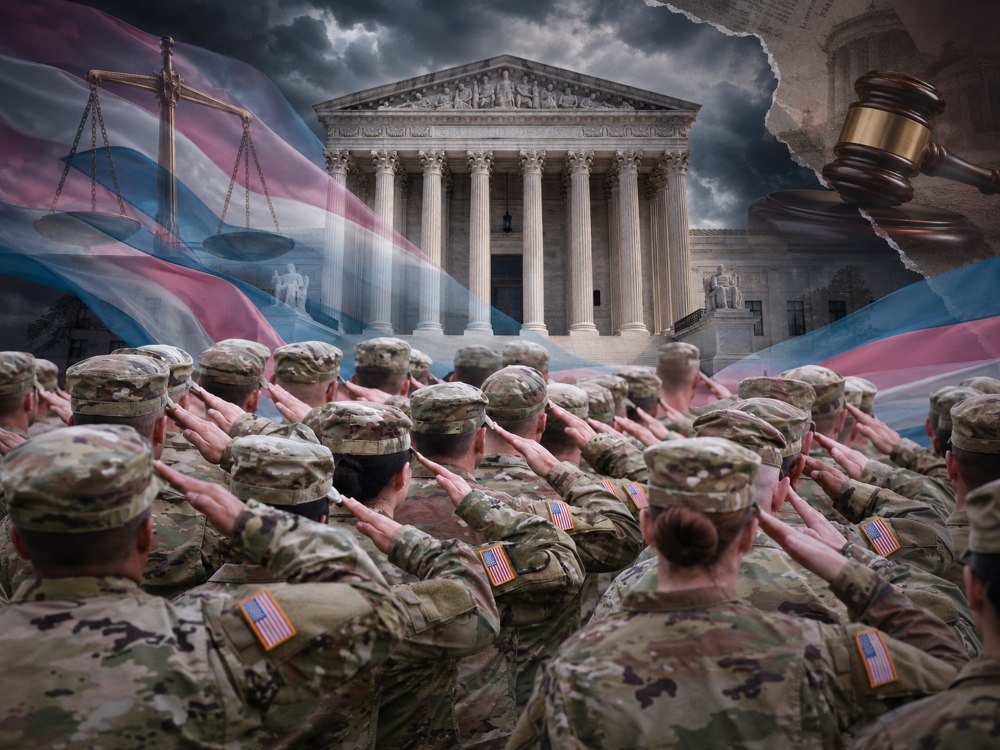

The Trump administration has asked the United States Supreme Court to uphold its restrictions on transgender military service, escalating a legal battle that could affect thousands of current and prospective personnel.
The Justice Department filed its petition on 28 August, asking the Court to review a ruling that prevents the Pentagon from discharging transgender service members involved in Talbott v United States while their case continues.
The administration argues that decisions over who is eligible to serve in the military deserve significant judicial deference. Lawyers representing the service members say the policy unlawfully targets transgender people who are already serving successfully.
What The Case Is About
The dispute stems from an executive order Donald Trump signed shortly after returning to office in January 2025.
The policy that followed generally disqualifies people with a history of gender dysphoria or certain forms of gender transition from serving, with limited exceptions.
The administration argues the restrictions are based on medical standards and military readiness rather than transgender identity.
However, the US Court of Appeals for the District of Columbia Circuit reached a different preliminary conclusion in June.
Judge Robert Wilkins wrote that parts of the policy were arbitrary and appeared to be motivated by hostility towards transgender people. The court therefore kept protections in place for current service members while the lawsuit proceeds.
Administration Takes The Fight To The Supreme Court
Solicitor General D John Sauer has now asked the Supreme Court to step in before the case reaches a final judgment at trial.
He argues that the appeals court failed to give sufficient weight to the military’s authority to determine who can serve.
Lawyers challenging the policy say that would allow experienced service members to be discharged before the courts have fully examined whether the policy is constitutional.
National Center for LGBTQ Rights legal director Shannon Minter criticised the request, saying the administration was seeking to remove “proven, decorated soldiers” before their legal challenge had been resolved.
Thousands Could Be Affected
Pentagon figures have identified thousands of active-duty, reserve and National Guard personnel diagnosed with gender dysphoria, while estimates of the wider number of transgender people serving have been higher.
The policy has created considerable uncertainty for those personnel since the Supreme Court allowed the Pentagon to begin enforcing most of the restrictions in May 2025 while separate lawsuits continued.
That earlier decision was temporary and did not determine whether the ban itself is constitutional.
Research has also challenged claims that open transgender service undermines military effectiveness.
A Pentagon-commissioned RAND study found that allowing transgender personnel to serve openly was expected to have a minimal impact on readiness and healthcare costs. More recent research has similarly found no evidence that transgender personnel damage unit cohesion.
Supreme Court Could Hear The Case This Term
The Supreme Court must first decide whether to take the case.
If it does, arguments could be heard during the term beginning in October, potentially leading to a ruling in 2027.
For transgender service members, the outcome could determine whether they are able to continue military careers they have already built — or whether the federal government can exclude them under a policy lower courts have found likely discriminatory.