








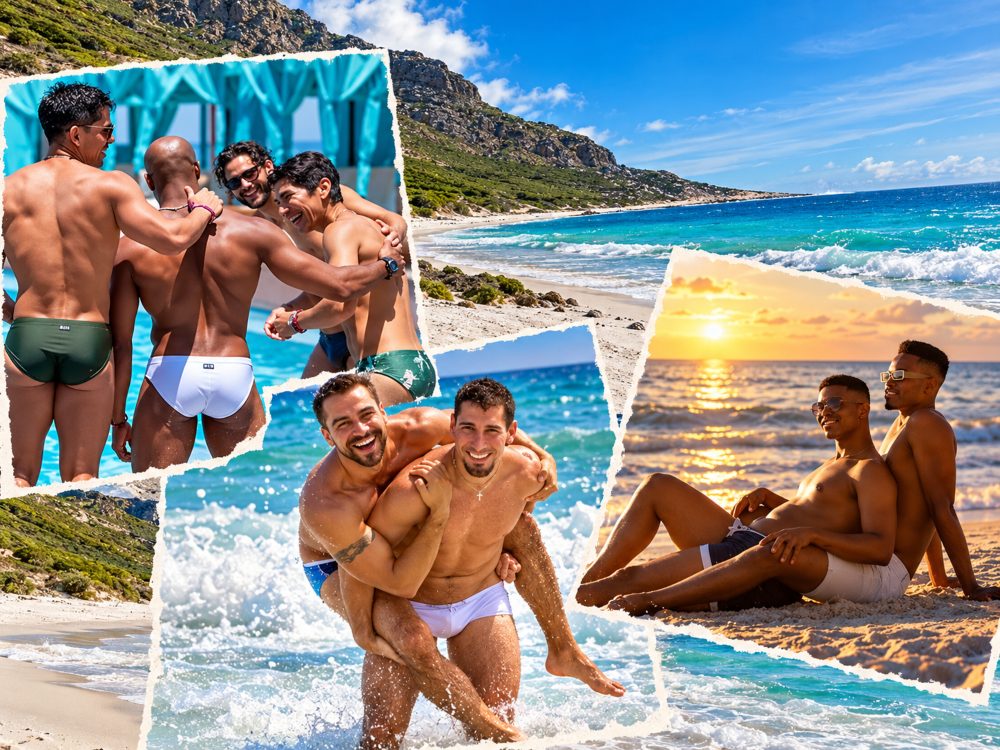

A long-running battle over one of Cape Town’s best-known queer-friendly beaches is intensifying, with new signs warning against nudity and reports that drones are being used to monitor visitors.
Sandy Bay has been known for decades as Cape Town’s unofficial nudist beach and a popular gathering place for gay men.
But despite that long-standing reputation, it has never been formally designated as a naturist beach.
Now, as campaigners push for official clothing-optional status, some nearby residents and community groups are backing tougher enforcement of existing rules.
New Signs Warn Against Nudity
Recent signs installed around Sandy Bay reportedly warn visitors that nudity and “sexual misconduct” are prohibited and that infringements may result in fines.
The signage was funded by the Llandudno Community Improvement District and residents of Kronenzicht, with support reportedly coming from SANParks and local councillor Cameron Patrick.
The signs also tell visitors that drones are monitoring the area.
Hout Bay Community Crime Prevention welcomed the measures, describing them as part of an effort to make the beach “safer and more welcoming for everyone”.
The organisation has also referred to plans for additional camera technology monitoring access to the area.
However, critics argue that nudity itself should not be conflated with illegal or harmful sexual behaviour.
A Beach With Deep Queer History
Sandy Bay’s reputation as a gay-friendly beach stretches back decades.
Its secluded location and relatively difficult access helped make it a popular destination for LGBTQ+ people, particularly gay men, from at least the 1970s.
The City of Cape Town itself has previously described Sandy Bay as its “unofficial nudist beach”, noting both its isolation and popularity with the gay community.
For many queer Capetonians, that history means Sandy Bay is not simply another beach.
It forms part of the city’s LGBTQ+ social and cultural landscape.
That context has made the current crackdown particularly sensitive.
Campaigners Want Official Naturist Status
In March, campaigner Arno Tietz-Geldenhuys launched a petition calling for Sandy Bay to be formally recognised and regulated as a naturist beach.
The proposal argues that official status could actually improve safety by creating clear boundaries and rules around behaviour.
Those proposed rules include bans on sexual activity, harassment and non-consensual photography, alongside clear signage and defined clothing-optional areas.
Supporters say the current unofficial status creates confusion.
Naturists may believe nudity is tolerated because of the beach’s decades-long reputation, while authorities continue to point out that no formal designation exists.
SANParks has previously stressed that Sandy Bay forms part of Table Mountain National Park and has never officially been declared a naturist beach.
‘Nobody Slips On A Banana Peel And Lands Up At Sandy Bay’
South African comedian and influencer Anton Taylor has criticised the latest enforcement push.
He argued that Sandy Bay’s isolation means people generally arrive knowing its longstanding reputation.
“You have to hike quite a bit to get to Sandy Bay, so nobody is being exposed against their wishes,” Taylor said.
“Nobody slips on a banana peel and lands up at Sandy Bay. You go there by choice.”
He also questioned whether drones were the best use of public-safety resources in a city facing serious violence elsewhere.
“Surely we could rather use those drones somewhere more deserving,” he said.
Nudity And Misconduct Are Not The Same Thing
One of the central tensions in the debate is the tendency for arguments around Sandy Bay to mix together naturism, public sex, harassment and other alleged illegal activity.
Those are not the same thing.
Non-sexual nudity is central to naturist culture, while sexual assault, exploitation, drug-related offences and sex involving minors are separate criminal matters.
The petition for official naturist status explicitly proposes stricter rules against sexual misconduct and non-consensual photography.
That means the current debate is not simply between people who want “anything goes” and those who want safety.
It is also about whether regulation could offer a better framework than trying to erase a culture that has existed at Sandy Bay for decades.
A Queer Space At A Crossroads
For LGBTQ+ communities, the future of Sandy Bay raises a broader question about who gets to define historically queer spaces as cities change.
The beach’s unofficial status has always made it vulnerable.
It is both widely known as a gay-friendly naturist destination and formally treated as something else.
Campaigners now want authorities to acknowledge that reality and regulate it.
Opponents want clearer enforcement of existing rules.
What happens next will determine whether Sandy Bay’s long-standing queer and naturist identity is formally recognised — or increasingly pushed out.