








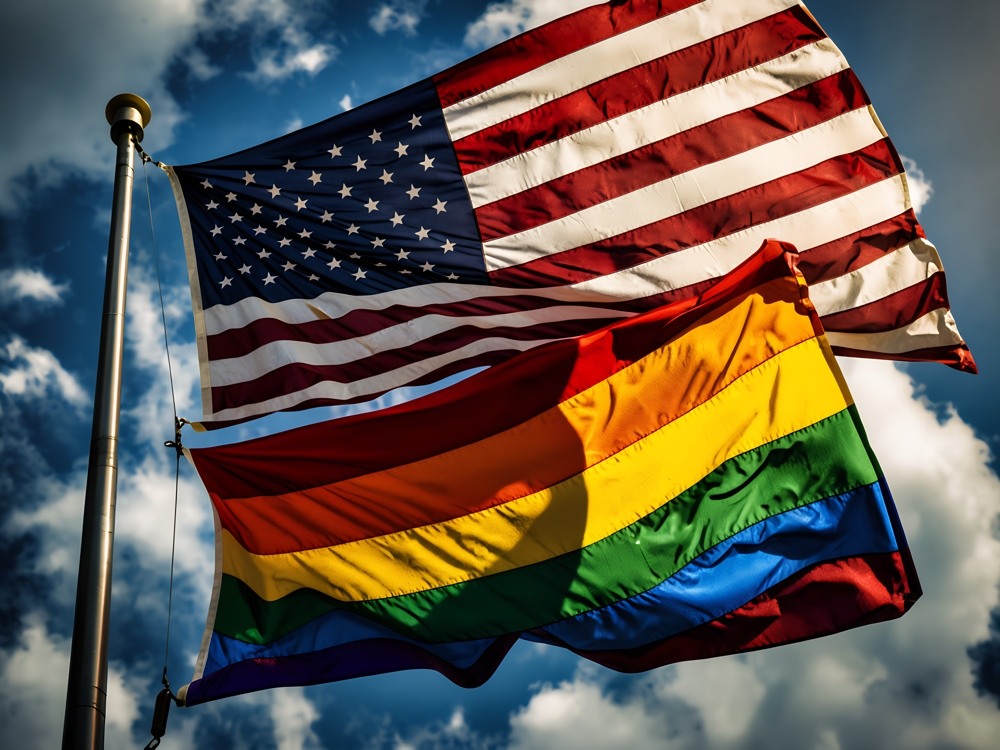

Virginia voters will decide in November whether to remove the state constitution’s same-sex marriage ban and replace it with an explicit guarantee of marriage equality.
More than a decade after same-sex couples began legally marrying in Virginia, voters are being asked whether those rights should also be expressly protected in the state’s constitution.
Question 2, which will appear on ballots at Virginia’s 3 November 2026 election, asks voters whether the constitution should be amended to remove its existing ban on same-sex marriage, affirm that two adults may marry regardless of sex, gender or race, and require lawful marriages to be treated equally under state law.
The vote comes as early voting is already under way in the US state.
For LGBTQ+ Virginians, the unusual situation is that marriage equality is already legal, while discriminatory wording remains embedded in the state constitution.
Virginia’s current constitution, amended by voters in 2006, says that only a marriage between “one man and one woman” can be valid or recognised by the state. That provision has been unenforceable since federal court rulings overturned Virginia’s ban, but it has never been removed from the document itself.
Same-sex couples have been able to marry in Virginia since 6 October 2014, when the US Supreme Court declined to hear an appeal of a federal court ruling striking down the state’s ban. The following year, the Supreme Court’s landmark Obergefell v. Hodges decision established a nationwide constitutional right for same-sex couples to marry.
‘A critical vote’
Arlington couple Rob Bookbinder and James Fisher have been together for 38 years and married in 2014.
Speaking to the Washington Blade, Fisher described the amendment as a “critical vote”, saying he wanted Virginia’s constitution brought into line with the reality of marriage equality in the state.
Bookbinder said marriage had also carried a powerful sense of social equality for the couple.
“I was surprised how good it felt, how important it was to begin to say, ‘my husband rather than my partner,’” he told the publication.
The couple are among supporters of Question 2 who argue that removing the old constitutional language would provide stronger state-level protection if federal constitutional law changes in the future.
The proposed new wording would state that Virginia cannot deny a marriage licence to two adults because of their sex, gender or race, and must recognise and treat lawful marriages equally.
Why does the vote matter if same-sex marriage is already legal?
There are several overlapping layers of protection for same-sex marriage in the United States.
Virginia state law already says officials cannot refuse a marriage licence because of the sex, gender or race of the couple.
At the federal level, Obergefell currently requires every state to issue marriage licences to same-sex couples and recognise their marriages. The Respect for Marriage Act, passed by Congress in 2022, separately requires the federal government and US states to recognise marriages that were legally entered into where they were performed.
Question 2 would add another layer by placing marriage equality directly into Virginia’s own constitution.
If a majority votes in favour, the amendment is scheduled to take effect on 1 January 2027.
A familiar debate for New Zealanders
For New Zealand readers, the debate arrives more than 13 years after Parliament passed the Marriage (Definition of Marriage) Amendment Act 2013.
Aotearoa’s law defines marriage as the union of two people regardless of their sex, sexual orientation or gender identity, with the first same-sex marriages taking place here on 19 August 2013.
Virginia voters will now decide whether a comparable guarantee of equal access to marriage should sit in their state’s highest law.