
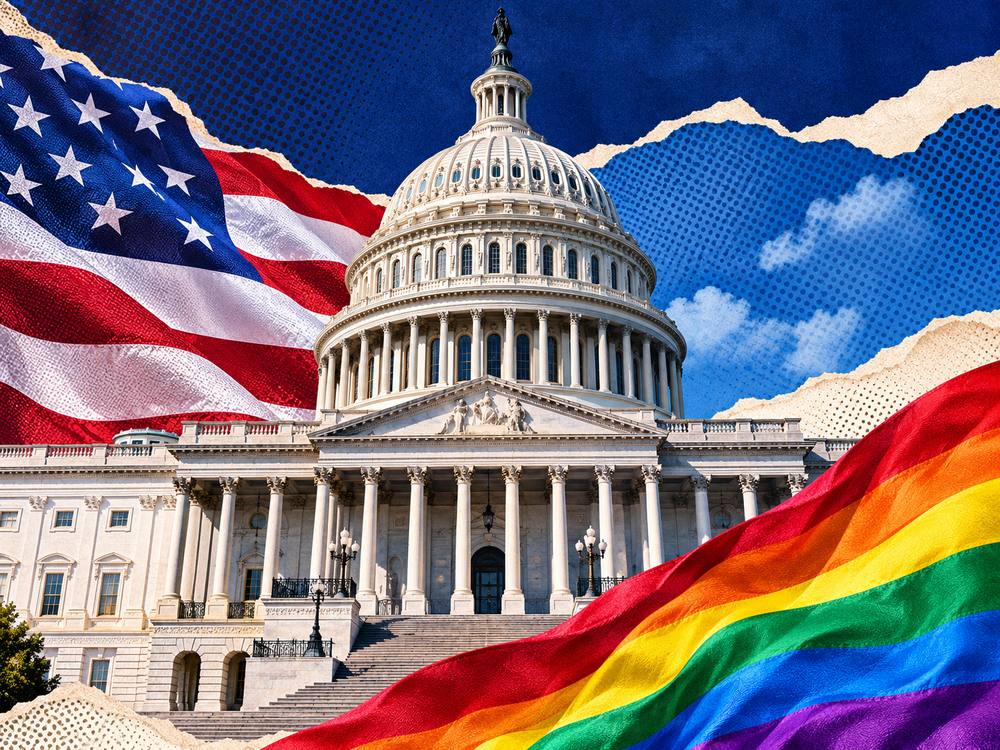
Democrats have won control of the US House and Senate, creating a stronger congressional check on Donald Trump and a new political opening for LGBTQ+ advocates. But the election result will take time to translate into policy—and the president retains considerable power.
Democrats have won control of both chambers of the United States Congress in a major setback for President Donald Trump, with the result opening a new chapter in the fight over LGBTQ+ rights.
The midterm election took place on Tuesday 3 November, US time, with the outcome reported on Wednesday 4 November in New Zealand. The incoming majorities will take over when the new Congress begins in January 2027.
For rainbow Americans, the significance goes beyond the number of seats changing hands. Control of Congress determines who leads committees, which legislation advances and how closely the administration is questioned about its decisions.
A Stronger Check On Washington
A Democratic House can use hearings and investigations to examine federal policy and demand answers from administration officials. That creates opportunities to scrutinise decisions affecting LGBTQ+ communities, although the extent of that scrutiny will depend on the priorities congressional leaders choose.
The Senate result adds another important layer.
Presidents nominate federal judges, Supreme Court justices and many senior government officials, but those appointments require Senate approval. A Democratic majority can therefore reject nominees or decline to advance them.
That could prove significant for rainbow communities because judges and senior officials help shape how civil-rights protections are interpreted and enforced.
It does not change the membership of the Supreme Court overnight. Sitting justices retain their positions, and any future appointment would depend on a vacancy and the nomination process.
An Opening For Rights Advocates
Congressional control also gives Democrats greater influence over the legislative agenda.
For LGBTQ+ advocates, that creates an opening to seek stronger protections and challenge proposals they oppose. It also gives campaigners new opportunities to press lawmakers publicly on their commitments.
Those possibilities should be understood as opportunities rather than promises. Winning a majority does not establish which bills will pass, how individual members will vote or what compromises party leaders will accept.
Nor should the election be read as proof that every voter was casting a ballot on rainbow rights. Reporting on the result points to a broader mix of concerns, including living costs and dissatisfaction with the administration.
Trump Still Holds The Veto
The United States now faces divided government.
Trump remains president and can veto legislation passed by Congress. Overriding a presidential veto requires a two-thirds vote in each chamber, a much higher threshold than an ordinary majority.
Senate procedure creates another obstacle: most legislation facing a filibuster needs 60 votes to end debate under current rules.
The election itself does not repeal state laws, cancel executive policies or resolve ongoing court cases. Each of those requires its own legal or political process.
For New Zealand rainbow readers following America’s influence on global debates, the practical change is a shift in who can challenge, scrutinise and negotiate with the White House.
The next test is how the incoming Congress uses that power—and whether its new majorities turn political opportunity into lasting protection.