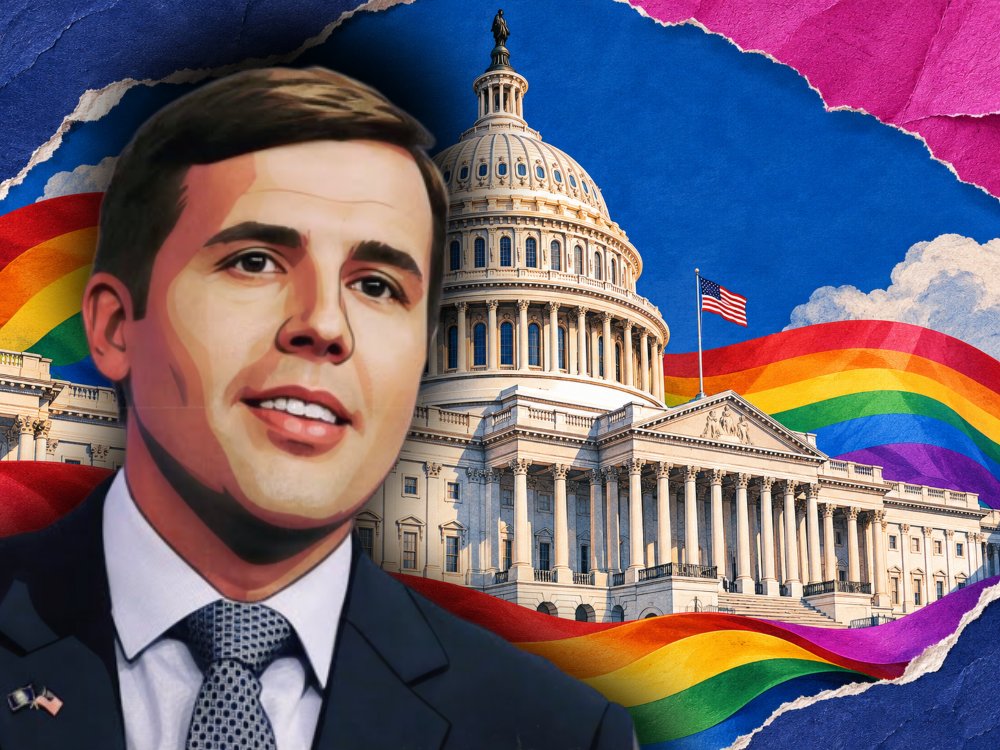
Fresh from making history as the first openly gay man elected to the US Senate, Chris Pappas has pledged to defend LGBTQ+ rights and marriage equality as he prepares to take on one of Washington’s most powerful responsibilities — scrutinising Donald Trump’s judicial nominees.
The Democratic senator-elect, who won New Hampshire’s Senate race on 3 November, says protecting the legal rights of LGBTQ+ Americans will be a priority when considering candidates nominated to serve on federal courts.
Speaking to LGBTQ+ publication The Advocate following his historic victory, Pappas made clear that he wants judicial nominees to respect the landmark Supreme Court decisions protecting marriage equality, privacy and personal freedom.
His comments come as LGBTQ+ rights remain a significant issue in American politics, particularly regarding transgender healthcare, anti-discrimination protections and the future of same-sex marriage.
Marriage Equality Is A Priority
In his interview, published on 6 November, Pappas specifically highlighted Obergefell v. Hodges, the landmark 2015 Supreme Court ruling that established marriage equality across all 50 US states.
The decision recognised that same-sex couples have a constitutional right to marry, requiring states to issue marriage licences and recognise marriages performed elsewhere.
Pappas says respect for that legal precedent will be an important consideration when evaluating judicial nominees.
“I need to know that they respect the precedent that has been set in Obergefell,” he told The Advocate.
He also emphasised the importance of previous court decisions protecting privacy and individuals’ freedom to make personal decisions about their lives.
As a senator, Pappas will have the opportunity to question judicial nominees and vote on whether they should be confirmed.
The position gives him a more direct role in shaping the federal judiciary than he held while serving in the House of Representatives.
However, his pledge does not create new legal protections or guarantee the outcome of any future confirmation vote.
Could Marriage Equality Be At Risk In America?
Although same-sex marriage has been legal nationwide since 2015, debate about its constitutional protections has continued.
Some conservative legal figures have questioned the reasoning behind Obergefell, while LGBTQ+ organisations have warned about the consequences if the Supreme Court were to reconsider the ruling.
In 2022, Congress passed the Respect for Marriage Act, which established additional federal protections for legally recognised same-sex and interracial marriages.
The legislation requires federal recognition of qualifying marriages and recognition by states of marriages lawfully performed elsewhere.
However, it does not independently require every state to issue same-sex marriage licences if Obergefell were overturned.
That distinction helps explain why supporters of marriage equality continue to place importance on the Supreme Court’s existing precedent.
Pappas has previously supported the Respect for Marriage Act and other legislation intended to strengthen LGBTQ+ civil rights.
His latest comments indicate that he intends to bring that record into his work in the Senate.
A Historic Victory Celebrated With His Husband
Pappas’s commitment to marriage equality also carries personal significance.
The 46-year-old politician celebrated his historic election victory alongside his husband, Vann Bentley, whom he married in 2023.
The couple shared an emotional moment during Pappas’s election-night celebrations in Manchester, New Hampshire.
Speaking to supporters, he reflected on how fortunate he felt to be married to the man he loves.
In his subsequent interview with The Advocate, Pappas acknowledged the significance of his and Bentley’s relationship becoming visible within an institution that has never previously had an openly gay male senator.
He said the couple were conscious of the example their presence could provide to LGBTQ+ people who had not previously seen a family like theirs represented in the chamber.
His victory followed a contest against Republican former senator John E. Sununu, with Pappas winning the seat being vacated by retiring Democratic senator Jeanne Shaheen.
Having represented New Hampshire’s 1st Congressional District since 2019, Pappas will officially take up his Senate position in January 2027.
LGBTQ+ Rights And Everyday Issues
While LGBTQ+ equality remains an important part of Pappas’s political record, he says his priorities also include issues affecting Americans more broadly.
Throughout his election campaign, Pappas focused on household costs, healthcare affordability and economic pressures facing New Hampshire residents.
Following his victory, he argued that voters expected political leaders to focus on practical concerns, including grocery prices, fuel costs and health insurance.
He also criticised political campaigning that targets LGBTQ+ communities, suggesting that such messaging had become less effective with voters.
That is Pappas’s assessment of the election rather than an established conclusion about voting behaviour nationwide.
His legislative record includes support for the Equality Act, protections for LGBTQ+ military veterans and efforts to prohibit the use of so-called gay and transgender “panic” defences in federal courts.
He has also expressed opposition to restrictions on transgender healthcare.
However, his previous voting record has attracted criticism from some LGBTQ+ advocates, including his support for a broader defence bill in 2024 that contained restrictions affecting healthcare for transgender minors in military families.
Pappas said he opposed that provision but supported the overall legislation because of its wider defence-related measures.
What Does His Election Mean For Rainbow Communities?
For LGBTQ+ communities in Aotearoa New Zealand and internationally, Pappas’s election represents another significant development in openly rainbow political representation.
New Zealand legalised same-sex marriage in 2013, two years before the United States recognised it nationwide.
While the American judicial system operates differently from New Zealand’s, the debate surrounding marriage equality highlights how legal protections and judicial decisions can shape LGBTQ+ people’s everyday lives.
Pappas’s arrival in the Senate will place an openly gay politician in a chamber responsible for considering legislation and confirming federal judges.
His future voting record will provide a clearer measure of how he uses that influence.
For now, the senator-elect has identified marriage equality and personal freedom as important considerations in his approach to judicial nominations.
And after making history at the ballot box, Chris Pappas is preparing for the next chapter — turning his commitment to LGBTQ+ equality into decisions made on the floor of the United States Senate.