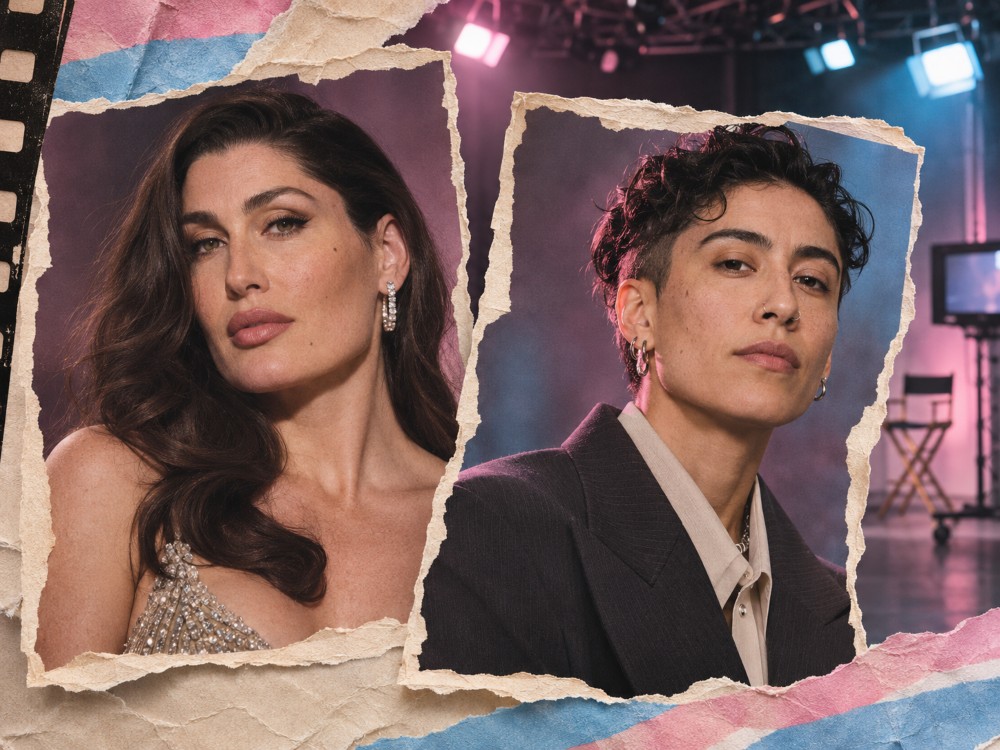
Transgender representation on television has suffered a dramatic decline, with a major new report revealing that the number of trans characters has fallen from 33 to just seven in a single year. Now, actors including Trace Lysette and Vico Ortiz are speaking out about the lack of opportunities facing transgender performers in Hollywood.
Just a few years ago, it appeared transgender representation was making significant progress on screen.
Shows such as Pose, Transparent and Our Flag Means Death had helped bring transgender and non-binary characters into mainstream entertainment, while a growing number of openly trans actors were landing prominent roles.
But new research suggests that progress has stalled.
LGBTQ+ media advocacy organisation GLAAD has released its latest Where We Are on TV report, revealing a staggering 79% decline in transgender characters across the scripted television programmes it tracks.
And for the actors whose careers depend on those opportunities, the consequences are becoming increasingly personal.
Just Seven Transgender Characters Remain In GLAAD’s TV Count
GLAAD’s 2025–2026 report examines LGBTQ+ representation across scripted American broadcast, cable and selected streaming television programmes released between 1 June 2025 and 31 May 2026.
The findings reveal a significant decline across several areas of representation.
The organisation counted 369 LGBTQ+ characters, down from 489 the previous season — a decrease of approximately 25%.
But the reduction in transgender representation was considerably more severe.
The number of transgender characters dropped from 33 to just seven, representing a decline of almost four-fifths.
Of those seven characters, six were transgender women and one was a transgender man. No transgender non-binary characters were counted in the study.
Even more concerning, all seven appeared in programmes that have since been cancelled, concluded or were produced as limited series.
That means none of the seven characters is expected to return in the following television season.
The findings apply to the programmes and period covered by GLAAD’s research, rather than every television production currently being developed.
Nevertheless, the figures reveal a substantial reduction in the visibility of transgender characters within mainstream scripted television.
Trace Lysette Says Her Career Has Stalled Despite Critical Acclaim
For transgender actress Trace Lysette, the industry’s changing landscape has been particularly difficult.
Lysette earned widespread recognition for her performance in the 2022 film Monica, receiving an Independent Spirit Award nomination for Best Lead Performance.
The achievement appeared to represent a breakthrough following earlier roles in Transparent, Hustlers and Pose.
But the opportunities she expected to follow never arrived.
Speaking to The Guardian in an interview published on 15 November, Lysette revealed that she had auditioned for approximately seven roles throughout 2026.
She also said she had not secured another lead role or major studio project since Monica.
The actress described the emotional impact of watching her career lose momentum after years of hard work.
“It was almost like nothing I did had mattered,” she recalled.
Lysette also revealed that she had lost her Screen Actors Guild health insurance two years earlier, highlighting how reduced employment opportunities can affect performers beyond their immediate income.
For working actors in the United States, professional employment can determine eligibility for important benefits, including healthcare coverage.
Vico Ortiz Says Trans Actors Are Being Left Behind
Non-binary actor Vico Ortiz has described a similarly difficult experience.
Ortiz became a fan favourite playing Jim Jimenez in the queer pirate comedy Our Flag Means Death, a role that brought significant visibility to non-binary representation.
However, the show’s cancellation in 2024 was followed by a noticeable reduction in major audition opportunities.
Speaking to The Guardian, Ortiz said they had increasingly turned towards smaller independent productions, audiobook narration and voice acting.
The Puerto Rican performer also questioned why the limited major roles coming their way were frequently for cisgender women rather than characters reflecting their own identity.
The lack of work has had wider consequences for transgender and non-binary performers, particularly where income affects access to healthcare and other essential services.
Despite the challenges, Ortiz remains determined to continue creating opportunities and telling queer stories.
They have increasingly focused on independent projects and alternative creative work as major studio opportunities become harder to secure.
Our Flag Means Death Has A Strong Aotearoa Connection
For LGBTQ+ audiences in New Zealand, Ortiz’s experience has a particularly interesting local connection.
The second season of Our Flag Means Death, starring Rhys Darby and Taika Waititi, was filmed in Aotearoa.
Production moved from Los Angeles to Kumeū Film Studios, west of Auckland, with post-production also taking place in the city.
According to the New Zealand Film Commission, 96% of the production’s crew were New Zealanders, while 78% of the cast were also local performers.
The series became internationally popular for its queer storytelling, including the central romance between Stede Bonnet and Blackbeard, alongside Jim’s non-binary identity.
Its cancellation disappointed fans who had celebrated the show’s inclusive representation and unconventional approach to LGBTQ+ relationships.
The current decline in transgender television characters raises questions about where the next generation of similarly inclusive productions will come from.
Rebecca Root Says Relationships Matter More Than Ever
British transgender actress Rebecca Root, known for her roles in Boy Meets Girl, The Queen’s Gambit and Heartstopper, has also noticed the changing industry.
Root told The Guardian she believes some studios have become increasingly cautious about producing transgender storylines because of fears about audience backlash.
However, she also highlighted the importance of maintaining relationships with directors and producers who have previously supported transgender talent.
Root credited The Queen’s Gambit writer-director Scott Frank with helping her secure additional work after their initial collaboration.
Her experience points towards a broader challenge facing the entertainment industry.
It’s not simply about providing one breakthrough role for a transgender performer.
It’s also about ensuring they can build sustainable careers, return for future productions and have opportunities to portray a diverse range of characters.
Root remains hopeful that opportunities for transgender actors will eventually improve.
Why Are Transgender Roles Disappearing?
The reasons behind the decline are complex.
Hollywood has experienced significant changes in recent years, including reduced production, streaming industry restructuring and the effects of the 2023 writers’ and actors’ strikes.
However, GLAAD’s research suggests that the decline in LGBTQ+ representation has been considerably greater than the overall reduction in American television production.
The organisation reported a roughly 25% fall in LGBTQ+ characters, compared with a 15% decrease in US-produced television premieres over a similar period.
Some performers and industry advocates believe political hostility towards transgender people has also made studios more cautious about commissioning trans-led stories.
Those concerns are their assessment of the industry’s changing environment rather than a conclusively established explanation for every casting decision.
The findings also come despite the international popularity of LGBTQ+ programmes including Heated Rivalry, demonstrating that queer storytelling can still attract enthusiastic mainstream audiences.
Why Trans Representation Matters
For transgender, non-binary and takatāpui audiences in Aotearoa New Zealand, the international decline raises questions about visibility and whose stories are being told.
Television has the ability to introduce viewers to people and experiences they may not otherwise encounter.
For LGBTQ+ young people, seeing characters who share aspects of their identity can provide recognition, connection and a sense of possibility.
But visibility also matters behind the camera.
Transgender actors need access to auditions, casting opportunities, sustainable employment and roles that aren’t limited to stories about gender identity.
Greater inclusion can also mean transgender performers playing characters whose gender isn’t central to the plot.
GLAAD’s findings suggest that progress in these areas cannot be assumed simply because several successful LGBTQ+ programmes have appeared in recent years.
The Fight For Trans Visibility On Screen Continues
While the statistics are concerning, the report does not mean transgender storytelling has disappeared entirely.
Independent filmmakers, smaller productions and emerging television projects continue to create opportunities for trans and non-binary performers.
Several productions released after GLAAD’s reporting period also feature transgender actors, meaning the study should not be treated as a complete picture of every current project.
For performers including Lysette, Ortiz and Root, however, the central issue remains access to meaningful and consistent work.
Hollywood has demonstrated that it can produce successful stories featuring transgender characters.
The question now is whether studios, networks and streaming services will continue creating those opportunities.
Because representation shouldn’t end after one breakthrough role. Transgender performers deserve the same chance as everyone else to build lasting careers, tell different stories and be seen on our screens.