









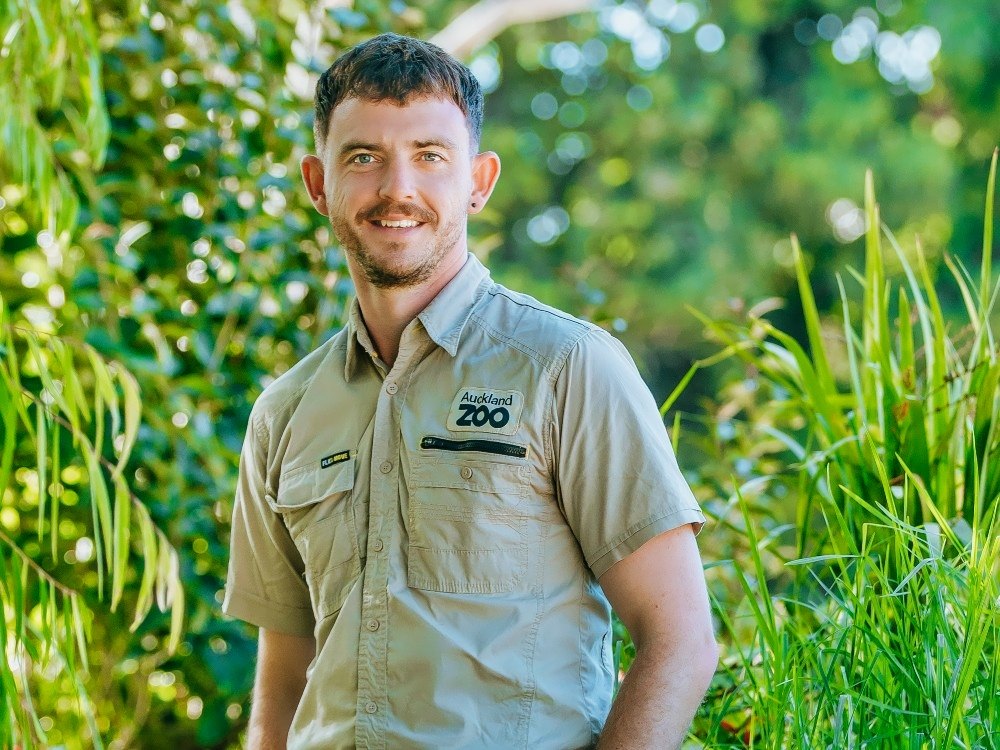
Michael ‘Heff’ Hepher reveals the science, hard work and wonder behind modern zookeeping.
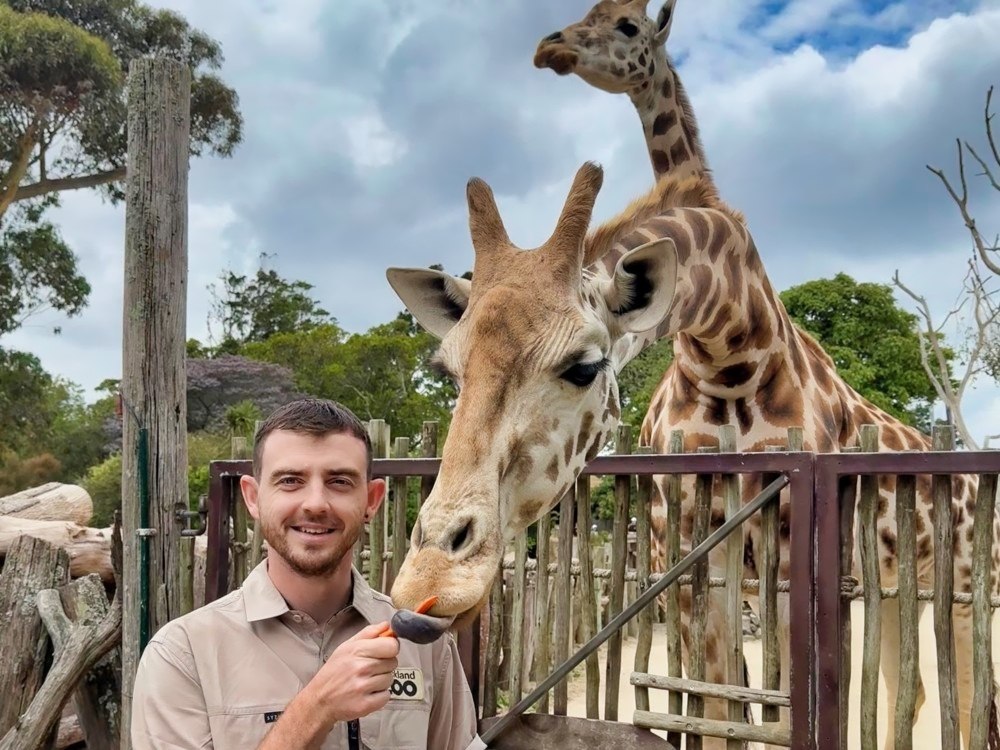
Michael Hepher has worked with giraffes for years, but he still talks about them like someone seeing them for the first time.
“They are so delicate,” he says, describing them as “gentle giants” and marvelling at the simple fact they exist at all. “They don’t look real! We’ve got Billy, who’s over five metres tall, you’re like, how has this thing come to be?”
That sense of wonder runs through everything Heff says. It is there when he talks about giraffes, when he talks about rhinos, and even when he explains the word ungulate with the enthusiasm of someone who genuinely loves getting into the details.
“An ungulate means a hoofed mammal,” he explains. “So you get odd-toed ungulates like rhino and even-toed ungulates like giraffe.”
As Auckland Zoo’s ungulates team leader, Heff looks after both those species, along with zebra, antelope and ostriches. It is a job built around observation, care and a huge amount of physical work.
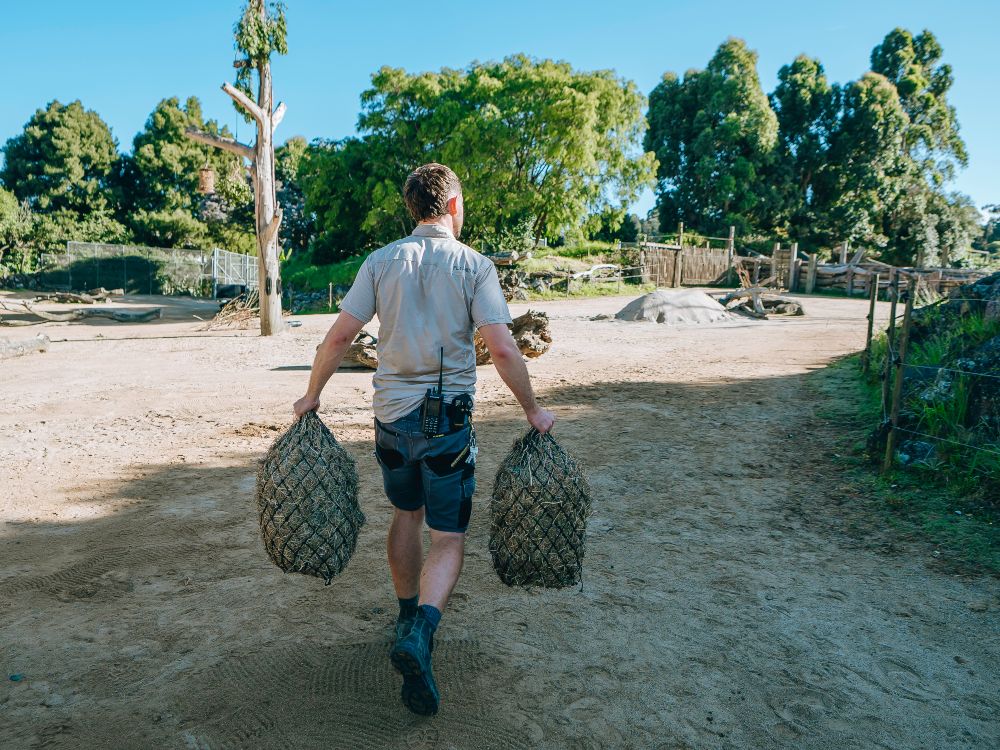
“We deal with all the hay and straw. Rhinos need 25 kilograms of hay a day to keep them going.” Rhinos, he explains, are “purely hay-based”, while giraffes need vast amounts of browse, with “20 bundles of leafy matter every single day” put up for them to strip, chew and forage through.
That attention to natural behaviour is central to how Heff sees a modern zoo. “Conservation and an evidence-based science of care approach are at the heart of good zoos today, and Auckland Zoo is amazing for this.” He describes the animals at the zoo as “ambassadors for their wild counterparts”, and says that for visitors, the chance to encounter them up close can be transformative.
“You want to see habitats that instigate natural behaviours,” he tells us, looking up at the orangutans traversing aerial pathways during our walkaround. “How can you not be fascinated and inspired by them?”
Heff describes himself as “a bit of a zoo geek”, and the label seems fair. He has visited countless zoos around the world, often using those trips to meet other keepers and build connections across the industry. “It’s a hugely close-knit community,” he says. “I’d always message and meet up with a zookeeper or curator, and chat about ideas we were having and what they were up to.”
That international network is not just social. It is essential. Zoos are constantly working together around breeding, genetics and animal transfers. “We have to in the industry when we’re moving animals around to keep genetics good,” he explains.
Heff moved to Auckland in January 2025 for this “dream role” with the Ungulates team. Before arriving here, he had already built a career around zoo biology, giraffe care and conservation, including university research focused on giraffe nutrition, work with nearly 40 giraffes across five collections, and involvement in international giraffe best-practice work. He has also contributed to rhino conservation projects in Indonesia and a bison reintroduction project in Azerbaijan.
But it is giraffes that light him up most. “One day I would love to go and work with GCF, the Giraffe Conservation Foundation,” he admits.
What interests him is the research still to be done around them. “They weren’t a massively studied animal,” he says. “They call it the silent extinction, because numbers were going down. You’d heard elephants were endangered and there was risk to them, but no one knew that giraffes were the same.” In some giraffe populations, he says, there were “fewer of them than elephants”.
But if giraffes are the dream, rhinos are where some of the hardest parts of the job come into focus.
Heff’s story in Season 4 of Three’s Wild Heroes centres on Zambezi, Auckland Zoo’s 36-year-old rhino, who was humanely euthanised last December after a long decline caused by periodontal disease. “There’s only so much, after a while, that you can do,” Heff says. “We started noticing that he was dropping food, his weight was slowly declining.”
What followed was an intensive, deeply scientific effort to understand exactly how Zambezi was coping, which included monitoring chewing and collecting and analysing rhino poo.
“One of our team, called Georgie, self-classifies as ‘the poo queen’,” he says. “It’s very Jurassic Park.” By measuring the hay in Zambezi’s dung over a year and a half, the team could see when he was no longer chewing properly. “So with that, we could see that it was time, and the vets obviously make that call.”
The impact on the team was significant. “It’s huge,” he says of losing an animal like Zambezi. “He was such a legend.” But Heff also speaks about legacy. Zambezi has fathered three calves, and his genetics remain important in the regional rhino population. “It is a big hole that he leaves,” he says, but with Zambezi’s eldest female offspring, Nyah, being transferred to an Australian zoo for breeding, Heff notes, “this is a new dawn for rhinos in the area.”
For all the emotional intensity of the work, Heff still speaks about zookeeping with real joy. “It’s like a hobby that I get paid for,” he says. “I have to pinch myself. I do what I love, and I get paid to do this.”
He is honest, too, that the glamour wears thin when Auckland weather kicks in. “The rainy days are the ones where I’m soaked through to my underwear as I carry hay bales around,” he laughs.
But even on the wet days, Heff is still happy to come to work. “It is really good for your mental health to walk around this place,” he says. “We’re working in a green space in the middle of Auckland, surrounded by the most amazing animals. It’s a privilege.”