










Stonewall, widely recognised as the birthplace of the modern LGBTQIA+ rights movement, has been placed on a major preservation watchlist.
Advocates warn that attempts to erase queer and transgender history in the United States are placing the legacy of the Stonewall uprising under threat.
The National Trust for Historic Preservation this week added the Stonewall National Monument to its 2026 list of America’s 11 Most Endangered Historic Places, citing growing concerns over political interference, censorship, and the removal of LGBTQIA+ historical material linked to the site.
The decision comes amid escalating debate across the United States over LGBTQIA+ visibility, particularly the treatment of transgender history within government institutions and national parks.
Stonewall added to endangered places list
Established in 2016 by Barack Obama, the Stonewall National Monument was the first US national monument dedicated to LGBTQIA+ history.
Located in New York City’s Greenwich Village, the site commemorates the 1969 Stonewall uprising, when patrons of the Stonewall Inn fought back against a police raid in an event widely recognised as a catalyst for the modern gay liberation movement.
According to the National Trust for Historic Preservation, recent federal actions connected to the monument helped prompt the decision.
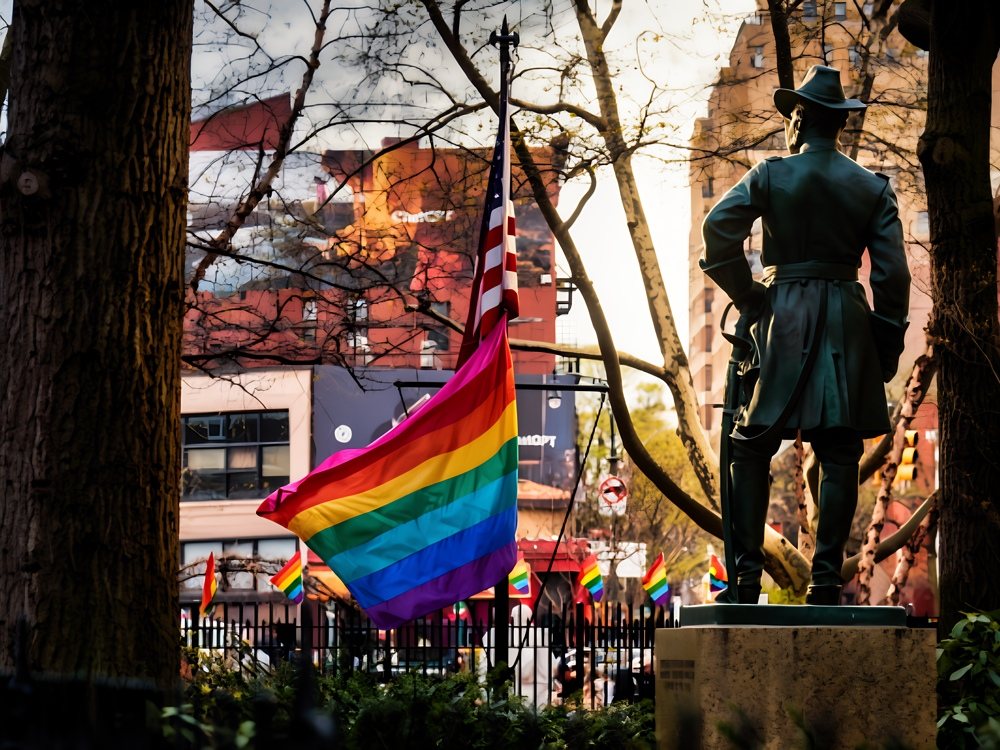
Those actions reportedly included the temporary removal of the Pride flag and the erasure of references to transgender and bisexual participants involved in the uprising.
For LGBTQIA+ advocates, the listing is about more than preserving a physical site. It is a warning that the history of Stonewall, and the communities who shaped it, remain vulnerable to political pressure.
Protecting queer and trans history
The Stonewall uprising has long been remembered as a turning point in LGBTQIA+ activism.
However, advocates have increasingly stressed that the movement’s history cannot be separated from the contributions of transgender people, bisexual people, drag performers, queer people of colour, sex workers and others whose role has often been marginalised or rewritten.
The decision to place Stonewall on the endangered list highlights fears that official recognition of LGBTQIA+ history is being narrowed at a time when queer and trans communities are facing heightened political attacks.
Preservation advocates say historic places are not only about buildings and monuments, but also about whose stories are allowed to be told.
For many LGBTQIA+ people, Stonewall remains a symbol of resistance, survival and collective power. Its inclusion on the endangered historic places list signals that even the most iconic sites of queer history still require active protection.
As debates over LGBTQIA+ rights and representation continue across the United States, advocates say safeguarding Stonewall’s full history is essential.
That means recognising not only the uprising itself, but the diverse communities who made it possible — including the trans and gender-diverse people whose visibility remains central to the story.