










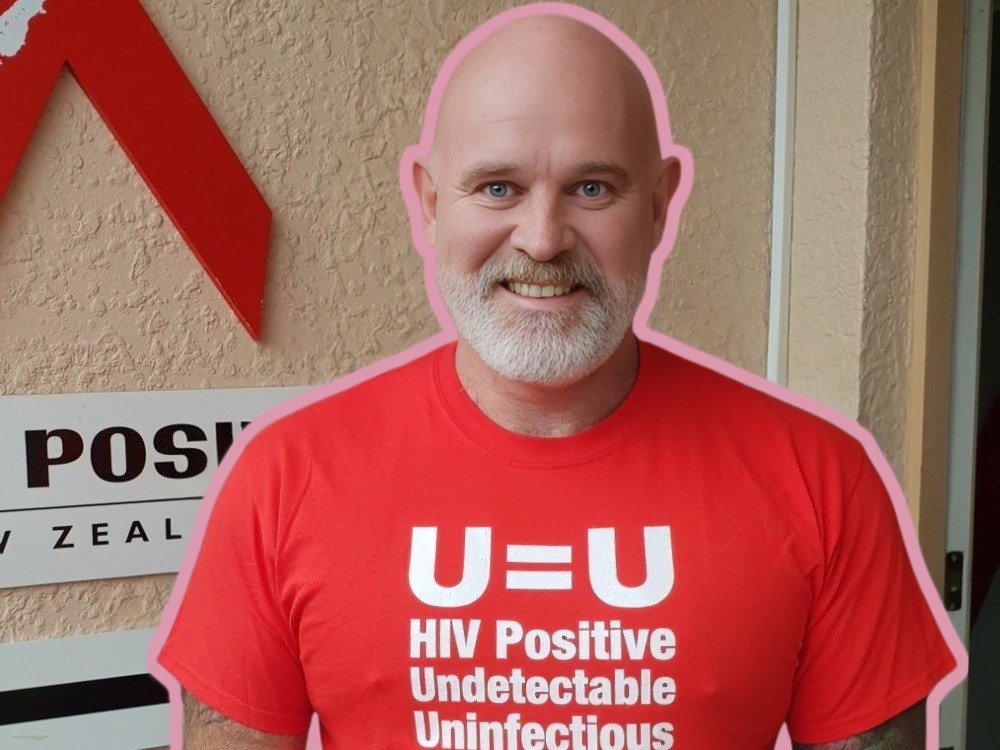
Body Positive Executive Director Mark David Fisher has been made a Member of the New Zealand Order of Merit, recognising more than a decade of advocacy, peer-led support and work challenging HIV stigma.
Fisher was named in the King’s Birthday Honours for services to sexual health, particularly for people living with HIV.
The recognition is significant not only for Fisher personally, but also for Aotearoa’s HIV and Rainbow communities. Through his work, Fisher has helped shift public conversations about HIV away from fear and shame, and towards care, science, dignity and community-led support.
Speaking with YOUR EX following the announcement, Fisher said the honour was deeply meaningful.
“It’s very humbling to receive this honour.. It’s nice to be recognised for the things that you do. Everyone appreciates being recognised and valued, as it can be challenging at times. But with the support of the amazing people that I get to work with we can make things happen. Most importantly we can focus on what is important for our community and doing our best to make a difference.”
Fisher took up the role of Executive Director at Body Positive in 2014. Since then, he has become a leading advocate for people living with HIV, working to improve access to testing, treatment, prevention and support services, while pushing back against the stigma that continues to surround HIV.
Body Positive was founded in response to HIV in the early 1980s and remains one of Aotearoa’s key peer-led organisations for people living with HIV. Its work includes support networks, educational forums, advocacy, testing services and community-building initiatives that aim to reduce isolation and ensure people living with HIV are listened to, respected and supported.
Under Fisher’s leadership, Body Positive has strengthened its role as both a community hub and an advocacy organisation. His work has included campaigns promoting Undetectable = Untransmissible, helping more New Zealanders understand that a person living with HIV who is on effective treatment and has an undetectable viral load cannot pass HIV on sexually.
Fisher has also advocated for wider access to HIV prevention tools, including PrEP and PEP, as well as improved access to HIV and STI testing. The Department of the Prime Minister and Cabinet’s citation credits him with helping reduce transmission through this work. It also notes his earlier contributions to significant HIV and Hepatitis C testing databases in Australia and Canada before he moved to Aotearoa.
In recent years, Body Positive has launched Test’n’Treat, a peer-led sexual health clinic in Auckland offering free, inclusive and non-judgemental testing and, in many cases, same-day treatment.
Speaking to YOUR EX last year, Fisher described the model as care that “meets people where they are”, particularly for Rainbow people, sex workers, migrants, people living with HIV and those who may have had poor experiences with mainstream healthcare.
His honour comes at a time when HIV stigma remains a major barrier to care in New Zealand. Manatū Hauora’s National HIV Action Plan notes that stigma and discrimination can affect testing, treatment, mental health, privacy and people’s willingness to engage with health services. It also calls for stronger peer-led support and anti-stigma initiatives.
Fisher’s recognition also acknowledges work beyond healthcare access. His citation highlights his role in campaigns to destigmatise HIV, his advocacy for equitable policy changes, his involvement in the National HIV Treatment Seminar and AIDS Candlelight Memorial, and his work initiating the Te Whare Āniwaniwa Rainbow Hub project in 2018.
For many in the community, the award recognises work that is often deeply personal, quietly persistent and life-changing. It is the work of creating spaces where people living with HIV are not treated as problems to be managed, but as whole people with rights, futures, relationships, families, joy and power.
At its heart, Fisher’s honour is a reminder of how far Aotearoa has come in its response to HIV, and how much of that progress has been driven by people and organisations that have refused to let stigma have the final word.