









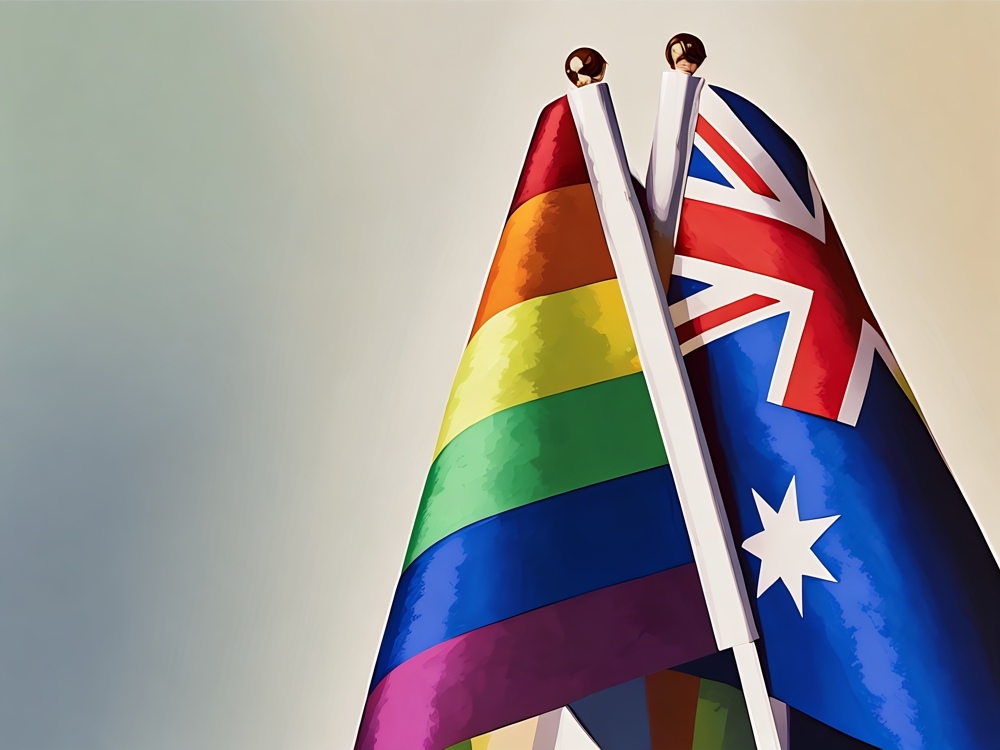
Reforms aimed at strengthening protections for LGBTQIA+ people have passed in the New South Wales Parliament following a disturbing rise in performative crimes and targeted attacks against the community.
The Crimes Legislation Amendment (Hate Crimes) Bill 2026 passed the Legislative Council last night.
The bill expands “post and boast” laws, which target offenders who film crimes and share the footage online. It also creates new offences for people who lure victims under false pretences, including through dating apps.
The legislation was introduced after a two-year ABC investigation into the reawakening of the Islamic State, which revealed in February that LGBTQIA+ teenagers had been lured and assaulted on camera in a series of violent attacks.
Following the report, NSW Premier Chris Minns promised a review of hate crime laws. The proposed reforms were later introduced to Parliament in March.
What does the Hate Crimes Bill include?
The Crimes Legislation Amendment (Hate Crimes) Bill 2026 introduces a number of tougher measures designed to address LGBTQIA+ hate crimes.
The bill expands “post and boast” offences to include assault and robbery, following a series of attacks against members of the LGBTQIA+ community.
It also creates new offences for perpetrators who lure victims under false pretences, including through apps such as Grindr or Wizz, before offending against them.
People found to have publicly threatened or incited violence on the basis of protected attributes, including gender identity or sexual orientation, now face up to five years in prison, rather than three.
A higher penalty of up to seven years will apply when violence occurs as a result of threats or incitement.
The bill also strengthens the ability of police and prosecutors to pursue hate crime charges. It amends the Crimes (Sentencing Procedure) Act 1999 to make it easier for prosecutors to prove that an offence was motivated by hatred or prejudice.
Supporters say this will help ensure prejudicially motivated offences are properly recognised and punished by the courts.
“These laws provide important protections for LGBTQIA+ people while imposing tough new penalties on thugs who commit hate-fuelled attacks,” Attorney General Michael Daley said after the bill passed.
Concerns raised over over-criminalisation
While many MPs agreed that protecting LGBTQIA+ people was essential, Greens members, including Dr Amanda Cohn and Sue Higginson, raised concerns about what they described as a wider trend towards over-criminalisation under the Minns Labor Government.
“In 2022, the Victorian Government held an inquiry into extremism. It found that social isolation, economic insecurity and inequality are risk factors that play a part in increasing susceptibility to extremist narratives,” Dr Cohn told Parliament on 2 June.
“In formulating intervention and prevention measures, it is imperative that alienating, criminalising or discriminating against young people in particular be avoided as much as possible.”
Dr Cohn acknowledged the symbolic importance of the bill, but said criminal law alone would not make communities safer.
“This is not the action that will actually make communities safer, but it sends an important message that hate crimes on the basis of sexual orientation, gender identity, intersex or HIV status, or religion are as serious as hate crimes on the basis of race,” she said.
Higginson also criticised what she described as the Minns Government’s inconsistent support for LGBTQIA+ communities, pointing to previous votes against LGBTQIA+ rights.
She said she opposed the bill’s criminalisation-focused approach, particularly where young people were concerned.
“I profoundly disagree with the approach to criminal law reform that the bill exemplifies,” she said.
“It is creating an escalating crisis in our criminal justice system, deliberately and profoundly targeting First Nations people, and failing to protect the very communities it purports to.”
Bill passes with two-year review
Both Greens MPs supported the bill after an amendment was added requiring the laws to be reviewed after two years.
Supporters of the review said it would allow Parliament to examine any unintended consequences, overreach or enforcement problems once the laws were in operation.
Despite that support, Premier Minns criticised Higginson and fellow Greens MP Abigail Boyd during question time in the Lower House. Labor also released statements claiming the Opposition and the Greens had been “holding up” attempts to pass the legislation.
In response, Higginson said the release “misrepresented” her and the Greens.
She added that “the allegations and misrepresentations of Premier Minns are gross and would likely be defamatory if said outside of Parliament”.
The passage of the bill marks a significant change to NSW hate crime law, strengthening penalties for targeted violence while also raising ongoing questions about how governments can protect LGBTQIA+ communities without relying solely on harsher criminal penalties.