








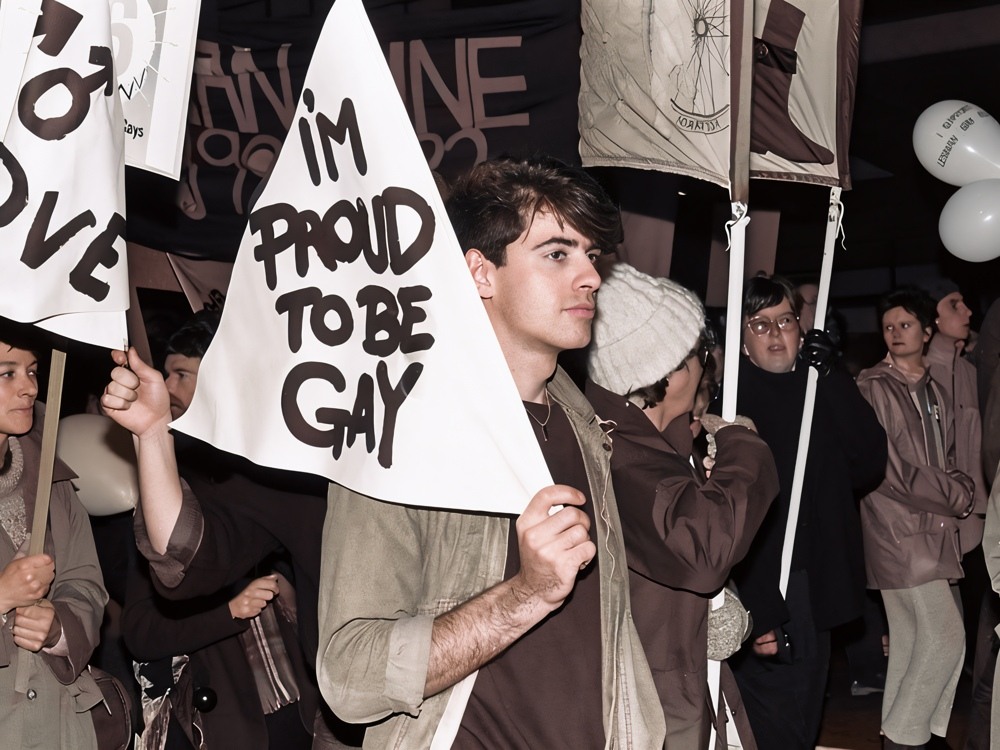
Gareth Watkins highlights June dates that helped shape Aotearoa’s Rainbow rights journey
30 June 1962
Under the headline “Banning of Book”, The Press newspaper reported that James Courage’s novel A Way of Love had effectively been banned by the Customs Department due to its homosexual themes. The novel, first published in London in 1959, had been freely available in New Zealand for over three years. The Press reviewer noted that Courage’s approach to the subject was “sober, serious and dignified”. However, after receiving advice from the Customs Department, public libraries and booksellers withdrew the book. At the time, the department had no official power to ban the book, but advised that action could be taken if it was imported or displayed. In 2020, author Christopher Burke reflected, “The censoring of the novel had a hugely detrimental impact on him as an individual. Despite the support of friends and well-wishers, he really never truly regained his literary voice.” A Way of Love is now widely credited as the first gay novel by a New Zealander.
30 June 1978
Gay rights activists marked Blue Jeans Day, a national visibility campaign built around something deliberately ordinary: denim. A leaflet from the time asked, “Why blue jeans?” and answered that everyone wore them: the bus driver, shop assistant, factory worker, teacher and lawyer. “Blue jeans are everywhere,” it declared. “Gay people are everywhere.” The campaign invited people to wear blue jeans on 30 June to support gay rights. One of those taking part was Kevin Hague, then a young activist at Auckland University. In a 2016 interview, Hague recalled that most students wore jeans anyway, giving the action a “built-in defensive mechanism.” If challenged, someone could simply say they were just an ordinary student wearing jeans. But the gesture still mattered. Hague remembered deliberately taking part and “feeling extraordinarily brave.”
18 June 1985
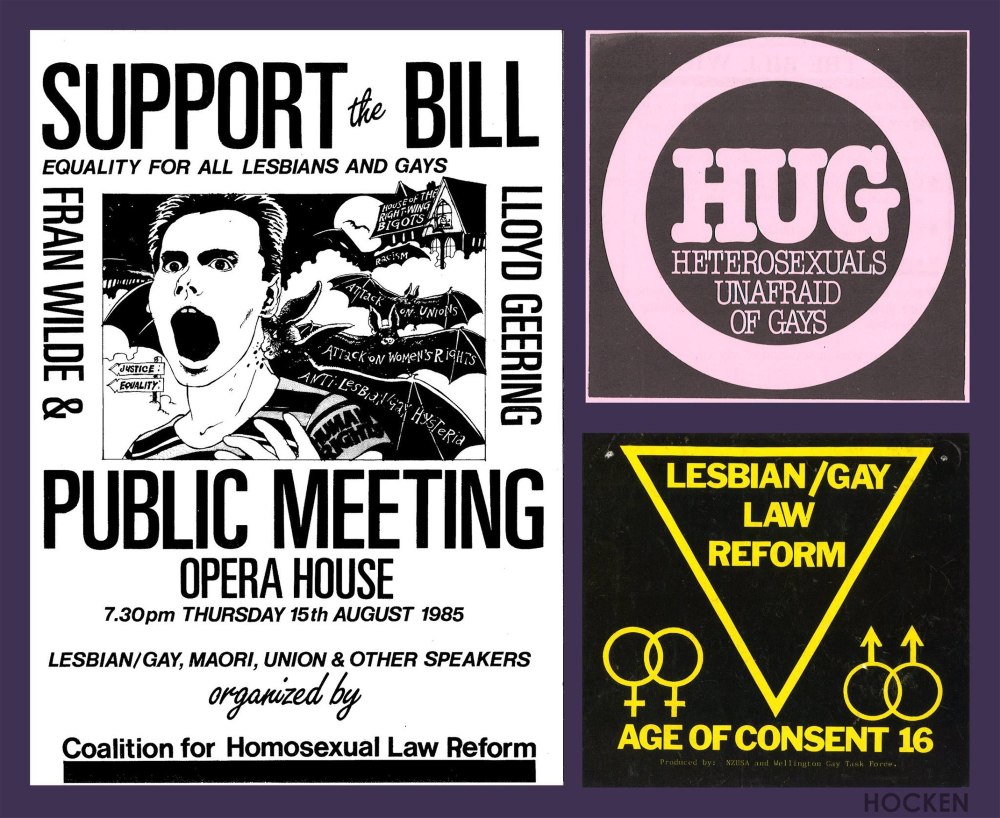
Television news reported from Auckland on the first public meeting of H.U.G., Heterosexuals Unafraid of Gays. More than 200 people had gathered to counter the increasing vitriol aimed at Rainbow communities as the Homosexual Law Reform Bill continued to be debated in Parliament. One mother interviewed said, “I have joined H.U.G. because I am the mother of a gay son. I would like to be able to mix with people who have an understanding of homosexuality and be able to do something positive to enlighten society at large.” H.U.G. branches soon appeared in other centres, including Christchurch and Wellington. Hugh Young was a member in Wellington and recalled writing and distributing press releases to media outlets. While many were not picked up, one success came when the group mocked a proposed exemption to the Bill for groups such as the police, fire brigade and armed forces, calling it the “Shiny Buttons Amendment.”
Heritage Spotlight:
The Charlotte Museum Trust was established in 2007 with the aim of collecting, preserving and exhibiting Lesbian Sapphic Herstory and cultural experiences, including the things people wore, carried, made, read, danced beside, marched with and kept. As founding trustee Miriam Saphira recalled in a 2012 interview, the idea emerged from a practical concern: “Well, maybe we need a museum of lesbian objects. There’s all these things, what’s gonna happen to them?” The name also honours two women connected with the KG Club, Auckland’s first lesbian club: Charlotte Prime and Charlotte Smith, both of whom passed away around the time the museum was being established. Almost 20 years later, the organisation continues as a museum, gallery, research library and archive. It prides itself on being a safe, inclusive space for all Rainbow communities and allies. To discover its collections, visit charlottemuseum.co.nz
Gareth Watkins runs PrideNZ, a community website exploring the voices and opinions of Aotearoa’s rainbow communities through over 700 audio recordings of interviews and local LGBTQ+ events.