










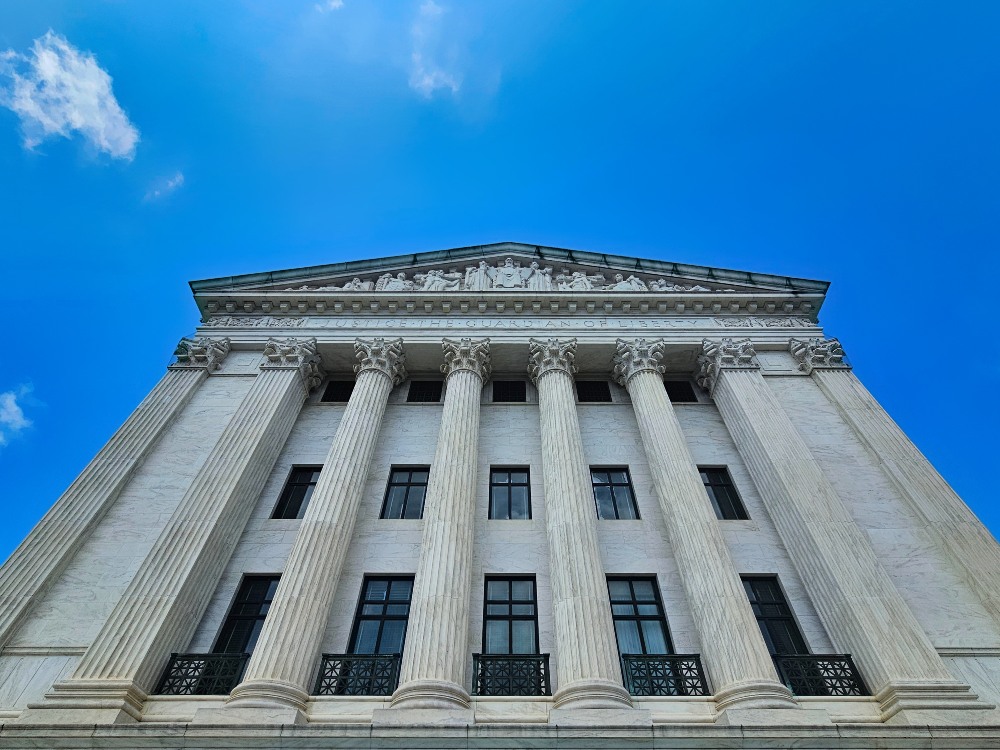

The US Supreme Court has upheld two state laws barring transgender girls and women from female sports teams.
In a decision handed down on Tuesday, 30 June, the court sided with West Virginia and Idaho in two closely watched cases, West Virginia v. B.P.J. and Little v. Hecox.
The ruling allows states to prohibit transgender athletes from competing on girls’ and women’s school sports teams, and is expected to affect similar bans across the United States.
Justice Brett Kavanaugh, writing for the majority, said schools may base eligibility for girls’ and women’s sports teams on “biological sex”.
“Consistent with Title IX and the Equal Protection Clause, we hold that the States may maintain women’s and girls’ sports for biological females,” Kavanaugh wrote.
“They may determine eligibility for women’s and girls’ sports based on biological sex. The Constitution and Title IX do not require an overhaul of women’s and girls’ sports throughout America.”
Kavanaugh also wrote: “No student-athlete on either side of the issue, whether a biological female or transgender, deserves to be ostracised or vilified.”
The court’s three liberal justices dissented from the majority’s finding on the Equal Protection Clause, with Justice Sonia Sotomayor warning that the court had resolved the issue despite unanswered factual questions. However, the liberal justices agreed with the conservative majority on the Title IX issue.
Trans athletes and advocates respond
The two cases were brought by transgender student-athletes Becky Pepper-Jackson in West Virginia and Lindsay Hecox in Idaho.
Advocacy groups representing the athletes condemned the decision.
“This ruling is deeply harmful for transgender women and girls who only asked for the ability to participate in sports with their peers,” said Sasha Buchert, senior attorney and director of the Non-Binary and Transgender Rights Project at Lambda Legal.
“We will not be deterred and will continue to fight back to secure the equal participation that all youth, including transgender youth, deserve.”
Joshua Block, senior counsel for the ACLU’s LGBTQ & HIV Rights Project, described the ruling as “heartbreaking”.
“This is a heartbreaking ruling for our clients and transgender girls like them who’ve asked for nothing more than the same opportunities afforded to their peers,” Block said.
Trans student Parker Tirrell said she felt “sheer disappointment” over the decision.
It remains unclear exactly how many transgender athletes will be affected by bans across the United States. Advocates have long argued that the number of trans athletes is tiny, and that they pose no threat to women’s sport.
Decision protects similar bans
The ruling protects similar laws in more than two dozen states that have introduced bans on transgender girls and women competing in girls’ and women’s sport.
According to Lambda Legal, 27 states have banned transgender youth from playing school sports since 2020. The organisation said many of those bans also allow invasive challenges to athletes’ sex, which advocates warn can affect all women and girls, including cisgender athletes who are perceived as not conforming to gender expectations.
The decision marks one of the Supreme Court’s most significant rulings on transgender rights and sport.
It also comes after a series of legal and political attacks on transgender people in the United States, including restrictions on gender-affirming healthcare, bathroom access and school policies.
For LGBTQ+ advocates, the ruling is a devastating setback for trans students who want the same opportunity as their peers to play, belong and take part in school life.