









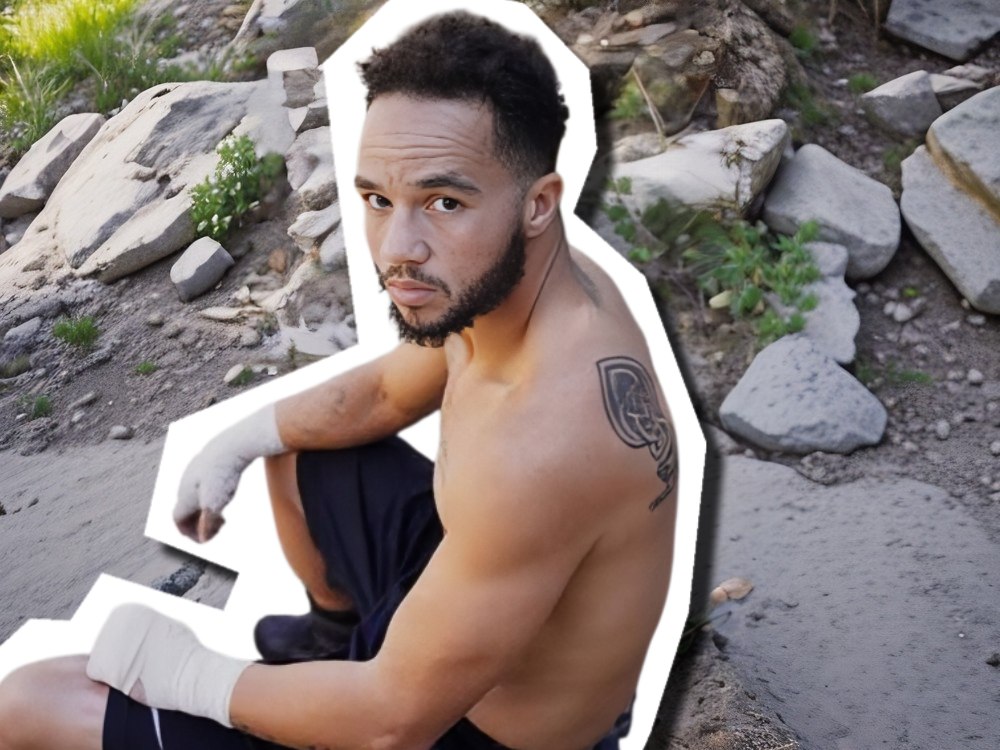


Patricio Manuel, the first openly transgender man to compete in a professional men’s boxing match, announced his retirement from the sport over the weekend.
His professional record tells part of the story: four fights, three victories and one defeat.
But Manuel leaves boxing with a title that stands as proudly as any championship belt. Patricio Manuel is a People’s Champion.
For many transgender people — particularly those who participate in competitive sport — Manuel represented something deeply personal. He was a hard-hitting super featherweight who found himself through boxing and refused to walk away from the sport he loved.
His journey became our story, our source of pride and our challenge to keep moving forward.
Manuel understood the importance of that journey.
“To some people, sports are just frivolous hobbies,” he said in his retirement announcement on Instagram. “But for many of us, they’re part of the foundation of who we are.
“Looking back, there have been two decisions that shaped my life. The first was choosing to medically transition.
“The second was walking through the doors of a boxing gym.”
A new beginning and an old pair of gloves
My understanding of Manuel and his journey has, in many ways, been shaped by an old pair of boxing gloves.
In a 2022 interview for the transgender history anthology Trans Hirstory in 99 Objects, Manuel reflected on the beginning of his transition.
It was 2013. A shoulder injury had prevented Manuel, then an emerging women’s amateur champion, from competing at the previous year’s Olympic trials. During his recovery, he realised it was time to live openly and step into his truth.
The LGBTQ+ centre where he taught boxing to children gave him a new pair of gloves. Those gloves accompanied him as he trained for his first amateur fight after transitioning.
They also came to symbolise what he loved most about boxing and the role the sport played in shaping his personal journey.
“I always appreciated the ‘drag out’ fights when people would have wars with each other and a particular type of toughness,” Manuel said in that interview. “That would become such a cornerstone whether I had realised it or not.
“Because of that cornerstone and my own pride of being that tough fighter when I would get in the ring. It allowed me to be that tough as I was growing and forming who I was going to be as a man.”
That toughness was visible throughout Manuel’s career, but so were his perseverance and patience.
It took four years for him to secure his first professional fight.
On a December night in 2018, Manuel made the most of that opportunity, defeating Hugo Aguilar by unanimous decision and opening a new door for transgender athletes.
Then another test began.
He would wait a further four years before receiving his second professional bout.
Finding his voice outside the ring
During those long stretches between fights, Manuel found his public voice — and many of us heard it clearly.
“A lot of people in boxing who I talked to, they would come to me and say, ‘You could have been one of the greatest female world champions, though you would throw it all away to be yourself,’” he recalled in a 2019 advertisement for Everlast.
“I’d tell them, that’s how bad I felt living that lie. If it meant that much to me to risk the love of my life, boxing, then they knew that it was something that was valid.”
For Manuel, the choice to transition became a defining line between sacrificing something important and compromising who he was.
“Sacrifice is giving something up in service of your values,” he says. “Compromise is giving yourself up to keep something you don’t want to lose. I chose sacrifice. I’d make that same decision every single time.”
His decision came at an enormous cost.
After coming out, Manuel lost relationships, friends, coaches and connections within the boxing world. One gym even expelled him. Still, he continued training and fighting.
That determination became part of his legacy.
Patricio Manuel’s leadership and legacy
In May, Manuel posted an open call to transgender athletes.
He wanted to bring people together for a Pride Month public service announcement celebrating transgender participation in sport. He said the project did not need a formal script or polished message. It simply needed to show transgender people competing, training and moving their bodies at every level.
“Right now, there’s a lot being said about trans athletes, and almost none of it is coming from us,” his message stated. “If you’ve ever competed at any level, trained to challenge your body, played for fun, or just moved your body in a way that mattered, you’re part of this.”
Manuel had spoken about that same philosophy years earlier.
Looking back, his words feel like a mission statement — one that stayed with me as I prepared for my own return to a special sporting arena.
“One of the most gender-affirming things I think I’ve experienced is the affirmation as I walk in the gym. I spend most of my time not being a trans man, but just being a man,” he said. “There’s not a moment now when I’m in a gym where I ever do not feel just being a man; it’s not even about being cis or trans, but just being a man in that space. I take a lot of pride in that.”
Manuel also took pride in challenging sporting organisations when their policies threatened transgender athletes.
When the World Boxing Council proposed creating a separate “trans division”, Manuel spoke out against the poorly conceived idea. When USA Boxing introduced severe restrictions affecting transgender competitors, the former amateur champion strongly challenged those rules.
When Manuel called on transgender athletes to show the world who we are, people responded.
The resulting Pride campaign included athletes from many sporting backgrounds and levels of competition, myself among them. Behind every image was Manuel’s central message.
Being in that gym, ring, court or field matters.
It matters whether you win or lose. It matters because you are there.