









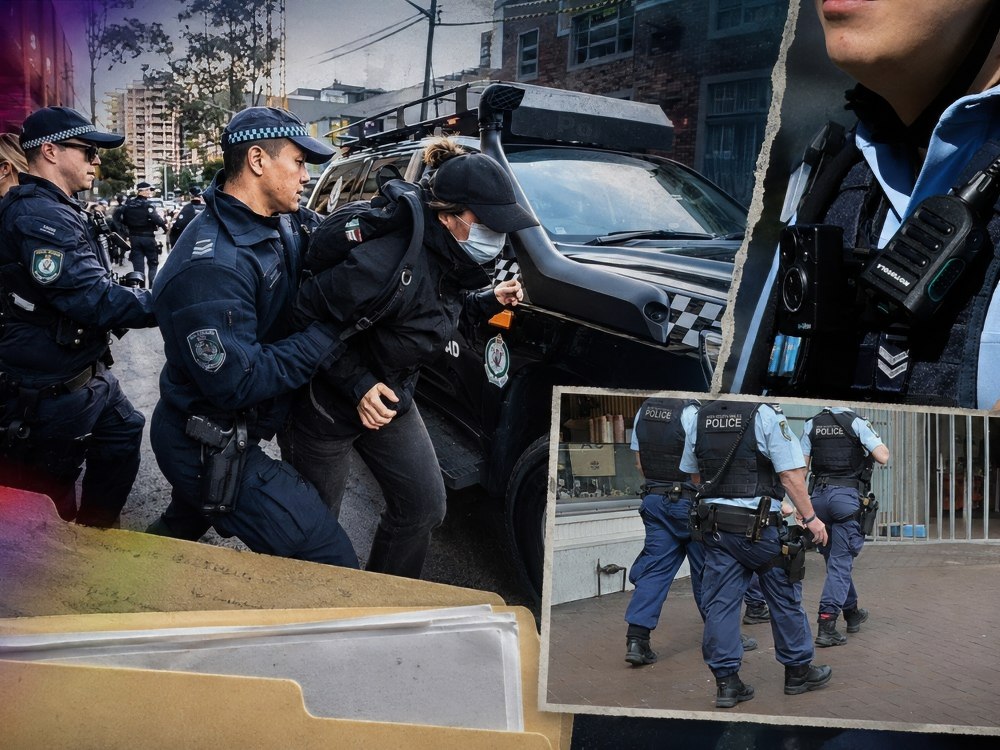

NSW Police have been directed to reopen a misconduct investigation into controversial drug-dog raids at several Sydney LGBTQIA+ venues after the state’s independent police watchdog rejected an internal finding that officers had done nothing wrong.
The Law Enforcement Conduct Commission, or LECC, has invoked its statutory powers to require NSW Police to investigate allegations surrounding the 13 June operation on and around Oxford Street.
Patrons at venues including Universal, Kinselas and Palms alleged they were shoved, pushed against walls, subjected to humiliating searches in public and aggressively questioned as police and drug-detection dogs moved through the precinct during Pride Month.
Some also alleged officers laughed during the operation, shone bright torches into patrons’ faces and told people to “f*** off” or “if you don’t like it, move to Melbourne”.
Internal police assessment found no misconduct
Sydney MP Alex Greenwich and Lord Mayor Clover Moore lodged complaints with the LECC after saying they had received an unusually large number of reports from people who witnessed or experienced the operation.
“There is footage of humiliating searches in front of crowds,” Greenwich and Moore wrote in their complaint.
“Neither of us has received so many complaints about police in more than 10 years.”
The matter was referred to NSW Police, which conducted an internal assessment examining body-worn camera footage, CCTV, police records and witness accounts.
Professional Standards Manager Inspector Michael Butcher subsequently concluded that “no further investigation was warranted”.
“The assessment did not identify any evidence of misconduct, unlawful conduct, or breaches of NSW Police Force policy by the officers involved,” Butcher wrote.
“The operation was conducted in accordance with applicable NSW Police Force policies and procedures.
“As a result, no further action will be taken in relation to this matter.”
The LECC did not agree.
Watchdog orders fresh investigation
In correspondence sent last week, LECC Commissioner Anina Johnson informed Greenwich and Moore that the watchdog had independently assessed the complaint and reached a different conclusion about whether further investigation was required.
“The [LECC] has conducted its own assessment and disagrees with the NSW Police Force’s decision not to investigate your complaint,” Johnson wrote.
“The commission has invoked our statutory powers and directed the NSW Police Force to investigate the matter.”
The LECC will monitor and review the resulting NSW Police investigation before deciding whether additional action is necessary.
The decision does not amount to a finding that police misconduct occurred. Instead, it means the watchdog believes the allegations warrant a full investigation rather than being closed following the initial assessment.
NSW Police confirmed it had received the complaint referral but said it could not comment further while inquiries remained ongoing.
‘Serious concerns deserve proper scrutiny’
Greenwich welcomed the watchdog’s intervention, saying members of Sydney’s LGBTQIA+ community deserved answers about what occurred during the operation.
“The community raised serious concerns about what occurred on Oxford Street, and those concerns deserve proper, independent scrutiny,” he told the ABC.
“This investigation is an important step towards transparency, accountability and rebuilding trust between police and our community.”
The raids drew particular concern because of the historically difficult relationship between NSW Police and Sydney’s LGBTQIA+ communities.
78er and historian Garry Wotherspoon resigned from the NSW Police LGBTQIA+ Consultative Committee following the operation, while fellow 78er Rebbell Barnes said witnessing the raid at Kinselas brought back memories of the first Sydney Gay and Lesbian Mardi Gras in 1978, when participants were subjected to police violence and arrests.
Ninety-three people searched
NSW Police said the Oxford Street operation formed part of broader efforts to reduce risks associated with prohibited drugs.
According to police figures, 93 people were searched during the operation, resulting in 42 drug detections.
One person was charged with supplying drugs in an amount below the commercial quantity threshold.
Inspector Butcher said decisions about deployments were informed by intelligence, emerging drug trends, overdoses and fatalities, drug and alcohol-related offending and incidents occurring in and around licensed premises.
However, critics have questioned whether the scale and manner of the operation were proportionate.
Greenwich and Moore said groups of between six and 12 officers accompanied by drug-detection dogs moved through venues, creating what patrons described as an intimidating atmosphere.
“Constituents tell us that police pushed, shoved and aggressively directed patrons to move, shining bright flashlights in their faces, sometimes laughing and appearing to enjoy themselves,” they wrote.
Pressure over policing of Sydney nightlife
The raids have also intensified a wider debate about policing in Sydney’s nightlife precincts.
Greens MLC Cate Faehrmann has previously criticised what she describes as aggressive policing of nightlife venues and has argued that patrons at clubs, pubs and festivals should not be treated as though they are automatically criminals.
The June operation prompted her to accuse police of “killing Sydney’s nightlife”
For LGBTQIA+ advocates, however, the controversy is also about trust.
Oxford Street and the surrounding neighbourhood have long been central to Sydney’s queer community, and allegations that patrons were publicly humiliated or aggressively treated during Pride Month have reopened longstanding concerns about relations between police and LGBTQIA+ people.
Whether individual officers breached the law or NSW Police policy is now a question the renewed investigation will have to determine.
What has already changed is the decision to close the matter.
The state’s independent police watchdog has made clear that the allegations require another look.