









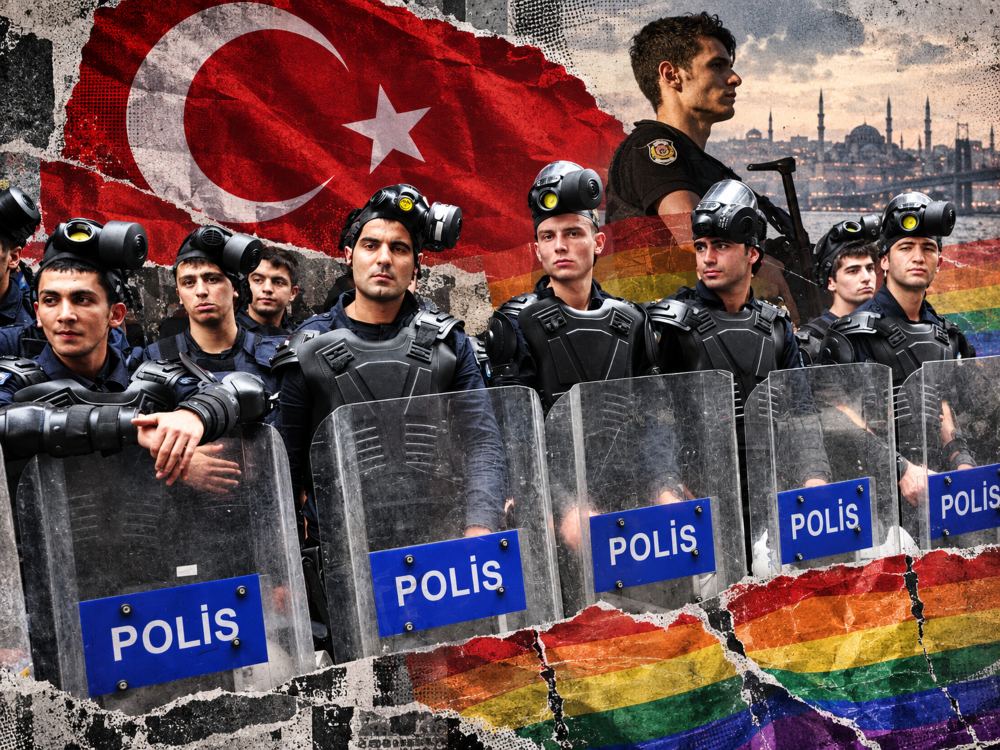


Turkish authorities have detained at least 47 people in a major crackdown involving LGBTQ+ organisations, activists and businesses, as President Recep Tayyip Erdoğan’s government intensifies its campaign around so-called “family values”.
The coordinated raids took place across multiple provinces over the weekend, with prosecutors announcing separate investigations in Istanbul and Ankara.
Authorities say the operations relate to allegations including prostitution, obscenity and the inappropriate influence of children and young people on issues involving sexual orientation and gender identity.
LGBTQ+ groups and human-rights organisations, however, say the raids represent a serious escalation in the government’s longstanding pressure on queer and trans communities.
At Least 47 Detained
The Istanbul Chief Prosecutor’s Office said operations were carried out across 12 provinces targeting 38 suspects.
Twenty-six people were detained, while authorities said they seized digital equipment, drugs, smuggled alcohol and a firearm during searches.
In a separate investigation, Ankara prosecutors announced the detention of another 21 people in connection with LGBTQ+ rights organisation Kaos GL, with five additional people being sought.
Kaos GL says the total number of activists detained across the operations is at least 50, including more than 10 people taken from their homes during police raids.
The organisation also says dozens of LGBTQ+-related websites and social media accounts have been blocked.
Wider Investigation Targets 162 Suspects
Turkey’s Justice Minister Akın Gürlek said the wider coordinated investigations involve 162 suspects, nine associations and 13 businesses across 15 provinces.
Prosecutors in Istanbul, Ankara, İzmir, Aydın and Mersin are involved.
The government has dubbed the campaign “My Family Is Safe”, linking it to Erdoğan’s wider “Decade of Family and Population” programme.
That initiative is intended to address declining birth rates and an ageing population, but Erdoğan has repeatedly framed LGBTQ+ identities as being incompatible with his government’s definition of the traditional family.
Same-sex relationships are not illegal in Turkey, but LGBTQ+ people have faced increasing restrictions in recent years, including bans on Pride events, censorship and growing anti-LGBTQ+ rhetoric from senior government figures.
Rights Groups Condemn Crackdown
Turkey’s Human Rights Association condemned the raids, rejecting the government’s framing.
“The real name of this operation is not ‘My Family Is Safe’,” the organisation said.
“It is state-led discrimination, politics of fear and the dismantling of civil society.”
Nacho Sánchez Amor, the European Parliament’s rapporteur on Turkey, also called the arrests a “shocking escalation” and said imposing a moral agenda through mass detentions risked violating fundamental rights and Turkey’s international obligations.
Rights advocates have warned for years that LGBTQ+ organisations are increasingly being treated not simply as civil-society groups, but as political or moral threats.
Kaos GL Again In The Crosshairs
Kaos GL is one of Turkey’s longest-established LGBTQ+ rights organisations and has documented discrimination, violence and censorship for decades.
Its media operation has already faced restrictions, including blocks on its social media presence.
The latest investigation marks a significant escalation because it extends beyond content restrictions into widespread detentions and searches targeting people connected with the organisation.
Prosecutors have alleged that children and young people were being inappropriately influenced around sexual orientation and gender identity.
Those are allegations, and the people detained have not been convicted of wrongdoing.
‘Family Values’ As State Policy
The raids come against a wider backdrop of increasingly aggressive government rhetoric around gender and sexuality.
Erdoğan has repeatedly described LGBTQ+ identities as a threat to the family and has tied population policy, nationalism and conservative religious values together in speeches.
That framing mirrors developments elsewhere, where governments have increasingly invoked children, demographics or “family protection” to justify restrictions affecting LGBTQ+ organisations and visibility.
For Turkey’s queer community, however, the immediate concern is far less abstract.
Dozens of people are in custody, organisations are facing investigations, online platforms have reportedly been blocked, and a network of civil-society groups is being placed under pressure simultaneously.
Whether prosecutors ultimately substantiate the criminal allegations remains to be seen.
What is already clear is that Turkey’s LGBTQ+ movement is facing one of the broadest state crackdowns it has experienced in years.