









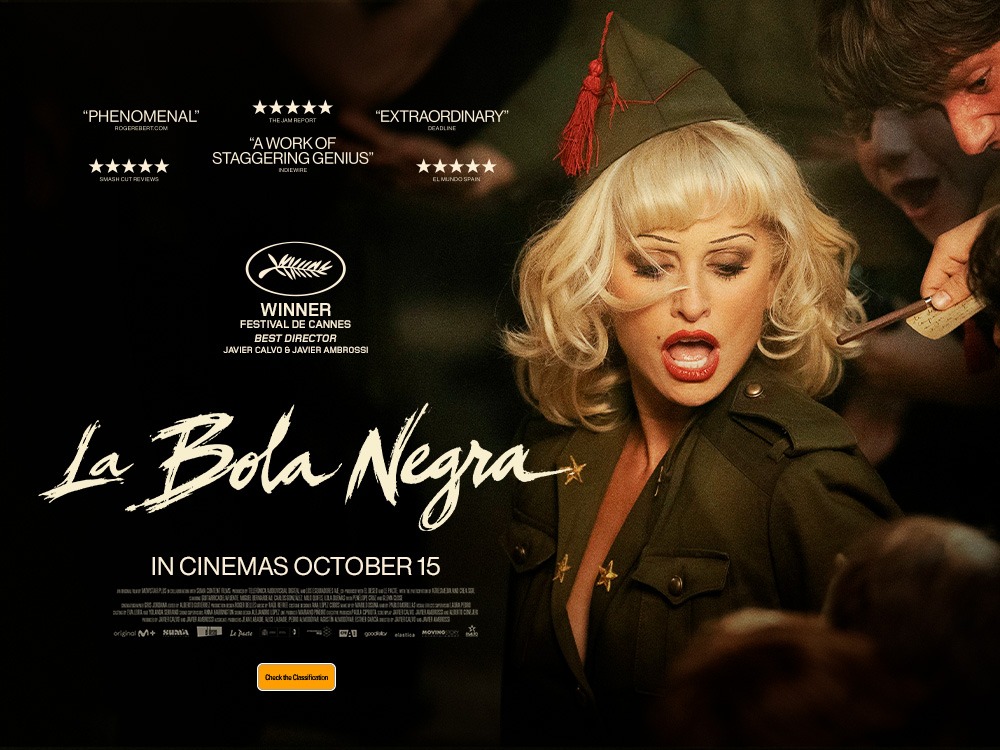

One of the year’s most acclaimed queer films is heading to Aotearoa, with La Bola Negra arriving in New Zealand cinemas on 15 October.
Directed by Javier Calvo and Javier Ambrossi — better known collectively as Los Javis — the sweeping Spanish drama spans 85 years, moving between 1932, 1937 and 2017 as the lives of three men become connected through desire, repression, family secrets and a queer history that has spent generations hidden.
And it arrives with some serious awards-season credentials.
Calvo and Ambrossi won the Best Director prize at Cannes, while the film later took home the coveted People’s Choice Award at the Toronto International Film Festival.
Add Penélope Cruz, Glenn Close and a story partly inspired by Federico García Lorca, and La Bola Negra is shaping up as one of the queer cinema events of 2026.

Three Men, Three Eras, One Queer History
At the centre of the film are three men living through vastly different periods of Spanish history.
Carlos, played by Milo Quifes, is searching for belonging in Spain in 1932.
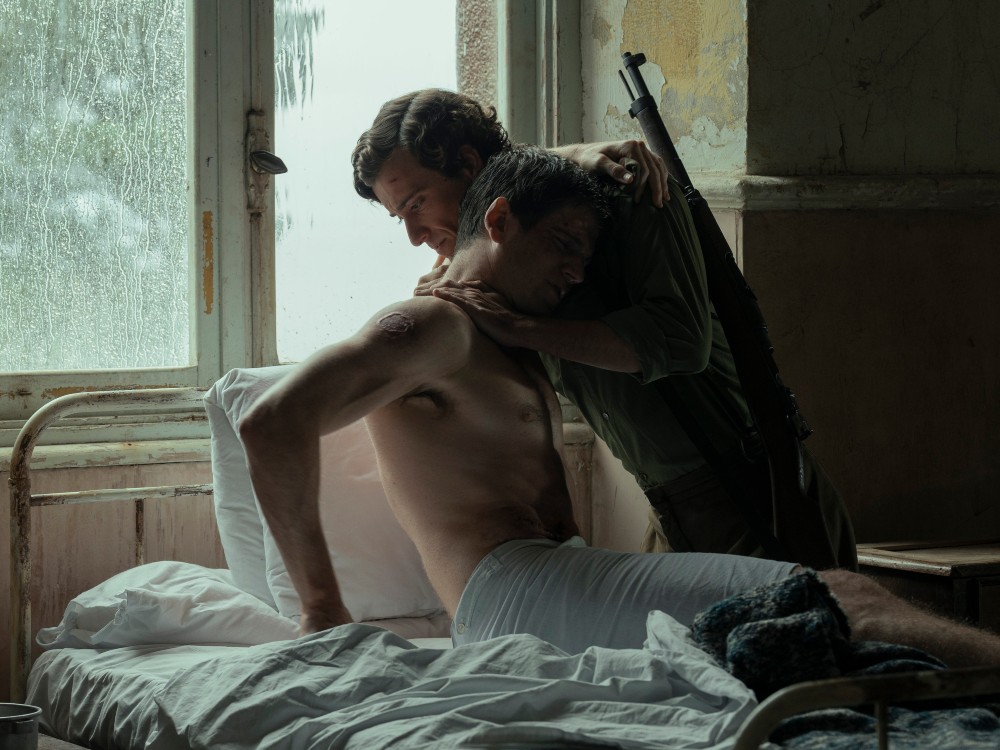
Guitarricadelafuente plays Sebastián, whose story unfolds in 1937 during the Spanish Civil War, where love and desire emerge across dangerous political divides.
Then, in 2017, Carlos González plays Alberto, a writer who begins uncovering a long-buried family secret connecting his own life to the men who came before him.
The film also stars Miguel Bernardeau, Lola Dueñas, Penélope Cruz, Glenn Close and Julio Torres.
Across its 155-minute running time, La Bola Negra explores what happens when queer lives are hidden, erased or forced into silence — and what can happen when later generations finally uncover those stories.
Inspired By Federico García Lorca
The film is tied closely to the legacy of Spanish poet and playwright Federico García Lorca, whose sexuality and murder during the Spanish Civil War have made him an enduring figure in queer cultural history.
Its title and themes draw from one of Lorca’s unfinished works, while the screenplay was co-written by Calvo, Ambrossi and playwright Alberto Conejero.
Los Javis have previously explored queer identity, religion, family and repression through acclaimed projects including Veneno and La Mesías.
With La Bola Negra, those themes are expanded across nearly a century of Spanish history.
The result is not simply a romance, but a story about inheritance — the secrets families carry, the lives that history tries to erase and the ways queer people find themselves reflected in those who came before.
Cannes And Toronto Audiences Fell For It
The film received a 20-minute standing ovation when it premiered at Cannes earlier this year.
Calvo and Ambrossi subsequently shared the festival’s Best Director prize, marking a major international breakthrough for the filmmaking duo.
Then came Toronto.
In September, La Bola Negra won the TIFF People’s Choice Award, one of the festival circuit’s most closely watched audience prizes.
The directors said following the win that the film was ultimately about the importance of being able to express who you are.
That message feels particularly potent within a story spanning decades in which gay men were frequently denied exactly that freedom.

Glenn Close Delivers The Trailer’s Killer Line
The newly released full trailer gives audiences their clearest look yet at the scale of the film.
There are secret relationships, wartime danger, fractured families and generations of men attempting to understand where they belong.
One of its most striking moments comes from Glenn Close’s character, Isabelle, who tells Alberto:
“I think the most important question for you to ask is who was your grandfather and why did he spend his entire life hiding.”
It is a question that appears to sit at the heart of the entire film.
Who gets remembered?
Who was forced to hide?
And what happens when somebody finally decides to tell their story?
For queer audiences, those questions reach far beyond Spain.