









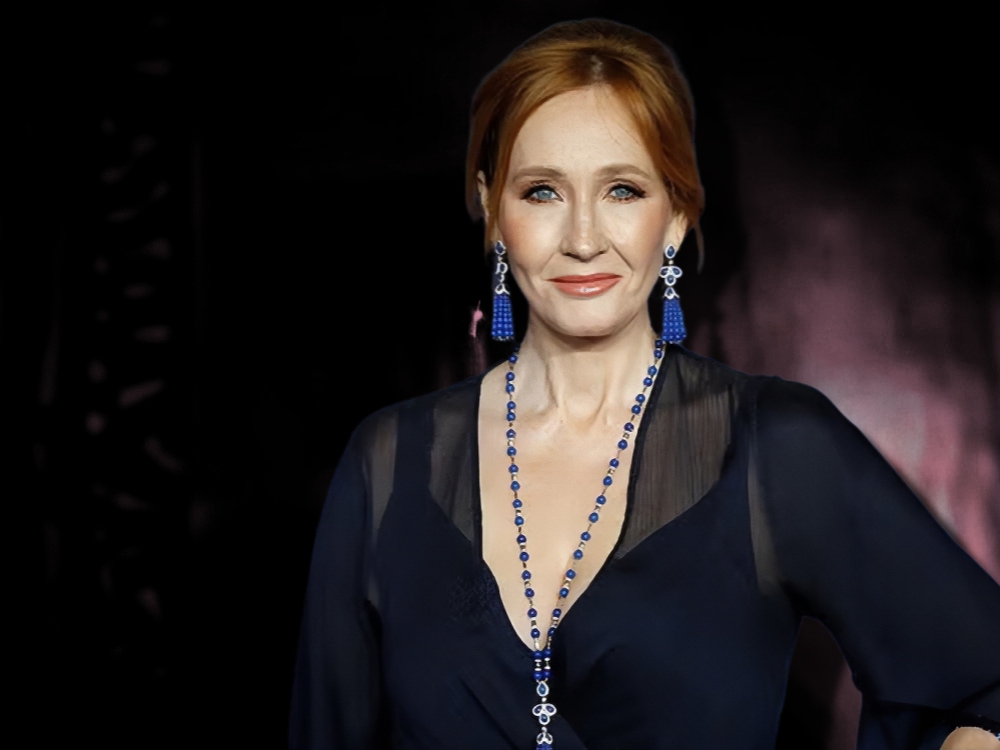

The BBC has commissioned a two-part documentary about JK Rowling that will examine the creation of Harry Potter, her enormous cultural influence and the increasingly divisive public debates surrounding her views on gender identity.
The BBC has announced a new two-part documentary examining the life, career and “contested legacy” of JK Rowling.
The as-yet-untitled series will air on BBC Two, BBC Scotland and iPlayer, tracing Rowling’s rise from writing in Edinburgh cafés to becoming one of the world’s most successful authors — before turning to her emergence as one of Britain’s most polarising public figures.
The BBC says the series will use Rowling’s life as a lens through which to examine three decades of social, political and technological change.
Rowling herself is not taking part in the documentary.
Instead, the production will draw on archive material, her own public statements and writing, and interviews with people who have worked with her throughout her career.
From Harry Potter to political controversy
The first episode will focus on Rowling’s early life and the creation of Harry Potter.
The BBC says it will explore how the books transformed children’s publishing, developed into a global film and entertainment franchise and created a cultural phenomenon worth billions.
The second episode will shift towards Rowling’s increasingly public political interventions.
That includes her positions on Scottish independence, feminism, free speech and gender identity, as well as the effect those interventions have had on her relationship with sections of the Harry Potter fanbase and performers associated with the franchise.
BBC publicity describes Rowling as someone “admired by supporters as a fearless defender of women’s rights and condemned by critics who call her an opponent of trans equality”.
That divide is likely to be one of the documentary’s central themes.
Why Rowling remains such a divisive figure
Rowling has become a prominent voice in UK debates over sex, gender identity and transgender rights.
She has repeatedly criticised policies based on self-declared gender identity and argues that sex-based rights and spaces require legal protection.
Rowling has also rejected accusations that she is transphobic, previously saying that she supports transgender people’s right to live in ways that feel authentic to them.
Critics, including LGBTQ+ organisations, activists and some actors associated with the Harry Potter franchise, have argued that her public interventions contribute to hostility towards transgender people.
Performers including Daniel Radcliffe, Emma Watson and Rupert Grint have publicly expressed support for trans people or disagreed with Rowling’s position on gender identity.
Those disagreements have become part of a wider debate over whether — and how — audiences separate Harry Potter from its creator.
BBC says timing is significant
Simon Young, the BBC’s head of commissioning for history, said the documentary comes at a significant point in Rowling’s career.
“Thirty years after the publication of the first Harry Potter book, there feels like no better time for the BBC to explore one of the towering figures of British literature,” he said.
Young added that any cultural history of modern Britain would need to consider both the impact of the Harry Potter phenomenon and “the polarising public figure she has become”.
David Harron, commissioning editor for BBC Scotland, said the series would use Rowling’s life and work to explore how British culture has changed alongside shifts in politics, media and technology.
Executive producer James Rogan said the production would examine how Rowling’s strongly held personal beliefs have contributed to “a fraught and divisive dialogue that continues to this day”.
No release date yet
The project is currently listed as in development, and the BBC has not announced a broadcast date.
Rogan Scotland is producing the series, with BBC Studios handling international distribution.
For LGBTQ+ viewers — particularly trans audiences who have found themselves at the centre of arguments surrounding Rowling’s comments — much will depend on how the finished documentary frames those debates and whose voices it chooses to include.
For now, the BBC is promising a portrait not only of one of the most commercially successful writers of modern times, but of the public arguments that have reshaped how her legacy is understood.