









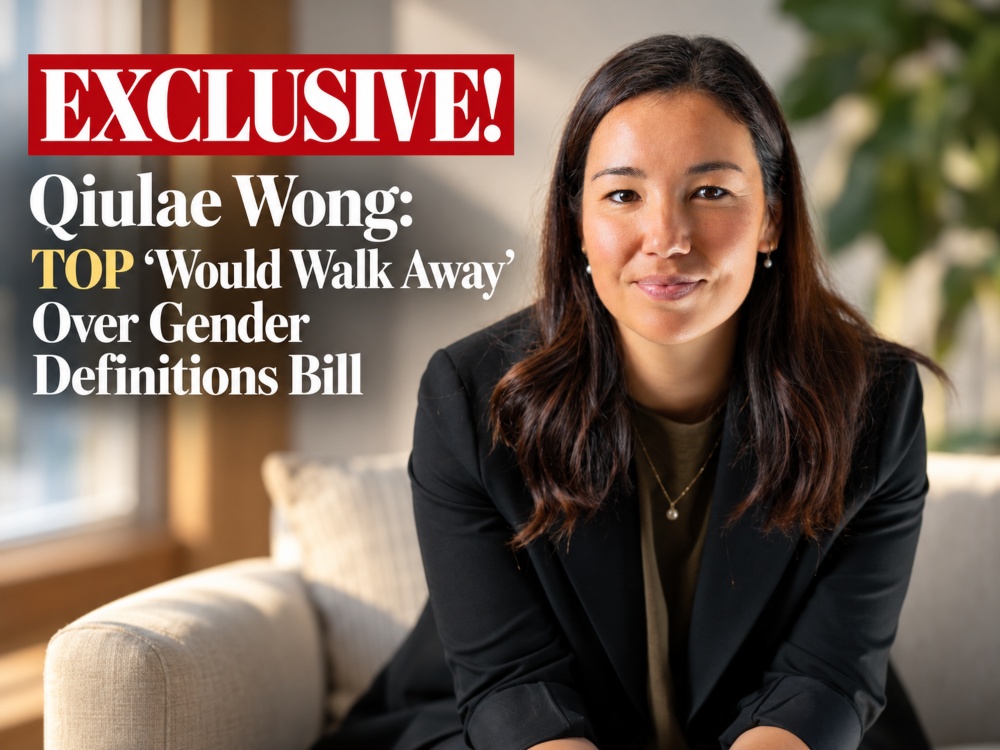
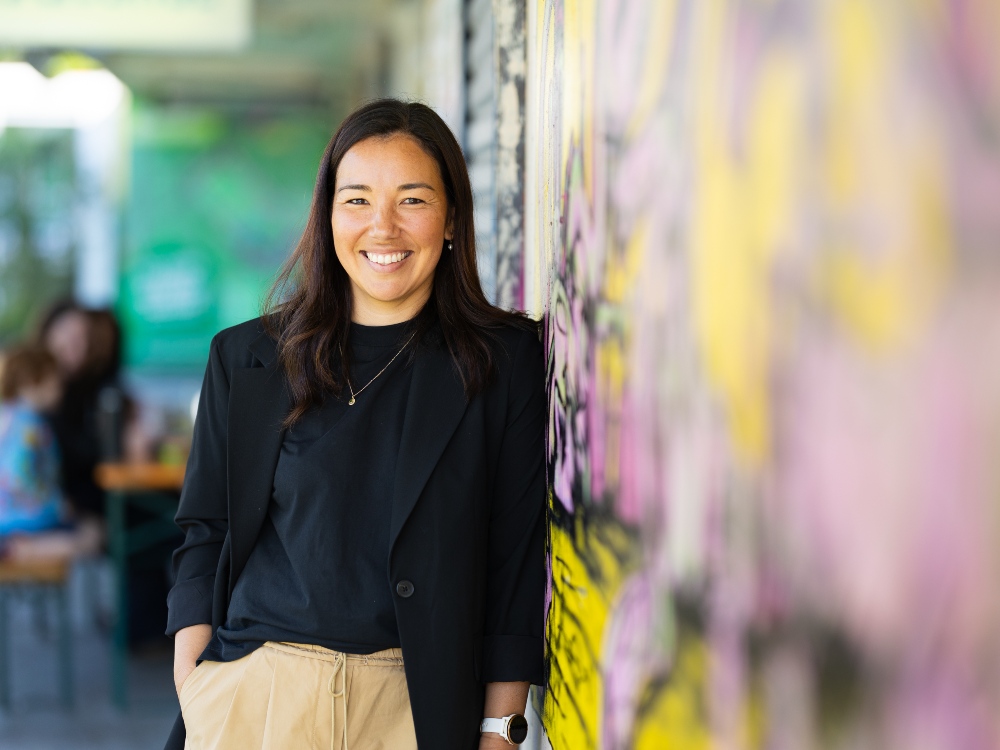
Opportunity Party leader Qiulae Wong tells YOURE EX’s Oliver Hall why transgender rights could become a coalition red line, where she believes politicians have overreached, and which rainbow issues her party still has work to do on.
If Opportunity enters Parliament after November’s election, leader Qiulae Wong wants the freedom to work with either Labour or National, but she says she is considerably less flexible about some of the policies another potential coalition partner might bring to the negotiating table.
When YOUR EX asks Wong what would happen if Winston Peters made support for legislation affecting transgender rights a condition of forming a government, she says there are lines Opportunity would not cross.
“We’ve said that the gender definitions bill or the Treaty Principles Bill, for example, are things that we would walk away from.”
It is a significant commitment from a party whose pitch includes finding common ground across the political divide.
Wong says Opportunity would first try to reach an agreement with either Labour or National, while recognising other minor parties would also be part of those negotiations.
“If we can’t find an agreement with either of the major parties that is really the direction for the country that we feel is right, then being in opposition might be required.”
“We’ll only get one shot at making that first impression in Parliament.”
New Zealand First’s Legislation (Definitions of Woman and Man) Amendment Bill would insert definitions of “woman”, “female”, “man” and “male” into the Legislation Act, applying across legislation unless another law explicitly provides otherwise. It remains before the Social Services and Community Committee, which said last month it would not complete its consideration before Parliament dissolves, so the next Parliament will decide how the bill proceeds.
Opportunity has already lodged a submission opposing it, and Wong argues the proposal would create uncertainty rather than resolve it.
“It’s unscientific and it’s unworkable. It’s not a practical piece of legislation that’s going to help with any kind of clarity. It actually raises more questions than delivers certainty.”
She describes the bill as an attempt to divide New Zealanders and says she does not believe it was introduced “in good faith”, and her concerns about political intervention extend to transgender healthcare.
“There has generally been too much political overreach into these issues in this term of government, including things like puberty blockers. These things should be personal choice.”
Regulations introduced in December 2025 restrict new prescriptions of puberty blockers for children and adolescents experiencing gender incongruence or gender dysphoria, although the Ministry of Health says they are currently not being enforced while a judicial review proceeds.
Asked whether Opportunity would support changing those restrictions, Wong is unequivocal.
“Yeah, we would support changes to that.”
She takes a similar position on relationship and sexuality education, arguing that politicians have gone too far in deciding what can be discussed in classrooms.
“Young people do have the right to learn about different things in their relationship and sexual education classes.”
“Having politicians determine what can and can’t be taught in those classes takes things too far.”
There are limits, however, to how much detail Opportunity currently has behind some of those positions.
Asked what age children should begin learning about sexuality, gender, consent and different kinds of families, Wong says the party does not have a specific policy.
Her own daughters are five and two. She suggests “around the age of puberty” might be appropriate, while acknowledging she would need to look further at what is currently taught.
The same distinction emerges when we discuss the difficulties some same-sex couples face when trying to become parents.
Opportunity has no specific surrogacy policy, but Wong says reform is something she would support.
“Anyone that wants to be a parent should have the same equal opportunities to do that.”
“Same-sex parents are fantastic parents, and they shouldn’t face additional barriers just because of who they’ve chosen to be married to.”
Wong’s broader prescription for a less combative political culture is one of Opportunity’s signature ideas: citizens’ assemblies.
The party proposes bringing representative groups of New Zealanders together to hear evidence, consider competing perspectives and deliberate on difficult issues. Opportunity’s published policy proposes two or three assemblies each year.
Wong suggests rainbow issues could potentially form the subject of one.
“You get everybody in a room, you get an accurate representation of the community, and thrash out the pros and cons, the trade-offs of different solutions.”
She points to Ireland’s use of citizens’ assemblies around contentious social questions and believes bringing people physically together could counter some of the hostility encouraged by online echo chambers.
The interview leaves one question unresolved: which rainbow issues Wong believes should be opened to public deliberation, and which she regards as individual rights that should never depend on achieving wider agreement.
What is considerably clearer is the line she says Opportunity would take into coalition talks.
While the party presents itself as willing to negotiate across traditional political blocs, on the Definitions of Woman and Man Bill, Wong is saying compromise would have an endpoint.
Perhaps her simplest explanation for why comes when I ask what she would hope for if either of her daughters came out as rainbow later in life.
“My hopes for them would be that they can just have the same opportunities and experiences that they would have otherwise had if they weren’t rainbow.”
“That shouldn’t be a determinant of how successful they are, how much they feel valued, how their mental health is impacted.”
“I would hope that that is just accepted by everybody that they engage with as a part of who they are.”