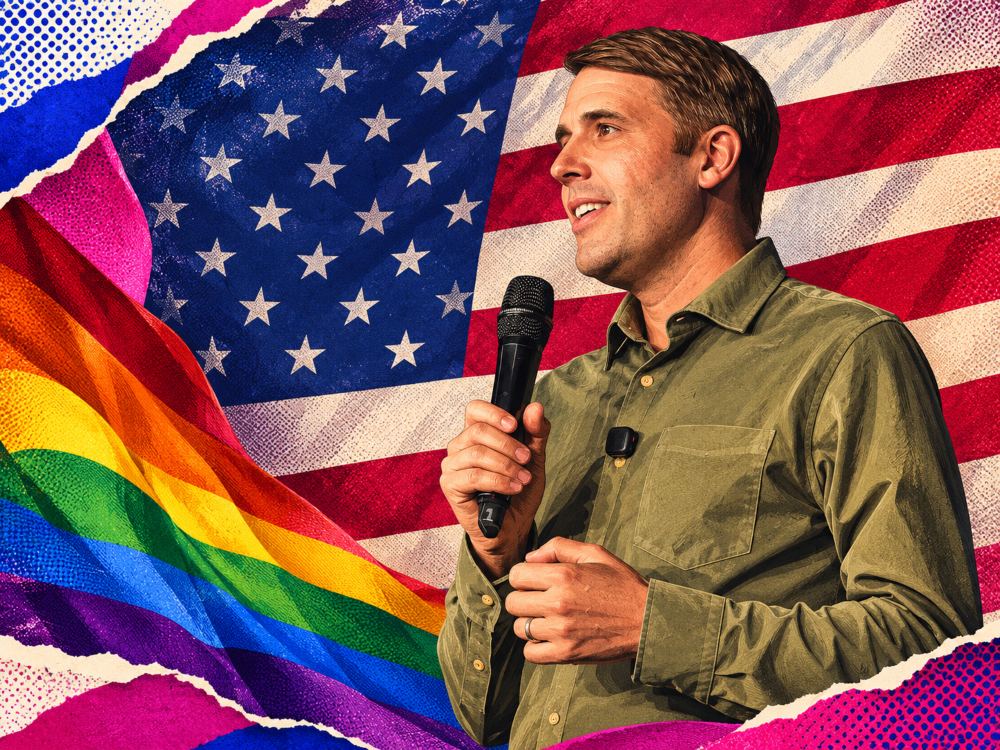
History has been made in the United States, with Democrat Chris Pappas becoming the first openly gay man elected to the US Senate, marking a significant milestone for LGBTQ+ political representation.
The 46-year-old congressman defeated Republican former senator John E. Sununu in New Hampshire’s Senate election on Tuesday 3 November, securing a victory that will see him represent the state in Washington.
The Associated Press called the race on election night, with Sununu conceding defeat and congratulating his Democratic opponent.
Pappas will replace retiring Democratic senator Jeanne Shaheen when the new Congress begins in January 2027.
His victory makes him the first openly gay man elected to the US Senate, adding another chapter to the history of LGBTQ+ representation in American politics.
‘I’m Married To A Man That I Love’
While the election result was historic, Pappas also shared a deeply personal moment during his victory speech.
Standing alongside his husband, Vann Bentley, he thanked him for his support throughout the campaign and their life together.
“Look, win, lose, or draw, I’m the luckiest guy because I’m married to a man that I love,” Pappas told cheering supporters.
The moment drew an enthusiastic response from the crowd, as the senator-elect openly celebrated his relationship on one of the biggest nights of his political career.
Pappas and Bentley married in 2023, with their relationship becoming a visible part of the congressman’s public life.
His election-night comments offered a reminder that LGBTQ+ representation in politics is about more than legislation and election results. It also means people being able to acknowledge their relationships and families openly in public office.
A Political Career Already Making History
Born and raised in Manchester, New Hampshire, Pappas has spent much of his adult life involved in public service.
Before entering Congress, he served in New Hampshire’s state legislature, as Hillsborough County treasurer and on the state’s Executive Council.
He was first elected to the US House of Representatives in 2018, becoming New Hampshire’s first openly LGBTQ+ member of Congress when he took office in January 2019.
He subsequently won three more House elections before launching his campaign for the Senate.
His latest victory sees him move from representing New Hampshire’s 1st Congressional District to representing the entire state.
Following In The Footsteps Of Tammy Baldwin
While Pappas is the first openly gay man elected to the Senate, he is not the first openly LGBTQ+ person to reach the chamber.
That distinction belongs to Wisconsin Democrat Tammy Baldwin, who made history in 2012 as the first openly gay person elected to the US Senate.
She began serving in January 2013 and remains a prominent advocate for LGBTQ+ equality.
Other openly LGBTQ+ politicians have also served in the chamber, including former Arizona senator Kyrsten Sinema, who identifies as bisexual, and former California senator Laphonza Butler, who is openly lesbian.
Pappas’s election adds a new dimension to that history, expanding the range of LGBTQ+ identities represented in one of America’s most powerful political institutions.
Where Does Pappas Stand On LGBTQ+ Rights?
Throughout his congressional career, Pappas has supported several measures intended to strengthen legal protections for LGBTQ+ Americans.
As a co-chair of the Congressional Equality Caucus, he has backed the Equality Act, which seeks to prohibit discrimination based on sexual orientation and gender identity in areas including employment, housing and public accommodation.
He has also supported legislation seeking to prohibit the use of so-called gay and transgender “panic” defences in federal courts.
These legal arguments attempt to use a victim’s sexual orientation or gender identity to justify or reduce responsibility for violence.
Pappas has additionally advocated for LGBTQ+ military veterans, including those affected by the former “Don’t Ask, Don’t Tell” policy.
He has also opposed the Trump administration’s restrictions on transgender military service.
However, his voting record has not been without controversy within LGBTQ+ communities.
In December 2024, Pappas voted in favour of a defence spending bill that included restrictions on Tricare coverage for certain gender-affirming medical treatments for transgender minors in military families.
The vote drew criticism from LGBTQ+ advocates.
In a subsequent interview with The Advocate, Pappas said he opposed the healthcare restriction but supported the broader legislation because of its military investments and benefits for service members.
The decision highlights that his record on LGBTQ+ issues, while including substantial support for equality legislation, has also involved votes that some advocates have challenged.
Affordability At The Centre Of The Election
Although his victory represents an LGBTQ+ first, Pappas did not campaign solely on equality issues.
The cost of living, housing affordability and economic pressures were major themes throughout the New Hampshire contest.
Both candidates sought to convince voters they could address rising household expenses, while also presenting different approaches to national economic and government policy.
Pappas criticised aspects of President Donald Trump’s economic agenda, including tariffs and their potential impact on businesses and consumers.
Sununu, who previously represented New Hampshire in the Senate from 2003 to 2009, campaigned on his experience and argued he could deliver a different approach to Washington politics.
The result keeps New Hampshire’s open Senate seat in Democratic hands.
A Milestone Watched Beyond America
For LGBTQ+ communities in Aotearoa New Zealand and internationally, Pappas’s election represents another development in the history of openly rainbow politicians holding senior public office.
His victory comes at a time when LGBTQ+ rights, particularly transgender healthcare, military service and anti-discrimination protections, remain prominent subjects of debate in the United States.
As a senator, Pappas will have a vote on federal legislation and, depending on the chamber’s procedures, a role in confirming senior government officials and federal judges.
His political record and future votes will ultimately determine his impact on LGBTQ+ policy.
But his place in American political history is already established.
For the first time, an openly gay man has been elected to the United States Senate — and on election night, he celebrated that moment standing proudly beside the husband he loves.