







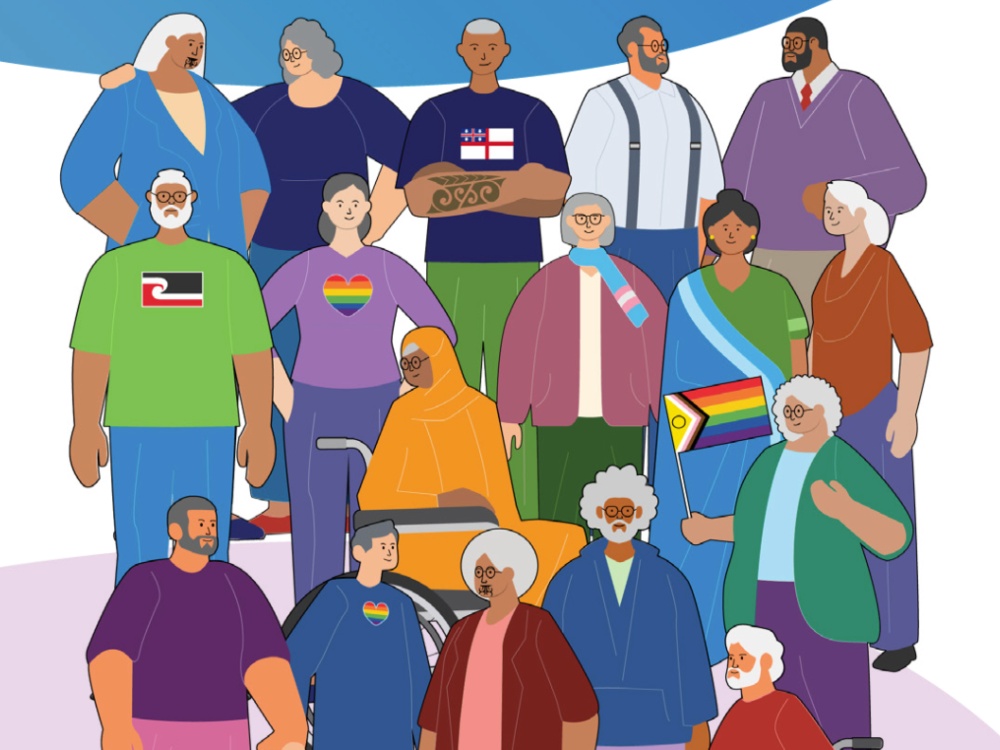

Following recent research revealing that almost one in three Takatāpui and Rainbow older New Zealanders experience abuse, lead researcher Sandra Dickson tells YOUR EX the country’s aged-care system is failing to protect some of its most vulnerable residents
New Zealand’s aged-care system is leaving Takatāpui and Rainbow older people vulnerable to discrimination, bullying and abuse, with researchers warning that urgent changes are needed to ensure residents can live safely and openly.
Speaking exclusively to YOUR EX, Sandra Dickson, Tauiwi Research Lead at Hohou Te Rongo Kahukura – Outing Violence, says existing protections are inadequate, with some older Rainbow New Zealanders afraid to disclose their identities, relationships or medical histories to those responsible for their care.
“We have very grave concerns about the existing aged-care systems for older Takatāpui and Rainbow people,” Dickson says.
“We definitely hear of aged-care facilities doing this well, but there are also too many cases where people are scared to share their identities or talk about their loved ones or history.”
Her comments follow the release of Prevention of the Abuse of Takatāpui and Rainbow Older People, a landmark report produced by Hohou Te Rongo Kahukura and the University of Auckland, commissioned by the Ministry of Social Development.
The research highlights significant gaps in how New Zealand protects older LGBTQ+ people, including those living in residential care.
A national prevalence survey conducted within the same government work programme found that 32.4 per cent of Takatāpui and Rainbow people aged over 55 living in the community had experienced harm in the previous 12 months, compared with 16.4 per cent of the general older population.
Financial, physical, cultural and spiritual harm were all reported at approximately four times the rates experienced by other older New Zealanders.
‘We Should Be Safe in Aged Care’
Dickson says the problems extend beyond individual instances of discrimination and reflect deeper failures in how aged-care services are funded, regulated and expected to operate.
“There’s sometimes bullying and abuse from staff or other residents, as our report shows, and a real lack of knowledge around gender-affirming care for older trans folks,” she explains.
“We heard of older people living with HIV being denied access to aged-care when they shared their status too.”
Particularly concerning are situations where estranged or previously abusive relatives are given greater influence over an older person’s care than their partners or chosen family.
“There also sometimes seems to be a very dangerous dynamic where family members who’ve had very little to do with, or been abusive to an older trans, bisexual, lesbian or gay person will be listened to by aged-care providers, overriding older people’s own wishes, or that of chosen family or partners.”
For generations of Rainbow New Zealanders who grew up when homosexuality was criminalised and discrimination was widespread, these experiences can reinforce lifelong fears about revealing their identities.
Dickson believes responsibility for change must begin at a government level.
“We believe these issues are structural, and start with funding agreements from the state which don’t set expectations of older people being treated with dignity in terms of all of who they are.”
While some providers have proactively sought specialist training, Dickson argues that respectful, culturally competent care should be a basic requirement rather than something dependent on individual organisations taking the initiative.
“When we train aged-care providers or older person’s services, they’ve invited us in because there’s good people in those organisations who want to do their best – but it should be a requirement of every service.
“It’s just not good enough – we should be safe in aged-care.”
A National Rainbow Elder Abuse Service
The report outlines 24 recommendations aimed at preventing abuse, improving access to support and addressing the structural barriers facing older Takatāpui and Rainbow people.
Asked which recommendation should be implemented first, Dickson says meaningful change requires action across all 24.
“The foundations are Te Tiriti o Waitangi, improving human rights protections and including Takatāpui and Rainbow older people in national ageing strategies – we have distinct and diverse needs that will not get addressed without these things.”
However, she identifies one immediate priority that could make a practical difference to those currently experiencing harm.
“In the short term, we would like to see a national elder abuse response service for our communities, similar to our national ACC service for survivors of sexual harm.”
Such a service would provide specialist advice and assistance to older Rainbow people experiencing abuse, particularly those who may feel unable to approach mainstream services.
“That could help Takatāpui and Rainbow older people get advice, access protections and get the support they might need. And alongside that, we’d like to see resourcing for our communities.”
The research also found that Takatāpui and Rainbow older people are frequently overlooked in national policies intended to protect older New Zealanders.
Of 35 key policy documents examined, 21 made no mention of Takatāpui and Rainbow communities.
The Generation That Fought for Our Rights
Dickson believes the responsibility for protecting Rainbow elders cannot rest solely with government and aged-care providers.
She says LGBTQ+ community organisations must also reconsider how they support older generations, particularly those who helped establish the rights and services younger Rainbow New Zealanders benefit from today.
“Most community supports in Takatāpui and Rainbow communities today are focused on young people, which is awesome. Imagine if we saw the same kind of growth for older people in our communities?”
“We know the need is there, and we’re talking about the people who changed the laws and set up many of the groups we all benefit from now.”
Despite their contributions, Dickson says many older Rainbow people struggle to access services tailored to their circumstances.
“But now they don’t have the supports they need, including around tailored legal and healthcare information.”
She also highlights the need for greater understanding of people who come out later in life, whose experiences may differ considerably from those who have lived openly for decades.
“For folks coming out later in life, we really need culturally specific supports for families and whānau, so they know how to support us. There are so many differences in our sexuality and gender journeys.”
The research emphasises that older Takatāpui and Rainbow people are not a single, uniform community. Their experiences of ageing, family relationships and accessing care can differ significantly depending on culture, sexuality, gender identity and personal history.
For Dickson, the findings are a challenge to both policymakers and Rainbow organisations to ensure that progress towards equality does not stop at a certain age.
“Fundamentally, this research shows our community groups need to show up for older people too – especially in times like today.”
“We are so much stronger together.”
The full report, Prevention of the Abuse of Takatāpui and Rainbow Older People, and its 24 recommendations are available at kahukura.co.nz.