









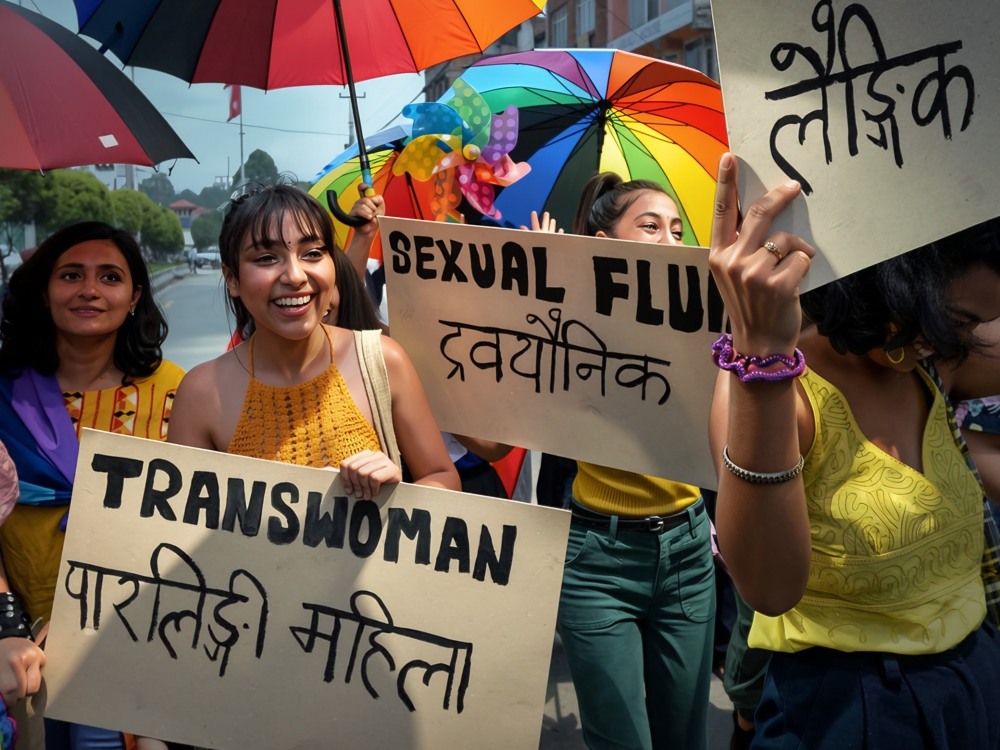

Nepal’s new government has made history by creating a dedicated ministerial portfolio for LGBTQIA+ communities, believed to be a first for an Asian nation.
The Hon. Sita Badi, from the newly ruling National Independent Party, has been appointed Nepal’s Minister for Women, Children, Gender and Sexual Minorities and Social Security.
The role was created on 13 May by merging the former Ministry of Women, Children and Senior Citizens with the social security wing of the Ministry of Labour, Employment and Social Security.
The portfolio also expands the ministry’s responsibilities to formally include serving and representing LGBTQIA+ people.
Community leaders welcome appointment
The move has been welcomed by Nepalese LGBTQIA+ advocates, including the Blue Diamond Society, one of the country’s leading activist organisations.
“This is a historic and long-awaited milestone for Nepal’s gender and sexual minority communities,” the Blue Diamond Society said in a statement.
“It reflects the government’s recognition of the rights, dignity, and inclusion of gender and sexual minorities within the national governance framework.
“We celebrate this important achievement and are encouraged to see our issues formally recognised within a government ministry’s name and mandate. This marks an important step toward meaningful inclusion.”
One of Badi’s first official acts as Minister was to mark the International Day Against Homophobia, Biphobia and Transphobia at an event hosted by Mitini Nepal.
Nepal’s record on LGBTQIA+ rights
Nepal was already seen as a regional leader in LGBTQIA+ rights following a series of Supreme Court victories beginning in 2007.
That year, the court struck down the country’s 1963 law banning “unnatural sexual intercourse”.
The court also recognised transgender and non-binary people as a legal “third gender”, which is now reflected in official Nepalese documents, including citizenship cards and passports.
In 2023, the Supreme Court directed the government to create a separate register for same-sex marriages and other non-traditional couples.
However, same-sex couples who marry in Nepal still do not have all the same rights and responsibilities as people in opposite-sex marriages.
That may be addressed through another case currently before the Supreme Court.
A new generation of leaders
The National Independent Party was swept to power in March after Nepalese voters chose its leader, former rapper and Kathmandu mayor Balendra Shah, to become the country’s new Prime Minister.
At 36, Shah is the world’s youngest head of state.
His election followed a viral wave of protests led by Gen Z students, which were violently suppressed by the previous government in September, resulting in the deaths of 76 people.
Following those deaths, Nepal’s former prime minister, KP Sharma Oli, resigned after giving in to protesters’ demands.
At the same election, the National Independent Party also saw Nepal’s first-ever transgender lawmaker, 37-year-old Bhumika Shrestha, elected to Parliament.
“I am very excited but also feel the responsibility on my shoulders,” Shrestha, an LGBTQIA+ rights activist, told AFP in March.
“Our constitution has provisions for our community, but they have not translated to laws and policies. Our community expects me to raise our issues [in the parliament].”
For Nepal’s LGBTQIA+ communities, the creation of a dedicated ministerial portfolio marks a significant step towards formal recognition, representation, and the possibility of stronger legal protections.